
Table of Contents
- India's Aromatic Treasury
- The Search for Kewda
- First Encounter
- The Flowering Seasons of Orissa
- The Art of Kewda Attar
- Ruh Kewda
- The Question of Authenticity
- Beyond Distillation
- Fragrance as Life
- Botanical Identity, Sexual Dimorphism & Coastal Ecology
- Chemical Architecture & Molecular Intelligence
- Courtly Patronage, Sacred Status & Cultural Continuity
- Ayurvedic, Unani & Folk Therapeutic Perspectives
- Literature, Symbolism & Mythic Resonance
- Sustainability, Authenticity & the Future of a Coastal Flower
- Atmosphere, Announcement & Maritime Exchange
- Aromatic Polarity & the Masculine Floral Archetype
- Volatility, Diffusion & the Physics of Projection
"The kewda (Pandanus odoratissimus) is another. It has a very agreeable perfume. Musk has the defect of being dry; this may be called moist musk — a very agreeable perfume… In amongst the inner leaves grow things like what belongs to a middle of a flower and from these things comes the excellent perfume…"
— Babur Nama, 1525
More than five centuries ago, the Mughal emperor Babur paused long enough to record his astonishment at a flower he encountered in India. He called it "moist musk."
The phrase is remarkable.
Musk is dense, animalic, dry. Kewda is radiant, humid, diffusive. And yet Babur sensed something in it — a sweetness that clung to air the way humidity clings to wind.
That perception remains accurate today.
Kewda Attar

$28.75
kewra — also spelled kewda — comes from the male flowers of the screwpine (Pandanus), a spiky coastal plant that grows along the Bay of Bengal. The flowers are picked at dawn and distilled into sandalwood oil over twelve to… read more
India's Aromatic Treasury
India holds within her landscapes a treasury of aromatic plants that remain little known outside the subcontinent. Kadam, Parijat, Bakul, Champa, Lotus, Water Lily — each woven into medicine, poetry, ritual, cuisine, and devotion. These are not merely fragrances. They are cultural presences.
Among them stands Kewda (Pandanus odoratissimus), a plant whose relationship with human life extends far beyond perfume.
Kewda grows as a small tree or large shrub, both cultivated and wild, particularly in coastal regions. While found inland where sufficient water exists, its most exquisite aromatic character develops in the tidal climate of the Ganjam district of Orissa.
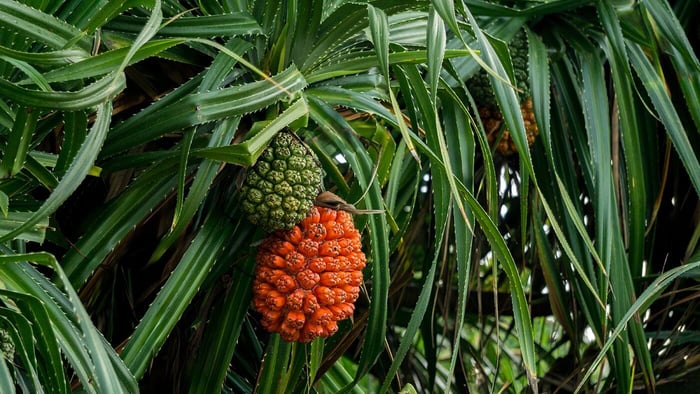
The plant is architectural and formidable. Long, sword-like leaves spiral outward, edged with sharp spines. Aerial roots descend like buttresses, forming dense thickets nearly impenetrable to the uninitiated. It is a plant shaped by wind and salt air.
And it is divided.
Kewda is sexually dimorphic. The female produces fruit. The male produces fragrance.
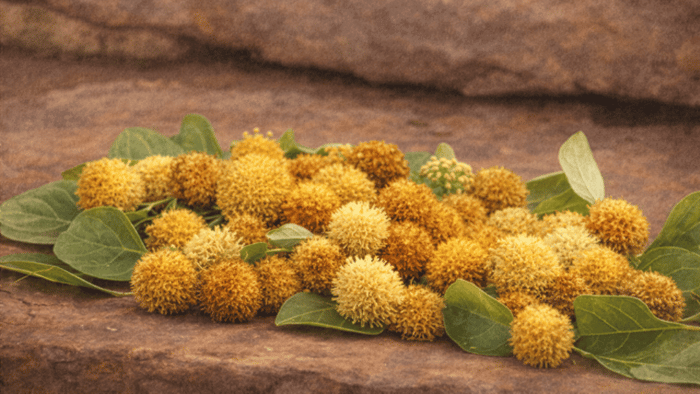
Only the male inflorescences — long cream-colored spadices hidden within protective bracts — yield the perfume that has enchanted emperors and perfumers alike. A mature plant may produce thirty to forty such spikes annually, each ten to twenty inches in length.
From within these layered structures emerges one of India's most penetrating floral scents.
The Search for Kewda
My own search for Kewda began not in Orissa but in literature.
In the late 1970s, while reading Steven Arctander's Perfume and Flavor Materials of Natural Origin, I encountered his description of this exotic flower — "extremely sweet, hyacinth-honeylike." His words stirred something in me.
At that time, however, much of what was sold as Kewda in Indian perfume bazaars was synthetic. Champa, Bakul, Hina — many traditional fragrances were being composed without the flower itself. My early explorations in Bombay yielded mostly artificial products. I lacked the experience to distinguish clearly between authentic and synthetic materials, yet something urged me to continue searching.
By fortunate circumstance, I was introduced to Ramakant Harlalka, a dedicated researcher of natural fragrance. Through his guidance, I began to encounter living plants I had previously known only through books.
First Encounter
My first physical encounter with Kewda came in March 1996 near Bangalore. Though early in the flowering cycle, we harvested several spikes growing along a rocky stream bed. Later that summer, traveling with Ramakant and Sudhakar, we stopped in a village where a vendor sat beneath a broad tree, bundles of freshly cut Kewda spikes before him.
We purchased a dozen and placed them in the car.
As we drove through the warm afternoon air, the vehicle filled with their aroma.
The first impression was sharp and extraordinarily diffusive — commanding attention. Then, as the senses adjusted, sweetness emerged: honeyed, luminous, humid. There was moisture in it — not dampness, but living air. Arctander's words returned. Babur's phrase echoed.
Moist musk.
Proper dilution revealed its complexity. Undiluted, the top note can overwhelm. But at 1% in alcohol — or absorbed into fine sandalwood oil — its layered character unfolds. In the case of Ruh Kewda especially, I have found the effect upon the mind to be awakening, almost clarifying, as though brushing cobwebs from tired inner chambers.
The Flowering Seasons of Orissa
In Orissa, the flowering cycle unfolds in three seasons:
Dhoopkal (Hot Season) — May/June — approximately 30% of annual yield.
Bhaudaun Mas (Rainy Season) — July/September — approximately 60%.
Sheetalkal (Cool Season) — October/November — approximately 10%.
Each season includes a forty-day harvesting window. Timing is precise. The spikes must be cut at exact stages of development.
In the Ganjam district alone, an estimated 300,000 to 400,000 Kewda trees produce nearly ten million male inflorescences annually. At dawn, men and women move through the coastal groves with long hooked poles, snapping mature spikes free. Bundles travel by foot, bicycle, scooter, jeep, or bullock cart to small distilleries hidden within dense vegetation.
Here, tradition continues quietly.
The Art of Kewda Attar
The preparation of Kewda attar follows the classical deg-bhapka system.
The green outer leaves are removed so that only the aromatic spadices remain.
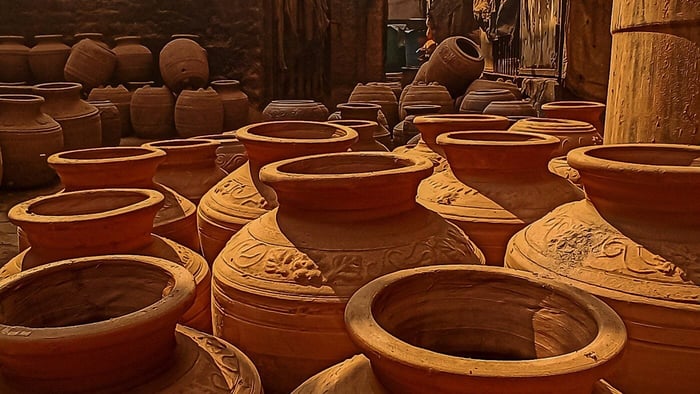
These are cut and placed into the copper deg with water — roughly two parts water to one part flowers. The rim is sealed with a clay "snake," and the lid secured. In certain distilleries, instead of a copper lid, an inverted clay dome is used, weighted with stones. It is said that this method imparts a subtle earthen nuance — perhaps legend, perhaps truth.
Distillation proceeds slowly, at low pressure, for ten to twelve hours. After each cycle, spent flowers are removed and replaced with fresh spikes. This repetition continues for twelve to fifteen days.
The receiving vessel, containing sandalwood oil, is turned continuously by hand. This agitation improves absorption, ensures even cooling, and prevents overheating.
Concentration is measured not by weight but by flower count: 10,000-flower attar, 15,000-flower attar, and higher. With each successive charging, the sandalwood absorbs more of the floral soul.
In a well-prepared attar, sandalwood remains nearly invisible at first, revealing itself only in the dry-down. Yet paradoxically, it is sandalwood that allows Kewda to reach its fullest expression.
It is a slow marriage of flower and wood.
Ruh Kewda
Ruh Kewda is prepared differently and in far smaller quantities.
Five stills may be charged with approximately 600 spikes each. From each batch, three distillates are drawn:
Agari — the first distillate
Pichari — the second
Tigari — the third
Only Agari and Pichari are reserved for Ruh. The aromatic waters are recombined and gently redistilled. Careful temperature control and constant rotation of the receiver are essential. Approximately one thousand flowers — hundreds of pounds of fresh material — may yield a single ounce of Ruh.
It is extraordinarily potent and contains delicate volatile top notes that solvent extraction often struggles to preserve.
The hydrosol, too, plays an important role. Medicinally regarded as stimulant, diaphoretic, and antispasmodic, Kewda water holds a distinguished place in North Indian and Mughal cuisine. Rasgulla, Gulab Jamun, Ras Malai, and Biryani acquire from it a brightness that rosewater alone cannot provide. It has even been used traditionally to relieve mental heaviness.
The Question of Authenticity
Authenticity, however, is critical.
The principal natural constituent of Kewda oil — the methyl ether of beta-phenylethyl alcohol — is widely synthesized. Many commercial products contain little beyond this single molecule. Genuine oil contains numerous additional constituents that lend depth and evolution.
Synthetic reproductions are flat and linear.
True Kewda breathes.
GC/MS analysis readily reveals the difference. In today's marketplace, ethical responsibility demands verification.
Beyond Distillation
Beyond distillation, the plant itself offers much.
Related pandanus species flavor rice across Southeast Asia. As Gernot Katzer notes, pandanus leaves enhance coconut rice, sweets, and drinks throughout Thailand, Malaysia, Indonesia, and Bali. In India, the intensely perfumed male flowers of Pandanus odoratissimus dominate distillation, while related species enter daily cuisine elsewhere.
The spiny leaves of Kewda, once prepared and softened, become mats, baskets, hats, cordage, roofing thatch, and paper fiber. The roots bind basketry. Nothing is wasted. These practices remain living components of rural economies across India, Malaysia, Mauritius, and beyond.
Kewda is fiber, flavor, fragrance, and shelter.
Fragrance as Life
As I reflected on this plant, one image stayed with me.
Sudhakar once told us that in parts of South India, when a Kewda flower was plucked, it would be kept in the home for as long as fifteen days. Gradually, its fragrance would permeate the hut.
It was not worn merely as perfume.
It became atmosphere.
There was a time — not distant — when most people lived in intimate relationship with the land. Knowledge of plants was practical, ecological, aesthetic. A nearby plant became fragrance, flavor, fiber, and beauty.
In Kewda we see more than attar.
We see relationship.
Wind moving through coastal groves.
Hands cutting spikes at dawn.
Clay sealing copper.
Sandalwood receiving sweetness.
Rice steaming with floral brightness.
Leaves woven into shelter.
A single flower resting in a hut, sweetening air for days.
Babur called it moist musk.
Perhaps it is tidal breath captured in oil.
Perhaps it is simply this:
A plant and a people living together —
fragrance not as luxury,
but as life.
Botanical Identity, Sexual Dimorphism & Coastal Ecology
Botanical name: Pandanus odoratissimus
Family: Pandanaceae
Common names: Kewda, Kewra, Ketaki (in some regions)
Kewda belongs to a tropical family of screw-pines — though it is not a true pine. The name "screw-pine" derives from the spiral arrangement of its long, sword-like leaves around the stem. It is a plant of architectural presence: supported by stilt-like prop roots, armed with sharp spines along leaf margins, forming dense, nearly impenetrable thickets, and adapted to humid, wind-swept coastal terrain. The plant may grow as a shrub or small tree, sometimes reaching 15–20 feet in height.
Its appearance is rugged. Its fragrance is refined. This paradox is essential to its identity.
The Male Flower
Kewda is dioecious, meaning male and female flowers grow on separate plants. Only the male inflorescences are used for perfumery — an important detail often overlooked in simplified accounts. The male spike measures 10–20 inches long, is composed of numerous small true flowers, is surrounded by creamy, fragrant bracts, and emits its strongest aroma during early development. The female plant produces fruit resembling a segmented pineapple-like structure — but it is not used in distillation.
Thus, entire coastal ecosystems may contain both male and female plants, yet only a portion are aromatically productive. Harvesters must know the difference.
Ecology & Terroir
Kewda thrives in sandy coastal soils, slightly saline conditions, high humidity, intense seasonal heat, and monsoon-driven rainfall cycles. The famed Ganjam district of Odisha provides sea breeze from the Bay of Bengal, salt-laced air, a long humid flowering season, and seasonal monsoon rhythm. This coastal terroir likely contributes to high diffusive strength, bright top-note volatility, slight mineral sharpness, and exceptional aromatic projection.
Unlike inland florals such as champa or jasmine, Kewda carries something of wind and salt in its structure. It is solar. It is maritime. It is expansive.
Flowering occurs in three seasonal waves: Dhoopkal (Hot Season, May/June), Bhaudaun Mas (Rainy/Main Season, July–September), and Sheetalkal (Cool Season, October/November). The main yield comes during the rainy season. Environmental stress — heat, humidity, wind — appears to influence aromatic intensity. Experienced harvesters often claim that flowers gathered during specific seasonal windows possess superior olfactory strength. Thus, terroir is not merely geography — it is seasonal timing.
Several structural features of Kewda are also noteworthy. Thick protective bracts preserve volatile compounds. Layered inflorescence traps aroma. Narrow tubular structures concentrate fragrance. Dense fiber structure protects moisture. The flower's architecture is designed to shield its volatile oils, release aroma gradually, and withstand coastal exposure. This structural intelligence may partially explain why Kewda distillation preserves such a powerful top note. The plant evolved to project.
If we step back, Kewda represents a coastal masculine floral archetype: spined yet fragrant, rugged yet refined, solar yet moist, penetrating yet sweet. It does not carry the softness of rose or the narcotic heaviness of jasmine. It announces itself. It carries brightness sharpened by salt air.
Chemical Architecture & Molecular Intelligence
The narrative has described Kewda's brightness, penetration, and moist sweetness. Now we examine why. To understand Kewda properly, one must look beyond its dominant molecule and examine its molecular symphony.
The Dominant Constituent
The principal aromatic compound in natural Kewda oil is the methyl ether of beta-phenylethyl alcohol (often 60–80% of the total volatile fraction). This molecule is responsible for the hyacinth-like sweetness, the honeyed floral lift, the characteristic diffusive brightness, and the slightly narcotic but airy quality.
Because this compound can be synthesized efficiently and inexpensively, it is widely used in artificial "Kewda" products. And here lies the central problem. When this molecule is isolated and used alone, the scent becomes linear, overly sweet, thin in development, lacking depth, and short in evolution. The real oil behaves very differently.
Authentic Kewda oil contains numerous secondary constituents, including phenylethyl alcohol (soft rose-like nuance), linalool (fresh floral lift), benzyl acetate (light fruity sweetness), trace indolic compounds (subtle depth), minor terpenoid fractions, and additional oxygenated aromatics. These minor components round the sharpness, add texture, create evolution from top to heart, and prevent the oil from collapsing into sweetness. True Kewda breathes. Synthetic Kewda remains static.
Ruh, Absolute & the Role of Sandalwood
An important distinction: absolute captures heavier aromatic fractions via solvent extraction, while Ruh captures volatile fractions through hydro-distillation and concentration. Ruh Kewda preserves the brightest top-note molecules, highly volatile components, and delicate fractions that solvent extraction may distort. This explains why Ruh feels electrifying, penetrating, mentally awakening — more "alive." It contains molecules that would otherwise evaporate or degrade under solvent or high heat extraction.
When Kewda is distilled into sandalwood oil, the wood acts as a molecular stabilizer. It anchors volatile floral fractions, slows evaporation, and deepens the dry-down. Sandalwood's santalols provide creamy base resonance, warm fixative structure, and long aromatic persistence. The interaction over 10–15 days of repeated distillation allows slow absorption, molecular integration, and harmonization. This is not simple blending. It is gradual co-evolution.
Verification & Aromatic Behaviour
Modern gas chromatography/mass spectrometry reveals the complexity of genuine oil, the presence of minor constituents, and the absence of full-spectrum composition in synthetic versions. Authentic oil displays a multi-peaked chromatographic pattern, a complex volatility curve, and a broader molecular fingerprint. Synthetic replication often shows dominance of one peak, limited secondary complexity, and narrow volatility behaviour. For serious buyers and ethical producers, GC/MS is no longer optional — it is protective. It protects the farmer, the distiller, the perfumer, and the tradition.
From a perfumer's perspective, Kewda behaves unusually because it opens like a top note, persists like a heart, can dominate if overdosed, and cuts through heavy bases. It pairs well with sandalwood, vetiver, rose, cardamom, saffron, and mild musks. But it must be restrained. Used wisely, it illuminates. Used excessively, it overwhelms.
Chemistry often reflects psychological effect. Kewda's high concentration of bright phenyl derivatives likely contributes to its stimulating action, mental clarity, awakening sensation, and anti-lethargic quality. Unlike sedative florals (such as heavy jasmine absolute), Kewda activates. It feels solar.
Courtly Patronage, Sacred Status & Cultural Continuity
Kewda is not merely a coastal flower. It is a fragrance that entered imperial courts, royal kitchens, sacred ritual, and village homes. It bridges palace and hut.
The Mughal Court
One of the earliest references appears in the Baburnama (1525), where Babur describes the flower with fascination — calling it a moist musk, distinct from dry musk. The Mughal emperors were connoisseurs of perfumes, gardens, aromatic waters, and distilled essences. Under their patronage, attar distillation flourished, floral waters entered cuisine, and aromatic refinement became court culture. Kewda's penetrating sweetness appealed to the Mughal aesthetic of lush gardens, flowing fountains, sensory refinement, and ornamental excess. Yet the plant itself remained wild and coastal — a striking contrast.
Cuisine & Sacred Use
Unlike many perfumery florals, Kewda entered the culinary sphere deeply. Its hydrosol became central to Biryani, sweet syrups, milk-based confections, and festive desserts. In Mughal-influenced cuisine, Kewda water contributes lifting aromatic vapor, subtle sweetness, and high-note brightness. It is often paired with saffron, rosewater, and cardamom. The fragrance rises from hot rice or syrup as vapor — creating a sensory halo before taste even registers. This vaporous quality parallels its role in perfumery. Kewda is an aroma that announces itself through air.
In certain regions, Kewda flowers are offered in devotional contexts. However, unlike rose or jasmine, Kewda is not universally used in temple worship across India. It carries regional sacred status, especially in coastal Odisha. In some traditions, Ketaki (a related Pandanus reference in mythology) appears in Puranic narratives, including stories involving Lord Shiva. In certain mythic episodes, Ketaki flower becomes symbolically complex — sometimes honored, sometimes restricted. This duality reflects an ancient reverence mixed with caution.
Village, Trade & Identity
Beyond courts and cuisine, Kewda lived in homes. Villagers keep fresh spikes indoors for up to 15 days. The flower perfumes simple huts naturally. Its presence alters atmosphere without elaborate preparation. This quiet domestic use may be more culturally significant than imperial references. It suggests fragrance not as luxury but as atmosphere — not adornment but environmental uplift.
Historically, perfumers from Kannauj traveled to Odisha during harvest season. Portable copper stills allowed mobile distillation. Raw material dictated geography. This migratory distillation model preserved volatile freshness, supported rural economies, and linked inland perfumers to coastal ecosystems. Kewda thus sits within India's larger aromatic trade web — connecting Odisha, Uttar Pradesh, Mughal courts, and Middle Eastern buyers.
In Indian perfumery tradition, certain florals are considered feminine (rose, jasmine) and others masculine (kewda, hina blends). Kewda's penetrating, sharp, solar character lends itself to men's perfumery, tobacco scenting, and masculine attars. Yet its sweetness softens that sharpness. It occupies a liminal place.
Modern industrialization introduced synthetic phenyl derivatives, rapid production, and market dilution. Kewda became one of the most adulterated floral identities in India. Because its dominant molecule is easy to synthesize, it became commercially vulnerable. Thus today, cultural preservation is inseparable from chemical authenticity.
Ayurvedic, Unani & Folk Therapeutic Perspectives
Kewda has never been valued solely as perfume. Within traditional systems of medicine — particularly Ayurveda and Unani — it has been understood as a plant of stimulation, cooling balance, and nervous activation.
Ayurvedic & Unani Energetics
In classical Ayurvedic language, substances are described according to Rasa (taste), Guna (qualities), Virya (heating or cooling potency), Vipaka (post-digestive effect), and Prabhava (specific action). While detailed classical monographs on Kewda are less extensive than for sandalwood or vetiver, regional practice attributes the following energetic tendencies:
Rasa: Slightly bitter, mildly sweet
Guna: Light, penetrating, subtle
Virya: Cooling to mildly warming depending on preparation
Prabhava (observed action): Stimulant, antispasmodic, nervine
This may appear paradoxical: cooling yet stimulating. But many aromatic florals behave in this way — they cool excess heat while stimulating mental clarity.
Traditional practitioners have used Ruh Kewda for headache relief, hydrosol for mental fatigue, and flower preparations for nervous imbalance. Its penetrating aroma seems to increase alertness, clear dullness, stimulate subtle circulation, and reduce stagnation. Unlike heavy sedative florals (such as dense jasmine absolute), Kewda sharpens rather than soothes. It awakens.
In Unani medicine, aromatic substances are often categorized according to temperament (Mizaj). Kewda would generally be considered moderately warm, subtly dry, and stimulating to the heart and brain. Unani physicians historically favored fragrant materials that strengthen the heart (Muqawwi Qalb), uplift mood, and improve mental clarity. Its use in courtly environments may reflect not only aesthetic pleasure but therapeutic belief.
Folk Uses & Modern Interpretation
Traditional uses include powdered anthers inhaled, flower cigarettes for throat complaints, juice applied in veterinary care, and hydrosol for hangover recovery. While modern scientific validation may vary, these practices demonstrate a long-standing empirical relationship between people and plant. It is essential that such uses be contextualized: these were applied within cultural systems that integrated climate, diet, seasonal rhythm, and observational medicine. They are not random folk superstition. They arise from generational trial.
From a contemporary aromatic psychology perspective, Kewda appears to act on mental fatigue, emotional dullness, and cognitive stagnation. Its high-volatility compounds likely stimulate limbic response, olfactory nerve excitation, and subtle sympathetic activation. Subjectively, it feels clearing, lifting, brightening, and inspiring. This aligns with the personal observation that it "refreshes tired brain cells."
As with all essential oils and concentrated attars, potency demands respect. Dosage must be minimal. Purity must be verified. Synthetic substitutes may not replicate therapeutic effects and can create irritation or imbalance. Thus authenticity is not merely aesthetic — it may be physiologically relevant.
Literature, Symbolism & Mythic Resonance
Kewda has never occupied the same poetic frequency as lotus or jasmine in classical Sanskrit literature — yet its presence is felt in courtly prose, regional verse, Mughal memoirs, and coastal devotional traditions. Its literary role is different. It is not the flower of quiet contemplation. It is the flower of atmosphere.
Babur's "Moist Musk" & Ketaki in Myth
Babur's early sixteenth-century description of Kewda as "moist musk" is deeply revealing. Musk in Persian and Central Asian aesthetics symbolized sensual warmth, animal vitality, and earthy depth. To call Kewda "moist musk" is to acknowledge its sweet animalic undertone, its floral luminosity, and its capacity to bridge dryness and sweetness. Musk was dry and earthy. Kewda was radiant and humid. In this single phrase, Babur positioned Kewda within imperial olfactory hierarchy. It was not a minor floral. It was a court scent.
In Hindu mythology, Ketaki (often identified with Pandanus) appears in a story involving Lord Shiva and Lord Brahma. According to one well-known legend, Brahma falsely claimed to have reached the top of an infinite column of light (Shiva's form), and Ketaki flower bore false witness to support him. Shiva, angered by the deception, declared that Ketaki would no longer be used in his worship. The symbolism is striking. The flower is fragrant, beautiful, and powerful — yet not universally offered. This myth gives Ketaki a complex spiritual identity — simultaneously revered and restricted. Unlike lotus (pure) or jasmine (devotional), Kewda carries an edge. Its sharp diffusion mirrors this mythic tension.
Poetry, Mughal Aesthetics & Symbolic Archetype
In Odia and coastal devotional literature, Kewda appears more frequently as a marker of seasonal change, a scent of monsoon humidity, a symbol of longing carried on sea wind. Its sharp sweetness often accompanies imagery of salt air, river estuaries, humid nights, and festival gatherings. Where champa is often described as creamy and moonlit, Kewda is solar and expansive. It moves through air.
Mughal sensory culture valued perfumed fountains, scented textiles, aromatic gardens, and floral waters in court ceremony. Kewda water was often sprinkled in halls and used in kitchens to scent the air as much as the food. Its fragrance was theatrical. It created entrance, announcement, and atmosphere. It was not introspective — it was architectural.
If we step back symbolically, Kewda represents radiant proclamation, solar floral masculinity, coastal vitality, and celebration. It is not shy. It pierces air and expands outward. Where Mitti is inward and grounding, where Vetiver is subterranean and contemplative, Kewda is aerial and declarative. It inhabits space.
Sudhakar's comment — that villagers keep Kewda spikes in their homes for up to fifteen days — is perhaps the most powerful literary statement of all. The flower becomes environmental perfume, living incense, domestic atmosphere. It suggests a relationship to fragrance that is not ornamental. It is immersive. The hut becomes scented air. In this, Kewda transcends poetry. It becomes lived literature.
Sustainability, Authenticity & the Future of a Coastal Flower
We now leave poetry and courtly history and step into the present moment. The question before us is simple: will genuine Kewda survive?
Ecology & Labour
The finest Kewda grows in coastal Odisha (especially Ganjam district), moist riverine zones, and sandy soils near estuarine systems. These ecosystems are delicate. They are affected by coastal development, shifting rainfall patterns, cyclones, salinity changes, and urban expansion. Kewda thrives where moisture is consistent, air is humid, and soils drain yet retain subtle water. Climate irregularities directly affect flowering yield. Thus Kewda is not merely a flower. It is an ecological indicator.
Unlike large-scale essential oil crops, Kewda harvesting remains manual, seasonal, and community-based. Long hooked poles, foot transport, bicycle loads, jungle distilleries — these are not romantic relics. They are current realities. But younger generations increasingly leave rural regions, seek urban employment, and abandon seasonal floral harvest. Without fair economic return, the knowledge chain weakens. Ruh preparation especially requires technical skill, patience, careful separation, and experience in controlling heat and condensation. These skills are not easily automated.
Synthetic Threat & the Economics of Integrity
Methyl ether of beta-phenylethyl alcohol (the dominant aromatic component) is widely synthesized. Synthetic substitution creates lower cost, larger market reach, and easy scalability. But at a cost: complexity disappears, minor molecules vanish, therapeutic nuance diminishes, and cultural lineage erodes. When a single molecule replaces a living oil, the mandala collapses into a dot. GC/MS technology can distinguish this — but market awareness must follow. Authenticity is not nostalgia. It is chemical reality.
Ruh Kewda is among the most labour-intensive distillations in India. Its production demands massive flower volume, multiple stills, careful fractional separation, slow redistillation, and a high flower-to-yield ratio. True Ruh cannot be inexpensive. Thus preservation depends on educated buyers, transparent supply chains, analytical verification, and ethical marketing. Without informed demand, artisans cannot survive.
Ancient and modern technology can work together. This is precisely the path forward. Possible improvements include fuel efficiency in deg heating, water recirculation systems, cleaner separation tools, modern GC/MS batch verification, and cooperative distillery models. Innovation does not mean abandonment of tradition. It means strengthening the craft so it can endure.
In a world saturated with synthetic florals, Kewda offers radical distinctiveness, cultural depth, architectural diffusion, spiritual lineage, and culinary integration. No Western floral smells like Kewda. It cannot be replaced by jasmine, ylang, tuberose, or hyacinth. Its role in niche natural perfumery is immense — if understood.
Atmosphere, Announcement & Maritime Exchange
Unlike root, wood, or clay, Kewda is structured for diffusion. Its long, layered inflorescence traps volatile molecules and releases them with intensity. Chemically dominated by phenyl derivatives, its aroma projects strongly, travels through space, cuts through humid air, and announces presence. Kewda is not intimate. It is architectural. It fills halls. It precedes entry. This quality alone makes it culturally mobile.
From Court to Kitchen to Trade Route
In India, Kewda entered two powerful domains: Mughal courts and royal kitchens. It perfumed rice dishes, syrups, celebration halls, and textile rooms. Its vapor rises from heat. It becomes airborne before it becomes tasted. Thus Kewda operates in a space between fragrance and cuisine — an atmospheric bridge.
Kewda's coastal ecology is not incidental. It thrives in saline air, sandy soils, humid sea breeze. Historically, the Indian Ocean connected Odisha, Bengal, Gujarat, Arabia, and Persia. Maritime exchange carried spices, textiles, resins — and aromatic knowledge. While rose and sandalwood moved westward more prominently, Kewda's aromatic profile entered shared aesthetic memory through Mughal and Indo-Persian cultural blending. It is a flower shaped by wind and salt — and by trade winds.
In parts of the Arabian Peninsula, Arabian jasmine (ful) occupies a role of celebratory projection — worn in gatherings, woven into garlands. Though botanically different from Kewda, the archetype is similar: fragrance as announcement, fragrance as social signal, fragrance carried through open-air environments. Both flowers operate strongly in humid heat, project through movement, and carry sweetness sharpened by climate.
Pandanus Across Cultures
Across Southeast Asia (Indonesia, Malaysia, Thailand), pandanus leaves are used in cuisine and ritual for their aromatic properties. Though not identical species, the pandanus family carries a similar profile: green-sweet aromatic lift, airborne sweetness, and culinary integration. This reveals something important: pandanus-type aromatics often occupy a liminal space between food and fragrance, atmosphere and adornment. Kewda stands in this threshold category.
Some cultures favor intimate skin scents. Others favor atmospheric scenting. Kewda belongs to atmospheric cultures. It is sprinkled, vaporized, infused, scattered. It is less about close embrace and more about shared air. That distinction matters. It signals a communal rather than private fragrance philosophy.
Across cultures, certain aromatics align with solar energy — brightness, expansion, proclamation. Kewda's sharp sweetness and high projection align with this archetype. If jasmine is moonlit softness, Kewda is sun on water. It is reflective and bright. It does not withdraw. It radiates.
From a neurophysiological standpoint, highly diffusive aromatics stimulate alertness, activate attention, and increase environmental awareness. Kewda's brightness can awaken dullness, lift lethargy, and cut through heavy mood. Unlike sandalwood which slows, Kewda enlivens. Unlike khus which grounds, Kewda expands. It operates upward and outward.
Few flowers operate simultaneously in perfumery, cuisine, ritual sprinkling, and courtly atmosphere. Kewda does. It is not confined to one sensory domain. It exists in vapor. And vapor crosses boundaries. When fragrance becomes air, it becomes collective. That is Kewda's gift.
Aromatic Polarity & the Masculine Floral Archetype
Kewda is dioecious. Male and female flowers grow on separate plants. Only the male inflorescence is used in perfumery and attar distillation. The female plant produces fruit — segmented and pineapple-like — but it is not distilled for fragrance. This separation is not incidental. It shapes the entire aromatic identity of Kewda.
In most perfumery florals, the flower is both fertile and fragrant. Reproduction and scent are unified. In Kewda, fragrance is isolated from fruiting. The distilled aroma comes from the projecting male spike. This botanical polarity gives rise to a rare archetype: a masculine floral.
Sweetness With Edge
In traditional Indian attar culture, florals are often perceived along subtle energetic lines: rose — devotional, heart-centered; jasmine — lunar, intimate, erotic; champa — sacred, contemplative; Kewda — solar, penetrating, declarative. Kewda's scent is not soft or enveloping. It is bright, sharp-edged, diffusive, and expansive. It enters space assertively. Yet it retains unmistakable sweetness. This union of sweetness and projection creates tension. It is not demure. It is not narcotic. It announces. That quality has long aligned it with masculine attars and courtly environments.
The male inflorescence is long, layered, surrounded by protective bracts, and structured for aromatic release. Its architecture channels volatile molecules outward. The flower does not hide fragrance within petals. It projects through layers. The form supports emission. Biology and aroma align.
Kewda's sweetness is often described as hyacinth-like or honeyed. But unlike rose, which rounds its sweetness, Kewda's sweetness has edge. This edge gives it clarity, lift, and forward motion. In social contexts, this translates to presence. Not dominance. Not sensual surrender. Presence. This is why Kewda has historically been worn by men without diminishing floral identity. It does not feminize. It energizes.
Polarity & the Attar Tradition
If jasmine belongs to the moon, Kewda belongs to the sun reflected off coastal water. Its scent feels illuminated. Solar fragrances typically stimulate alertness, increase outward awareness, and encourage movement. Kewda behaves this way neurologically. Its phenyl derivatives create bright olfactory lift, mental stimulation, and slight sharpening of perception. It awakens rather than soothes.
In Mughal-influenced culture, scenting halls and garments was not only aesthetic — it signaled refinement and authority. Kewda's diffusive nature allowed it to carry through corridors, rise from warm dishes, and announce gatherings. This aligns with public masculinity rather than private intimacy. Jasmine invites closeness. Kewda shapes shared space.
It is important not to reduce masculine and feminine to rigid binaries. In aromatic terms, polarity refers to movement: inward vs outward, soft vs edged, enfolding vs projecting. Kewda moves outward. That is its polarity. It does not diminish its sweetness. It directs it.
When distilled into sandalwood, sandalwood stabilizes while Kewda projects. Axis meets radiance. Stillness receives declaration. This pairing is not random. It balances polarity. Without sandalwood, Kewda might feel volatile. Without Kewda, sandalwood might feel static. Together they create composed presence.
Modern perfumery rarely speaks of masculine florals outside niche experimentation. Kewda quietly occupies this category without controversy. It proves that floral does not equal feminine, sweetness does not equal softness, and projection can coexist with refinement. This is a subtle but important cultural correction.
Kewda is one of the very few flowers whose distilled identity emerges from the male spike alone. This creates a fragrance that feels structured, directed, solar, and alive in air. It does not withdraw into skin. It travels. That is its polarity. That is its distinction. And that is why it stands apart within the floral kingdom.
Volatility, Diffusion & the Physics of Projection
Kewda's extraordinary diffusion is not subjective exaggeration. It is molecular design. The dominant constituent of Kewda oil — methyl ether of beta-phenylethyl alcohol — is relatively small in molecular size, highly diffusive, bright in volatility, and sweet yet sharp in character. This creates a fragrance that rises quickly, expands outward, cuts through humid air, and maintains perceptibility over distance. Unlike heavy sesquiterpenic oils (sandalwood, vetiver), Kewda's key molecules are lighter and more mobile. They travel.
Volatility, Humidity & Sillage
Every aromatic material has a volatility curve — the rate at which its molecules evaporate and disperse. Kewda's curve is unusual: it opens like a top note, behaves like a radiant heart, and lingers longer than its molecular weight might predict. Why? Because authentic Kewda oil is not one molecule. It contains phenyl derivatives (high diffusion), supporting alcohols and esters, trace indolic depth, and minor terpenoids. These layers create staggered evaporation. So what appears bright at first does not collapse immediately. It sustains lift. This is what gives Kewda its architectural presence.
Kewda grows in saline coastal soils, high humidity, and monsoon climates. Humidity changes diffusion dynamics. In moist air, volatile molecules linger differently, sweet notes carry further, and sharpness becomes more noticeable. Kewda evolved in wind and salt. Its projection makes sense in that environment. In dry air it can feel sharper. In humid air it becomes luminous. Terroir influences behaviour even after distillation.
"Sillage" in perfumery refers to the scent trail left behind a moving body. Kewda creates sillage not through heaviness — but through speed. Its molecules disperse rapidly enough to surround the wearer, fill enclosed space, and announce movement. This is different from oud or amber, which radiate through density. Kewda radiates through lightness. It is aerodynamic rather than gravitational.
Sandalwood, Synthesis & Spatial Identity
When distilled into sandalwood oil, the volatile fractions enter the receiving wood. The santalols act as molecular anchors. Evaporation slows. Projection becomes rounded but not suppressed. Sandalwood does not silence Kewda. It regulates its velocity. The result is controlled radiance — brightness without fragmentation. This is co-evolution, not simple blending.
Bright phenyl compounds stimulate specific olfactory receptors associated with sweet perception, floral sharpness, and alertness. High-diffusion molecules reach receptors quickly, triggering rapid neural response. This produces immediate awareness, slight stimulation, and environmental attention. Unlike grounding oils, Kewda's projection activates. It wakes the olfactory cortex.
Synthetic Kewda reproductions often isolate the dominant molecule. The result: strong opening, flat evolution, rapid collapse. True oil displays multi-peaked chromatographic complexity, gradual diffusion shift, and textural modulation. Projection without depth becomes harsh. Projection with structure becomes radiant. This is why authentic Ruh Kewda feels alive.
Because of its physics, Kewda functions exceptionally well in entryways, ceremonial halls, culinary steam, and festive gatherings. Heat increases volatility. Thus when Kewda water is added to warm rice or syrup, molecules vaporize instantly. Aroma precedes taste. Air becomes fragrant before palate registers flavor. It announces before it is consumed. Few florals behave this way.
In aromatic taxonomy, materials can be categorized by spatial behaviour: grounding (low diffusion, high persistence) — vetiver; axial (steady diffusion, stable arc) — sandalwood; intimate (radiant bloom, close aura) — jasmine; projective (fast diffusion, spatial shaping) — kewda. Kewda defines itself by projection. It shapes space rather than skin.
When authentic Kewda attar is worn in humid air, it does not sit flat. It expands softly outward, forming a fragrant perimeter. You are aware of it without being overwhelmed. It feels less like perfume and more like charged air. That is physics expressed as experience. That is why Kewda feels architectural. And that is why it belongs in halls, not whispers.