
Table of Contents
"I am the taste in the water, the light of the sun and the moon, the sound in the ether, the ability in man, the fragrance of the earth, the life of all that lives, the strength of the strong, the intelligence of the intelligent, and the original seed of all existences."
— Bhagavad Gita (c. 400 BC)
In the Bhagavad Gita, when Lord Krishna reveals His cosmic identity to Arjuna, He speaks the phrase: "the fragrance of the earth." Few descriptions could be more intimate.
Fragrance is invisible. It cannot be grasped or contained. It is perceived inwardly. To call oneself the fragrance of the earth is to identify with something subtle yet unmistakable — something that arises when soil and sky meet.
Mitti Attar

$20.00
Mitti attar is the distillation of earth itself — that is not a metaphor. In Kannauj, India's perfume capital, clay from dried lakebeds is shaped into crude vessels, half-baked in small kilns, then distilled into sandalwood oil. The result captures… read more
The Monsoon
For the people of India, this fragrance is not abstract poetry. It is the scent of the monsoon.
In many parts of the country, there is no irrigation beyond what falls from the sky. The livelihood of entire regions depends upon the annual arrival of moisture-laden clouds. As the monsoon season approaches, farmers search the horizon with fervent hope. Their prayers are not ceremonial; they are urgent. The year's survival depends upon sufficient rain.
The atmosphere changes even before the first drop falls.
Heat thickens.
Wind shifts.
Clouds gather weight.
When the first rain touches the parched earth, something extraordinary occurs. The soil releases an intoxicating aroma — deep, mineral, sweet, and electric. Country people inhale it in long, grateful draughts.
It is not merely pleasant.
It is relief.
It is promise.
It is life returned.
Songs rise.
Children run barefoot into the fields.
Elders stand silently and weep.
If the rains continue, the fields will soon be green. Crops will grow. Families will eat. Communities will endure another year.
A Farm in South India
When I was in my early twenties, I lived for several years on a small farm in South India — six months of each year from 1971 to 1976. Living among farming families altered my perception gradually.
I began to sense the immense force nature exerts upon those who live close to her rhythms.
In the hearts of rural Indians lives not only the experience of the present generation, but the accumulated memory of centuries. Their relationship to rain is ancestral. Their longing is collective.
The coming of the monsoon is not a seasonal inconvenience.
It is an event of the soul.
As clouds gather, hearts become unified in anticipation. The longing is to see, to taste, to hear, to smell, and to feel the rain's arrival.
It may truly be said that the identity of the people is so closely intertwined with the earth that when the first drops fall, they feel as though the earth itself has been reinvigorated — and they with it.
Rajasthan at the Edge of the Monsoon
This July, I had the opportunity to visit Rajasthan as the monsoon season approached. It was a deeply moving time to be traveling through the countryside once again, sharing in the intense anticipation of the farming people. As my eyes drank in the austere and sublime beauty of that ancient landscape, I felt an overwhelming gratitude that my life had become intertwined with a part of India little known to most of the world.
I was traveling with my fragrance mentor, Mr. Ramakant Harlalka of Mumbai, and we were exploring yet another dimension of the great aromatic traditions that have long nourished the hearts and minds of the Indian people.
The countryside was alive with purposeful activity despite the tremendous heat that precedes the rains. The earth had already been, or was being, plowed so that its hardened crust could receive the precious drops more readily. Plows were being mended. Hoes sharpened. Shovels forged and repaired. Everywhere one sensed preparation — not merely agricultural, but almost ceremonial — for the intense labor that would follow should nature prove kind and the rains fall abundantly.
Above all, one could feel the call of the earth itself — and of all her creatures — for the monsoon to come.
The Distillation of the Earth
It was the perfect time to understand the importance of Mitti attar, which continues to be made in North India to this day.
An attar, as you know, is an Indian perfume based in sandalwood oil, into which one or more botanical essences are absorbed through hydro-distillation. But Mitti attar is unique among them.
It is not the distillation of a flower.
Nor of a root.
Nor of a leaf.
It is the distillation of the earth itself.
At some unknown moment in the past, the perfumers of Kannauj turned their attention toward capturing the fragrance released when the first monsoon rains strike parched soil — a scent so beloved by the people that it had already been sanctified in scripture and memory.
They asked a daring question:
Can the earth be distilled?
Years before, I had encountered a passing reference to this remarkable attar in perfumery literature. The idea captivated me immediately. To bottle the scent of rain-soaked soil seemed almost impossible — and yet entirely in keeping with India's poetic relationship to fragrance.
In February 1995, I finally had the opportunity to visit a distillery in Kannauj where Mitti attar was being produced. Since that time, with the generous help of my Indian colleagues, I have been able to document photographically the various stages of its preparation. What I witnessed confirmed that this perfume is not a novelty, nor an abstraction, but a deeply rooted expression of cultural memory.
The true significance of the attar was revealed to me only years later, when I once again found myself in Rajasthan at the edge of the monsoon season. It had been a long time since I had been in India during those charged weeks when the land waits in silence for the sky to open.
To see the sun-baked earth newly upturned and resting in expectancy…
To feel the longing of the people for the return of the rains…
To witness preparation carried out under a relentless heat…
All of this reconnected me to the deeper reason behind the existence of Mitti attar.
This fragrance was not created as a novelty. It was not conceived as a curiosity.
It was a remembrance.
For the people, the scent of the first rain upon parched soil is inseparable from survival, renewal, and grace. It is the aroma of one of the most sacred and decisive moments of the year. To preserve it in oil is to preserve hope itself.
Ramakant explained to me that even from a scientific standpoint, the phenomenon is remarkable. When the soil becomes depleted of moisture, countless microorganisms — numbering in the millions within a single teaspoon of earth — enter a dormant state. With the arrival of rain, they awaken. Their renewed activity releases aromatic compounds into the air, among them the substance now known as geosmin.
This subtle chemical awakening produces the rich, deep, mysterious fragrance that so powerfully stirs the heart. The air becomes invisibly charged. One can almost imagine the earth itself expressing gratitude — thanking the clouds and the rain for their cooling gift, for restoring vitality to the soil so that life may once again flourish.
The Preparation of Mitti Attar
Gathering the Earth
But how does one capture such a fragrance?
How can perfumers distill the meeting of rain and earth?
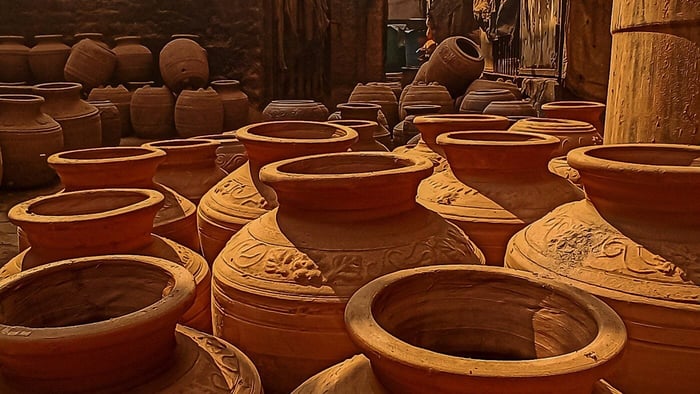
The artisans of Kannauj understand that not all earth smells alike. Each soil carries its own character, its own mineral and organic signature. Through patient experimentation over generations, they discovered that the finest earth for producing Mitti attar comes from dried lake beds, ponds, or wells — places where water once rested and later withdrew, leaving behind a concentrated mineral imprint.
Local workers travel to these selected sites with picks and crowbars. They break apart the caked earth and load it into bullock carts or tractor trailers for transport into the city, specifically to the quarter where the traditional potters reside.
The Potter and the Kiln
There, in open courtyards surrounded by mounds of clay, bricks, and small kilns, the transformation begins.
An assistant pounds the hardened earth into smaller fragments, reducing it to a workable consistency. Water is added, and the soil is kneaded into a dense dough. The potter squats before his wheel, setting it into motion with a practiced thrust of a spinning stick. In swift succession, coarse earthen vessels are shaped — not refined pottery, but simple forms destined for distillation.
Nearby stand small brick ovens, each with a concave central chamber designed to hold the freshly formed clay pieces. The vessels are carefully stacked within this chamber. Bricks are built upward around them in tiers. Straw is packed densely above. The entire structure is sealed with clay.
A controlled fire is then lit beneath.
The clay is not fully fired to ceramic hardness. It is only half-baked — enough to remove moisture and develop the mineral scent latent within it, but not so much that it becomes inert.
Once this gentle firing is complete, the earthen pieces are removed and transported to the distillery.
There, they will undergo yet another transformation.
The Deg and the Bhapka
At the distillery, the half-baked clay vessels are carried to the large copper degs — the traditional cauldrons supported above ground by structures of brick and packed earth. Often as many as ten degs stand in a row, each resting above a small opening that will later receive fuel — cow dung cakes or wood — when the fire is lit.
At this stage, the deg contains no water.
The baked earthen fragments are first placed directly inside the copper chamber. Once this is done, the workers prepare the seal. A thick rope of moist clay — the familiar "clay snake" — is laid carefully around the rim of the deg. Over this is placed the copper lid, known as the sarpos, forming a tight junction between vessel and cover.
The lid contains two openings.
Into the larger opening is fitted the chonga — a bamboo pipe wrapped in coarse grass twine that serves as insulation. Where the bamboo enters the lid, cotton cloth is tightly wound to create an airtight seal. The opposite end of the chonga connects to the bhapka, the long-necked copper receiver that holds approximately five kilograms of pure sandalwood oil.
Again, cotton is packed firmly at the junction to ensure no vapor escapes.
The bhapka itself rests in a water-filled basin. This cooling bath is essential, for it allows the vapors traveling through the bamboo pipe to condense gently into the sandalwood oil.
Only after every connection has been secured — every seam sealed with clay and cotton — is water poured into the second, smaller opening in the lid.
This sequence is crucial.
And it reveals a subtle intelligence within the traditional system that modern observers often overlook.
Water Before Fire
Before heat is applied, something remarkable occurs.
When water first touches the baked earth inside the sealed chamber, the dormant soil microorganisms begin to awaken — just as they do when rain touches dry ground. Without the application of fire, without pressure, without agitation, the earth begins to exhale its most delicate aromatic molecules.
These are what modern perfumers call headspace molecules — the most subtle and fleeting aromatic compounds released at ambient temperature. They are the very first notes perceived when rain strikes soil.
In conventional steam or hydro-distillation, many of these fragile molecules are lost or degraded by heat. They exist naturally only at normal environmental temperatures and often only at certain times of day.
The perfumers of Kannauj, long before the language of "headspace analysis" existed, intuitively understood this principle.
By introducing water only after the system was sealed, and allowing the first interaction between moisture and earth to occur within a closed environment — and before fire was applied — they captured traces of these delicate volatiles. These subtle essences were forced upward through the chonga and into the waiting sandalwood oil, where they could be absorbed and preserved.
Only after this initial, quiet phase does the fire begin.
Heat is then applied beneath the deg, and the fuller extraction of the earth's aromatic character proceeds through gentle hydro-distillation.
This sequence — moisture first, fire second — may be one of the earliest practical recognitions of the importance of preserving the most refined aromatic fractions of a material.
It is both simple and profound.
Repeated Distillation
For approximately two hours the cauldron is subjected to steady, controlled heat. During this time the earth yields its aromatic essence into the vapor stream and into the waiting sandalwood oil below. When the distillation is complete, the bhapka is carefully removed and set aside to cool through the night.
By morning, the contents have settled completely. The water and oil have separated into distinct layers. Through a small aperture at the base of the receiver, the water is gently drained away, leaving behind the sandalwood oil now subtly infused with the fragrance of earth.
This procedure is repeated again and again — often twenty times over the course of several weeks. With each cycle, the sandalwood becomes more deeply charged. Slowly, patiently, the oil acquires the memory of rain.
When the perfumer judges the saturation complete, the Mitti attar is transferred into traditional leather bottles. There it matures in darkness and coolness, its fragrance rounding and deepening with time.
A Constellation of Craft
The making of such an attar is undeniably labor-intensive.
To hold a small vial of Mitti is to hold the accumulated effort of many hands.
First, nature provides the fragrant earth.
Then workers extract it.
Potters shape it.
Kilns fire it.
Transporters carry it.
Distillers tend it.
Artisans fashion the vessels and fittings.
Perfumers guide the process.
The perfumer's knowledge alone is not sufficient. He depends upon the copper smith who forms the deg. The bamboo cutter who fashions the chonga. The potter who shapes the clay. The leather worker who prepares the aging bottles. The fuel gatherer who supplies the fire.
An entire constellation of cottage industries converges to produce this single attar.
I have had the privilege of witnessing many of these processes firsthand. By Western industrial standards, the work may appear humble — unsophisticated, even menial. Yet closer observation reveals an intricate web of skill, memory, and quiet ingenuity. With simple tools and locally available materials, these artisans produce objects of remarkable utility and beauty.
Their villages are modest. Their earnings are rarely substantial. They do not command the technological conveniences that modern society assumes as necessary. Yet in many cases, their lives remain rooted in strong family bonds, community relationships, and a continuity of craft that carries its own form of wealth.
It is difficult not to feel reverence for such a system.
The Future of Indian Attar
Still, there are bright possibilities.
Across the world, interest in natural aromatic materials continues to grow among perfumers, aromatherapists, aromachologists, herbalists, and serious students of fragrance. As synthetic perfumery reaches ever greater sophistication, there is also a parallel longing for authenticity — for materials whose origins are traceable to soil, plant, and craft.
Mitti attar is but one jewel in the Indian perfumer's repertoire.
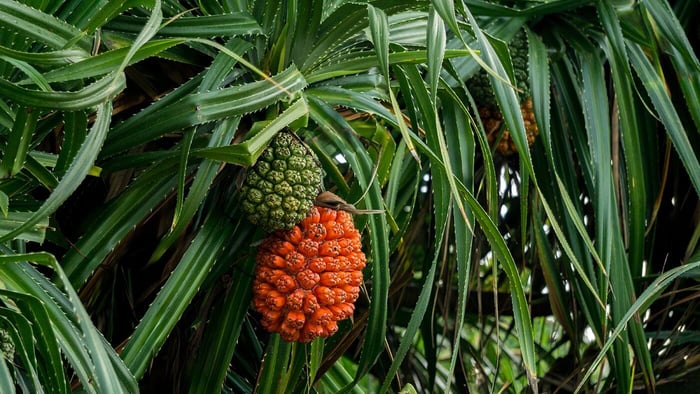
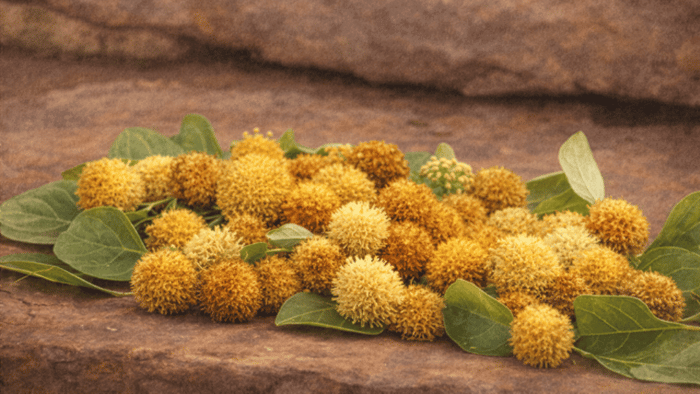
There remain the classical attars of Gulab (Rosa damascena), Keora (Pandanus odoratissimus), Hina (a complex blend of herbs, spices, and woods), Champa (Michelia champaca), Bakul (Mimusops elengi), Parijatak (Nyctanthes arbor-tristis), Chameli (Jasminum grandiflorum), Motia (Jasminum sambac), Genda (Tagetes erecta), Ratrani (Cestrum nocturnum), and Kadam (Neolamarckia cadamba).
Each of these carries centuries of accumulated knowledge.
A respected perfumer in Kannauj once confided to me that in earlier times many other natural perfumes were also produced — including lotus (Nelumbo nucifera). But as royal patronage declined and overseas markets, particularly in the Middle East, shifted their demands, some of these attars gradually disappeared. Without consistent patronage, knowledge weakens. Without practice, memory fades.
The loss is rarely dramatic.
It is incremental.
It is my sincere hope that an independent facility might one day be established — a place where true attars could be produced to the highest standards, their purity and authenticity certified through modern analytical equipment.
Such a facility could serve several purposes at once. It could preserve traditional methods with integrity, provide transparent quality control, allow researchers to examine the medicinal properties attributed to these oils in the Ayurvedic and Unani systems, introduce carefully considered improvements in fuel efficiency, yield optimisation, and environmental sustainability, and strengthen rural craft economies.
In such an environment, ancient and modern technologies need not stand opposed.
They could cooperate.
Ramakant — trained both as an engineer and as a distiller deeply rooted in tradition — has already noted simple, cost-effective modifications that could enhance efficiency without compromising authenticity. Thoughtful refinements could reduce fuel consumption, improve temperature regulation, and increase consistency, all while retaining the essential spirit of the deg system.
The deeper aim would not be industrial expansion.
It would be continuity.
If a sustainable market exists for authentic attars, perfumers and rural craftsmen alike may continue living and working in the smaller towns and villages where their skills evolved — remaining close to land, family, and community, rather than being drawn into uncertain urban migration.
India possesses an unparalleled heritage in natural fragrance.
With care, balance, and vision, she could emerge once again as a leader in this fascinating and deeply human domain.
The Olfactory Character of Mitti
When properly matured, Mitti attar possesses a fragrance unlike any other.
The first impression is mineral — damp clay, cool and earthen. There is a faint sweetness beneath it, not floral, not woody, but reminiscent of soil freshly awakened. It carries an almost electric tension, as though charged by the first strike of rain.
As the attar rests upon the skin, the sandalwood base begins to emerge more fully. The initial mineral edge softens. Warmth rises. What was once the scent of wet earth gradually becomes something more rounded — serene, contemplative, grounded.
It is neither overtly sweet nor sharply dry.
It is atmospheric.
Mitti does not project loudly. It hovers close to the body, intimate and reflective. One does not wear it to impress; one wears it to remember.
It evokes silence after rainfall.
It evokes fields darkened by moisture.
It evokes renewal without spectacle.
In perfumery, Mitti can lend extraordinary depth to compositions requiring realism and gravity. Used sparingly, it can suggest landscape — especially when blended with vetiver, patchouli, or certain resins. But as a perfume in its own right, it stands complete.
Mitti is not decorative.
It is elemental.
And so we return to the words spoken in the Bhagavad Gita:
"I am the fragrance of the earth."
To distill Mitti is, in a sense, to honour that declaration.
The earth speaks.
The rain answers.
The perfumer listens.
And in the quiet space between sky and soil, fragrance is born.