
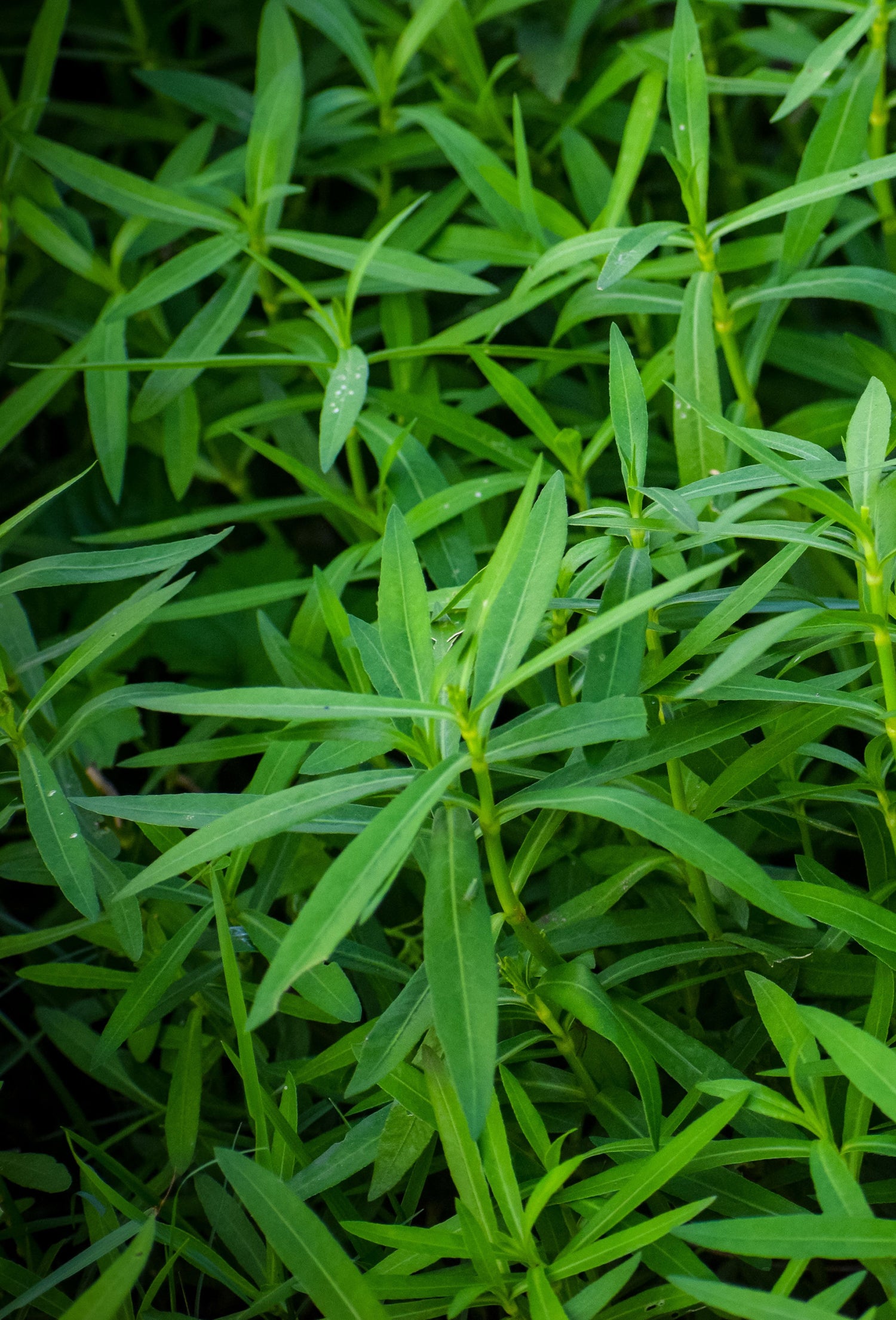
Tarragon “Signature” Oil
Tarragon “Signature” Oil
FREE US shipping over $120. Order within 4 hrs 25 mins for delivery Friday, November 6 – November 9

 Fresh fennel sweetness plus sharp green edge.
Liquorice warmth with peppery herbal bite.
Sweet anise meets bitter green in perfect clash.
Couldn't load pickup availability
Variety: Artemisia dracunculus Classification: Heart Note[i]
Tarragon oil is a wonderful herb with a distinctive anise note. It is indispensible in Chypre fragrances and was found in the original (formula below). Our signature Hungarian tarragon is lively and fresh; a must have oil.
According to Steffen Arctander: “Tarragon (estragon) is a colorless, or very pale yellow to greenish-yellow liquid, with a sweet-anisic, green-spicy, slightly celery-like odor, very similar to that of the fresh herb.
Tarragon (Estragon) is used in perfumery, usually in trace amounts, in Chypre, l’Origan types, Fougères, lilac bases, green floral bases, etc.
Blends well with galbanum, lavender, vanilla, cardamom, clovebud, oakmoss.”
Origin: Hungary
Part: Leaves
Method: Steam distillation
- Country of Origin
- France
- IFRA 51
- 0.018% in finished product (Cat. 4)
- Odour Family
- Aromatic
- Appearance
- Colourless liquid
- Longevity
- Lasts 14 hours on a smelling strip.
- INCI Name
- ARTEMISIA DRACUNCULUS OIL
Tarragon oil delivers a powerful sweet-anisic aroma reminiscent of fennel and liquorice, balanced by intense bitter-green herbaceous notes and subtle peppery spice.
Essential modifier for fougère and chypre structures, adds fresh complexity to aromatic compositions.
Fraterworks® is strictly a reseller of this product and is neither an agent nor official distributor for Payan Bertrand, and is not affiliated with or endorsed by them.
General Information
General Information
Like most suppliers and makers of quality raw materials for fragrances, we do not filter many of our products. This ensures that no odiferous matter is lost prior to use but can result in the appearance of small particles or slight clouding.
All alcoholic fragrances should be macerated for up to a month and then chilled in a moderate freezer overnight before being filtered fine. This will remove all cloudiness or detritus and is the industry norm.
IFRA Standards
IFRA Standards
Permitted amounts in finished product:
IFRA 51: 0.018%
IFRA 49: 0.525%
These are derived from calculated concentrations which do not replace chromatographic quantification on individual lots. Disclaimer...
For Trade Use Only
For Trade Use Only
Our products are intended as building blocks in the perfume creation process; they are not to be applied to the skin undiluted.
These raw materials are for use by the perfumery trade only.


Usage in Perfumery
Tarragon “Signature” Oil appears in 4% of the perfumes we have analysed, at a median of 0.15% of the concentrate.
- Odour
- Spicy, sweet, anise, green, basil
- Family
- Aromatic
- Common dilutions
- 10%
- Substantivity
- 14 hours on a smelling strip
Free formulasZen Original (1%), Tabu (1%), Jicky 1889 (0.75%), Poison (0.51%), Eau de Protection (0.41%), Old Spice (0.4%), L’Heure Bleue (0.4%), Eau de Coty (0.4%), 1000 Reimagined (0.35%), Cypria 986749 (0.35%), Femme Fatale (0.35%), Jacqui 618320 (0.3%), Safari Men (0.3%), Patou Pour Homme (0.289%), L'Origan (0.231%), F*** Fabulous (0.15%), Amrita (0.15%), Chypre (0.117%), Shocking (0.11%)
Creative FormulasUn Jardin Sur Le Nil (0.1–10%)
Also known by 39 other names
artemisia aromatica absolute; artemisia aromatica herb oil; artemisia dracunculina absolute; artemisia dracunculina herb oil; artemisia dracunculoides absolute; artemisia dracunculoides herb oil; artemisia dracunculoides var. dracunculina absolute; artemisia dracunculoides var. dracunculina herb oil; artemisia dracunculus absolute; artemisia dracunculus subsp. dracunculina absolute; artemisia dracunculus subsp. dracunculina herb oil; artemisia glauca absolute; artemisia glauca herb oil; artemisia glauca var. megacephala absolute; artemisia glauca var. megacephala herb oil; essential oil obtained from the whole herbs of the tarragon, artemisia dracunculus l., compositae; estragon (tarragon) oil; estragon essential oil; estragon oil; estragon oil FCC; oligosporus dracunculus absolute; oligosporus dracunculus herb oil; tarragon "pays" EO; tarragon "pays" EO 03; tarragon absolute; tarragon absolute (for fragrance) (Robertet); tarragon EO; tarragon EO italy; tarragon ess. oil (for fragrance) (Robertet); tarragon essential oil; tarragon france EO; tarragon herb oil; tarragon low methyleugenol EO; tarragon oil; tarragon oil (artemisia dracunculus); tarragon oil france; tarragon oil italy; tarragon oil spain organic; tarragon select 01
Statistics drawn from published GCMS analyses, commercial and demonstration formulas. References to third-party perfumes, brand names and trade marks are solely for identification and comparison. Formulas not made, supplied, licensed, authorised, sponsored or endorsed by the manufacturer or trade mark owner.
What Tarragon is made of
A Fraterworks analysis of the published chemical compositions of Artemisia dracunculus L, showing the median and observed range of each constituent across 26 studies.
Fraterworks Composition Combined from 26 published analyses — median and observed range
| Constituent | CAS | Median | Range |
|---|---|---|---|
| Methyl chavicol | 140-67-0 | 60% | 0.06–80.02% |
| beta-Ocimene (total isomers) | 3338-55-4 | 13.59% | 0.55–29.2% |
| 5-Phenyl-1,3-pentadiyne | 11.7% | 11.7% | |
| beta-Ocimene | 13877-91-3 | 11.33% | 10–12.65% |
| Capillene | 520-74-1 | 4.8% | 4.8% |
| Elemicin | 487-11-6 | 4.35% | 0.05–60% |
| Hexadecanoic acid | 57-10-3 | 4.1% | 4.1% |
| alpha-Bergamotene | 17699-05-7 | 2.6% | 2.6% |
| Citronellyl formate | 105-85-1 | 2.25% | 2.25% |
| Sabinene | 3387-41-5 | 2% | 0.05–48.6% |
| Limonene | 138-86-3 | 1.9% | 0.13–4.65% |
| alpha-Himachalene | 3853-83-6 | 1.59% | 1.59% |
| Isobornyl acetate | 125-12-2 | 1.35% | 0.14–2.55% |
| beta-Elemene | 515-13-9 | 1.25% | 1.25% |
| Terpinen-4-ol | 562-74-3 | 1.11% | 0.02–3.95% |
| Oleic acid | 112-80-1 | 1.1% | 1.1% |
| Citronellyl acetate | 150-84-5 | 0.89% | 0.01–2.77% |
| Methyl eugenol | 93-15-2 | 0.82% | 0.03–28.87% |
| Methyl isoeugenol | 93-16-3 | 0.82% | 0.05–2.86% |
| Geranyl acetate | 105-87-3 | 0.8% | 0.45–1.47% |
| beta-Farnesene (total isomers) | 28973-97-9 | 0.65% | 0.36–0.94% |
| Sesquiterpene hydrocarbons (unknown) | 0.64% | 0.64% | |
| gamma-Terpinene | 99-85-4 | 0.575% | 0.01–17.01% |
| alpha-Pinene | 80-56-8 | 0.51% | 0.03–1.8% |
| Myrcene | 123-35-3 | 0.505% | 0.1–2.69% |
| Dodecanoic acid | 143-07-7 | 0.5% | 0.5% |
| Linoleic acid | 2197-37-7 | 0.5% | 0.5% |
| Nerolidol (unknown isomer) | 7212-44-4 | 0.48% | 0.48% |
| alpha-Copaene | 3856-25-5 | 0.46% | 0.46% |
| Sabinene hydrate (total isomers) | 17699-16-0 | 0.45% | 0.14–0.77% |
| Germacrene D | 23986-74-5 | 0.44% | 0.1–1.1% |
| Camphor | 76-22-2 | 0.4% | 0.4% |
| Methyl geranate | 2349-14-6 | 0.4% | 0.4% |
| alpha-Terpinene | 99-86-5 | 0.335% | 0.01–0.88% |
| Citronellol | 106-22-9 | 0.31% | 0.01–2.1% |
| (E)-Anethole | 4180-23-8 | 0.3% | 0.3% |
| 1,3-Octadiene | 1002-33-1 | 0.3% | 0.3% |
| alpha-Bisabolol | 515-69-5 | 0.3% | 0.3% |
| Eugenol | 97-53-0 | 0.29% | 0.1–0.6% |
| alpha-Terpineol | 98-55-5 | 0.25% | 0.12–2.1% |
| Caryophyllene oxide | 1139-30-6 | 0.24% | 0.2–4.2% |
| Terpinolene | 586-62-9 | 0.23% | 0.04–25.4% |
| (E)-Nerolidol | 40716-66-3 | 0.22% | 0.08–0.36% |
| alpha-Humulene | 6753-98-6 | 0.22% | 0.04–3.5% |
| alpha-Farnesene (total isomers) | 28973-98-0 | 0.215% | 0.16–0.27% |
| 1,8-Cineole | 470-82-6 | 0.21% | 0.01–7% |
| beta-Bourbonene | 5208-59-3 | 0.21% | 0.21% |
| Isoelemicin (total isomers) | 5273-85-8 | 0.205% | 0.02–17.48% |
| Alloocimene (unknown isomer) | 673-84-7 | 0.2% | 0.02–0.43% |
| beta-Phellandrene | 555-10-2 | 0.2% | 0.1–13.1% |
| para-Cymene | 99-87-6 | 0.2% | 0.01–7% |
| beta-Pinene | 127-91-3 | 0.195% | 0.08–2% |
| (E)-4-Hexenol | 928-92-7 | 0.18% | 0.18% |
| T-Cadinol | 5937-11-1 | 0.165% | 0.11–0.22% |
| Methyl cinnamate (total isomers) | 103-26-4 | 0.145% | 0.04–0.25% |
| Cinnamyl acetate | 103-54-8 | 0.14% | 0.14% |
| p-Menth-2-en-1-ol (total isomers) | 29803-81-4 | 0.135% | 0.09–0.18% |
| (Z)-3-Hexenyl acetate | 3681-71-8 | 0.125% | 0.02–0.23% |
| beta-Caryophyllene | 87-44-5 | 0.125% | 0.08–1.5% |
| alpha-Cadinol | 481-34-5 | 0.12% | 0.02–0.22% |
| delta-Cadinene | 483-76-1 | 0.11% | 0.11% |
| p-Methoxycinnamaldehyde | 1963-36-6 | 0.105% | 0.1–0.11% |
| alpha-Phellandrene | 99-83-2 | 0.1% | 0.01–2.4% |
| Fenchone | 1195-79-5 | 0.1% | 0.1% |
| Linalool | 78-70-6 | 0.1% | 0.03–1.85% |
| Menthone | 0.1% | 0.02–0.25% | |
| Rose oxide (total isomers) | 876-17-5 | 0.09% | 0.09% |
| (E,E)-alpha-Farnesene | 502-61-4 | 0.09% | 0.09% |
| 1,5-Menthadienol-7 | 19876-45-0 | 0.09% | 0.08–0.1% |
| alpha-Thujone | 546-80-5 | 0.09% | 0.09% |
| beta-Thujone | 471-15-8 | 0.09% | 0.09% |
| gamma-Elemene | 30824-67-0 | 0.09% | 0.09% |
| (E)-Cinnamyl alcohol | 4407-36-7 | 0.08% | 0.08% |
| Carvacrol | 99-75-2 | 0.08% | 0.08% |
| Germacrene B | 15423-57-1 | 0.08% | 0.08% |
| Nerol | 106-25-2 | 0.08% | 0.03–0.21% |
| Camphene | 79-92-5 | 0.075% | 0.04–0.4% |
| Geraniol | 106-24-1 | 0.065% | 0.04–0.19% |
| beta-Bisabolene | 495-61-4 | 0.06% | 0.06% |
| (E)-2-Hexenal | 6728-26-3 | 0.05% | 0.03–0.06% |
| Alloocimene (total isomers) | 3016-19-1 | 0.05% | 0.03–0.38% |
| Neryl acetate | 141-12-8 | 0.05% | 0.05% |
| (E)-Methyl isoeugenol | 6379-72-2 | 0.04% | 0.04% |
| cis-Carveol | 1197-06-4 | 0.04% | 0.04% |
| Citronellal | 106-23-0 | 0.04% | 0.04% |
| Farnesol (unknown isomer) | 4602-84-0 | 0.04% | 0.04–0.11% |
| Isomenthone | 491-07-6 | 0.04% | 0.03–0.05% |
| Ylangene | 14912-44-8 | 0.04% | 0.04% |
| Borneol | 507-70-0 | 0.035% | 0.02–0.25% |
| Bornyl acetate | 76-49-3 | 0.035% | 0.02–0.05% |
| Geranial | 141-27-5 | 0.03% | 0.01–0.05% |
| Pulegone | 15932-80-6 | 0.03% | 0.03% |
| (E)-beta-Ionone | 79-77-6 | 0.02% | 0.02% |
| alpha-Cubebene | 17699-14-8 | 0.02% | 0.01–0.03% |
| Menthol | 89-78-1 | 0.02% | 0.02–0.52% |
| Methyl salicylate | 119-36-8 | 0.02% | 0.02% |
| Perilla aldehyde | 2111-75-3 | 0.02% | 0.02% |
| alpha-Thujene | 3917-48-4 | 0.015% | 0.01–0.94% |
| delta-3-Carene | 13466-78-9 | 0.015% | 0.01–0.02% |
| 7-Methoxycoumarin | 531-59-9 | 0.01% | 0.01% |
Tarragon 1Vostrowsky, O., et al., Chemical Composition of Estragon oil, Z. Lebensmittel-Unters.u.-Forsch., Vol. 173, 365-367, (1981)
- Sabinene3387-41-538.81%
- Methyl eugenol 93-15-228.87%
- Methyl chavicol140-67-017.26%
- Myrcene123-35-31.62%
- Methyl isoeugenol93-16-31.15%
- Citronellyl acetate150-84-50.89%
- alpha-Terpinene 99-86-50.5%
- Geranyl acetate105-87-30.45%
- Elemicin 487-11-60.34%
- Terpinolene586-62-90.26%
- alpha-Thujene 3917-48-40.16%
- Cinnamyl acetate103-54-80.14%
- Bornyl acetate 76-49-30.05%
- alpha-Pinene80-56-80.03%
Tarragon (Cuba)Pino, J.A., et al., Chemical Composition of the Essential Oil of Artemisia dracunculus L. from Cuba, J. Essent. Oil Res., Vol. 8, 563-564 (Sep/Oct 1996)
- Elemicin 487-11-653.03%
- Methyl eugenol 93-15-217.61%
- Sabinene3387-41-54.53%
- Terpinen-4-ol562-74-33.95%
- Isoelemicin 487-12-72.6%
- Citronellol106-22-92.1%
- gamma-Terpinene99-85-42%
- alpha-Himachalene 3853-83-61.59%
- alpha-Thujene 3917-48-40.94%
- alpha-Terpinene 99-86-50.88%
- para-Cymene 99-87-60.88%
- beta-Phellandrene 555-10-20.77%
- beta-Pinene127-91-30.73%
- Terpinolene586-62-90.54%
- beta-Caryophyllene87-44-50.51%
- Methyl chavicol140-67-00.49%
- trans-Sabinene hydrate 17699-16-00.43%
- cis-Sabinene hydrate 15537-55-00.34%
- (Z)-beta-Farnesene 28973-97-90.34%
- (Z)-beta-Ocimene 3338-55-40.3%
- alpha-Humulene 6753-98-60.29%
- (E,Z)-alpha-Farnesene 28973-98-00.27%
- (E)-beta-Ocimene 3779-61-10.25%
- alpha-Pinene80-56-80.21%
- Linalool78-70-60.14%
- alpha-Phellandrene 99-83-20.13%
- alpha-Terpineol98-55-50.12%
- delta-Cadinene 483-76-10.11%
- Menthone 0.1%
- Carvacrol99-75-20.08%
- (E)-Cinnamyl alcohol 4407-36-70.08%
- cis-Rose oxide 876-17-50.07%
- Geranial 141-27-50.05%
- Ylangene 14912-44-80.04%
- Isomenthone 491-07-60.03%
- Perilla aldehyde 2111-75-30.02%
- Bornyl acetate 76-49-30.02%
- alpha-Cubebene 17699-14-80.02%
- (E)-beta-Farnesene 18794-84-80.02%
- trans-Rose oxide 876-18-60.02%
- Methyl salicylate119-36-80.02%
- alpha,p-Dimethylstyrene 1195-32-00.01%
Tarragon (Italy) 1Tateo, F., Santamaria, L., Bianchi, L. and Bianchi, A., Basil Oil and Tarragon Oil: Composition and Genotoxicity Evaluation, J. Ess. Oil Res., Vol. 1, 111-118, (May/June 1989)
- Methyl chavicol140-67-060.46%
- gamma-Terpinene99-85-417.01%
- (Z)-beta-Ocimene 3338-55-413.54%
- Limonene138-86-34.65%
- alpha-Pinene80-56-81.44%
- Sesquiterpene hydrocarbons (unknown) 0.64%
- Methyl eugenol 93-15-20.51%
- Eugenol97-53-00.3%
- Myrcene123-35-30.25%
- beta-Pinene127-91-30.19%
- Sabinene3387-41-50.14%
- Cinnamyl acetate103-54-80.14%
- Menthone 0.14%
- Camphene 79-92-50.11%
- p-Methoxycinnamaldehyde1963-36-60.11%
- alpha-Thujone 546-80-50.09%
- beta-Thujone 471-15-80.09%
- Linalool78-70-60.03%
- alpha-Thujene 3917-48-40.01%
Tarragon (USA) 1Tucker, A.O., and Maciarello, M.J., Plant Identification (oil from fresh leaves), In: Proceedings of the First National Herb Growing and Marketing Conference, Eds. J.E. Simon and L. Grant, Purdue Univ. Press, West Lafayette IN (1987), pp 126-172
- Methyl chavicol140-67-080.02%
- (E)-beta-Ocimene 3779-61-17%
- (Z)-beta-Ocimene 3338-55-46.59%
- Limonene138-86-32.53%
- alpha-Pinene80-56-80.59%
- Methyl eugenol 93-15-20.48%
- gamma-Terpinene99-85-40.47%
- Eugenol97-53-00.26%
- Myrcene123-35-30.12%
- Methyl isoeugenol93-16-30.12%
- beta-Pinene127-91-30.09%
- Sabinene3387-41-50.08%
- Linalool78-70-60.06%
- Elemicin 487-11-60.05%
- Camphene 79-92-50.04%
- Geraniol106-24-10.04%
- Terpinolene586-62-90.04%
- Nerol106-25-20.03%
- trans-Alloocimene 3016-19-10.03%
- Terpinen-4-ol562-74-30.02%
- 1,8-Cineole470-82-60.02%
- trans-Isoelemicin 5273-85-80.02%
- alpha-Thujene 3917-48-40.01%
- alpha-Phellandrene 99-83-20.01%
- alpha-Terpinene 99-86-50.01%
- para-Cymene 99-87-60.01%
- Citronellyl acetate150-84-50.01%
- cis-Alloocimene 7216-56-00.01%
Tarragon (USA) 2Tucker, A.O., and Maciarello, M.J., Plant Identification (oil from dried leaves), In: Proceedings of the First National Herb Growing and Marketing Conference, Eds. J.E. Simon and L. Grant, Purdue Univ. Press, West Lafayette IN (1987), pp. 126-172
- Methyl chavicol140-67-059.77%
- (E)-beta-Ocimene 3779-61-110%
- (Z)-beta-Ocimene 3338-55-49.33%
- Limonene138-86-33.97%
- alpha-Pinene80-56-81.34%
- Methyl eugenol 93-15-20.82%
- Methyl isoeugenol93-16-30.82%
- Elemicin 487-11-60.74%
- gamma-Terpinene99-85-40.55%
- Eugenol97-53-00.54%
- Nerol106-25-20.21%
- Myrcene123-35-30.2%
- Geraniol106-24-10.19%
- beta-Pinene127-91-30.14%
- Sabinene3387-41-50.11%
- Linalool78-70-60.06%
- Terpinolene586-62-90.05%
- Camphene 79-92-50.04%
- trans-Alloocimene 3016-19-10.04%
- Terpinen-4-ol562-74-30.03%
- 1,8-Cineole470-82-60.02%
- Citronellyl acetate150-84-50.02%
- trans-Isoelemicin 5273-85-80.02%
- alpha-Thujene 3917-48-40.01%
- alpha-Phellandrene 99-83-20.01%
- alpha-Terpinene 99-86-50.01%
- para-Cymene 99-87-60.01%
- cis-Alloocimene 7216-56-00.01%
Tarragon (France) 2Baritaux, O., et al., Sechage et conservation des plantes aromatiques, Rivista Ital. EPPOS, (Numero speciale), 416-426 (1992)
- Methyl chavicol140-67-073.2%
- (E)-beta-Ocimene 3779-61-113.5%
- (Z)-beta-Ocimene 3338-55-410%
- Limonene138-86-31.8%
- Methyl eugenol 93-15-20.7%
- alpha-Pinene80-56-80.4%
- Eugenol97-53-00.3%
Tarragon (France) 3Piccaglia, R., et al., Antibacterial and antioxidant properties of Mediterranean aromatic plants, Indust. Crops Products, (2), 47-50 (1993)
- Methyl chavicol140-67-077.5%
- (Z)-beta-Ocimene 3338-55-47%
- (E)-beta-Ocimene 3779-61-17%
- alpha-Pinene80-56-81.5%
Tarragon 2Werker, E., et al., Glandular hairs, secretory cavities and essential oils in leaves of tarragon (Artemisia dracunculus L.) (analysis of hydrodist. oil of whole leaf), J. Herbs, Spices Med. Plants, Vol 2 (3), 19-32 (1994)
- Methyl chavicol140-67-077%
- (E)-beta-Ocimene 3779-61-19%
- (Z)-beta-Ocimene 3338-55-48.1%
- Limonene138-86-32.5%
- gamma-Terpinene99-85-40.9%
- Eugenol97-53-00.5%
- Methyl eugenol 93-15-20.5%
- Nerol106-25-20.2%
- Elemicin 487-11-60.2%
- Myrcene123-35-30.1%
- Geraniol106-24-10.1%
- Terpinen-4-ol562-74-30.1%
- Linalool78-70-60.1%
- para-Cymene 99-87-60.1%
- beta-Pinene127-91-30.1%
- alpha-Pinene80-56-80.05%
- Camphene 79-92-50.05%
- Sabinene3387-41-50.05%
- alpha-Terpinene 99-86-50.05%
- Terpinolene586-62-90.05%
- 1,8-Cineole470-82-60.05%
Tarragon (Japan) 1Tomitaka, Y., Kimura, M., Asano, K., and Boo H-O, Morphological characters and the essential oil in Artemisia dracunculus (French tarragon) and A. dracunculoides (Russian tarragon), J. Agric. Sci. Tokyo Nogyo Daigaku, Vol. 41, 229-238 (1997)
- Methyl chavicol140-67-074.46%
- beta-Ocimene13877-91-310%
- gamma-Terpinene99-85-48.89%
- Limonene138-86-32.26%
- Methyl eugenol 93-15-20.79%
- alpha-Pinene80-56-80.51%
- Eugenol97-53-00.28%
- Germacrene D 23986-74-50.28%
- Elemicin 487-11-60.28%
- Methyl cinnamate103-26-40.25%
- Alloocimene (unknown isomer) 673-84-70.17%
- (Z,Z)-alpha-Farnesene 28973-99-10.16%
- Isobornyl acetate125-12-20.14%
- Myrcene123-35-30.13%
- beta-Pinene127-91-30.09%
- Terpinolene586-62-90.09%
- (E,E)-alpha-Farnesene502-61-40.09%
- Sabinene3387-41-50.06%
- Camphene 79-92-50.05%
- Linalool78-70-60.04%
Tarragon (Italy) 2Zani, F., et al., Studies on the genotoxic properties of essential oils with Bacillus subti-lis re-assay and Salmonella/microsome reversion assay, Planta Med., Vol. 57, 237-241 (1991)
- Methyl chavicol140-67-077.5%
- 1,8-Cineole470-82-66.88%
- gamma-Terpinene99-85-45.69%
- para-Cymene 99-87-62.47%
- alpha-Pinene80-56-81%
- Methyl eugenol 93-15-20.53%
- Eugenol97-53-00.28%
Tarragon (France) 4Montagut, A., et al.,, Influence des procedes de conservation (deshydratation et surgelation) surla teneur en huile essentielle et le profil aromatique de l'estragon, Bull. Soc. Pharm. Bordeaux, Vol. 134, 99-106 (1995)
- Methyl chavicol140-67-077%
- (E)-beta-Ocimene 3779-61-110%
- (Z)-beta-Ocimene 3338-55-49%
- Limonene138-86-32%
Tarragon (France) 5Bourrel, C., Vilarem, G., Michel, G., and Gaset, A.,, Etude des proprietes basteriostatiques et fongistatiques en milieu solide de 24 huiiles essentielles preamblement analysees, Rivista Ital. EPPOS, No. 16, 3-12 (1995)
- Methyl chavicol140-67-070.7%
- Caryophyllene oxide1139-30-64.2%
- Hexadecanoic acid57-10-34.1%
- Limonene138-86-32.7%
- Methyl eugenol 93-15-21.7%
- Oleic acid 112-80-11.1%
- Eugenol97-53-00.6%
- Dodecanoic acid 143-07-70.5%
- Linoleic acid 2197-37-70.5%
- alpha-Pinene80-56-80.3%
- beta-Pinene127-91-30.3%
- (E)-Anethole4180-23-80.3%
- para-Cymene 99-87-60.2%
- Linalool78-70-60.2%
Tarragon (Lithuania) 1aVenskutonis, P.R.,, Essential oil composition of some herbs cultivated in Lithuania (plants imported from Georgia), Proceedings of the 13th International Congress of Flavours, Fragrances and Essential Oils, Istanbul, Turkey, October 1995. Edit. K.H.C. Baser, Vol. 2, pp. 108-123, Anadolu Univ. Press, Eskisehir, Turkey (1995); Flavour Science, Recent Developments 46-51,
- Methyl chavicol140-67-079.3%
- (E)-beta-Ocimene 3779-61-16.2%
- (Z)-beta-Ocimene 3338-55-45.5%
- Limonene138-86-31.5%
- Sabinene3387-41-51.1%
- alpha-Pinene80-56-80.5%
- Elemicin 487-11-60.5%
- Methyl eugenol 93-15-20.4%
- Caryophyllene oxide1139-30-60.24%
- Terpinolene586-62-90.2%
- beta-Phellandrene 555-10-20.2%
- Terpinen-4-ol562-74-30.1%
- beta-Caryophyllene87-44-50.1%
- Fenchone 1195-79-50.1%
- Germacrene D 23986-74-50.1%
- Isoelemicin 487-12-70.1%
- (E)-2-Hexenal 6728-26-30.05%
- Farnesol (unknown isomer)4602-84-00.04%
- cis-Carveol 1197-06-40.04%
- Geranial 141-27-50.01%
Tarragon (Italy) 3Antonelli, A., and Fabbri, C.,, Essential oils: SPE fractionation, Chromatographia, Vol. 49, 125.130 (1999)
- Methyl chavicol140-67-075.07%
- (Z)-beta-Ocimene 3338-55-49.19%
- (E)-beta-Ocimene 3779-61-18.97%
- Limonene138-86-33.03%
- alpha-Pinene80-56-80.94%
- Methyl eugenol 93-15-20.46%
- Myrcene123-35-30.17%
- Eugenol97-53-00.16%
- trans-Alloocimene 3016-19-10.13%
- beta-Pinene127-91-30.12%
- Linalool78-70-60.1%
- p-Methoxycinnamaldehyde1963-36-60.1%
- beta-Caryophyllene87-44-50.09%
- Sabinene3387-41-50.08%
- Camphene 79-92-50.06%
- Terpinolene586-62-90.05%
- Methyl (E)-cinnamate1754-62-70.04%
- 1,8-Cineole470-82-60.01%
- 7-Methoxycoumarin 531-59-90.01%
Tarragon (USA) 6Lawrence, B.M.,, Analysis by GC and GC/MS of an oil of French tarragon produced in North Carolina, Perf. Flav., Vol. 27, 54 (Jan/Feb 2002)
- Methyl chavicol140-67-070%
- (E)-beta-Ocimene 3779-61-110%
- (Z)-beta-Ocimene 3338-55-49%
- Terpinolene586-62-96%
- Limonene138-86-33%
- alpha-Pinene80-56-81%
- Elemicin 487-11-60.33%
- cis-Alloocimene 7216-56-00.31%
- Myrcene123-35-30.18%
- trans-Isoelemicin 5273-85-80.15%
- beta-Pinene127-91-30.14%
- Eugenol97-53-00.12%
- Linalool78-70-60.1%
- Nerol106-25-20.1%
- Geraniol106-24-10.09%
- Camphene 79-92-50.08%
- Sabinene3387-41-50.08%
- Terpinen-4-ol562-74-30.08%
- beta-Caryophyllene87-44-50.08%
- Citronellyl acetate150-84-50.07%
- trans-Alloocimene 3016-19-10.07%
- para-Cymene 99-87-60.06%
- (E)-Methyl isoeugenol 6379-72-20.04%
- Methyl eugenol 93-15-20.03%
Tarragon (Poland) 2a leafOlsezewska-Kaczynska, I., and Jaroszewska, I.,, Chemical differences between tarragon cultivated in Poland and French tarragon, Herba Pol., Vol. 45 (3), 173-178 (1999)
- Methyl chavicol140-67-060%
- Elemicin 487-11-67.5%
- para-Cymene 99-87-67%
- 1,8-Cineole470-82-67%
- Limonene138-86-34.5%
- beta-Pinene127-91-32%
- alpha-Pinene80-56-81.8%
- Myrcene123-35-30.7%
- alpha-Terpineol98-55-50.25%
- Linalool78-70-60.2%
- beta-Caryophyllene87-44-50.15%
- alpha-Humulene 6753-98-60.15%
- Camphene 79-92-50.12%
- Menthone 0.1%
- alpha-Terpinene 99-86-50.05%
- gamma-Terpinene99-85-40.05%
- Borneol 507-70-00.03%
Tarragon (Poland) 3a root/rhizomeOlsezewska-Kaczynska, I., and Jaroszewska, I.,, Chemical differences between tarragon cultivated in Poland and French tarragon, Herba Pol., Vol. 45 (3), 173-178 (1999)
- Elemicin 487-11-657.5%
- Methyl chavicol140-67-04.5%
- alpha-Terpineol98-55-52.1%
- beta-Caryophyllene87-44-51.5%
- Myrcene123-35-30.65%
- para-Cymene 99-87-60.4%
- Limonene138-86-30.4%
- 1,8-Cineole470-82-60.4%
- beta-Pinene127-91-30.2%
- Sabinene3387-41-50.2%
- alpha-Pinene80-56-80.15%
- Linalool78-70-60.15%
- Camphene 79-92-50.1%
- alpha-Humulene 6753-98-60.05%
- alpha-Terpinene 99-86-50.04%
- Borneol 507-70-00.02%
- Menthone 0.02%
- gamma-Terpinene99-85-40.01%
Tarragon (USA) 3Tucker, A.O., and Maciarello, M.J., Plant Identification (average concentrations of oils from fresh & dried leaves from clone 1), In: Proceedings of the First National Herb Growing and Marketing Conference, Eds. J.E. Simon and L. Grant, Purdue Univ. Press, West Lafayette IN (1987), pp 126-172
- Sabinene3387-41-546.87%
- trans-Isoelemicin 5273-85-817.48%
- Methyl eugenol 93-15-28.27%
- (Z)-beta-Ocimene 3338-55-44.23%
- (E)-beta-Ocimene 3779-61-13.8%
- Methyl isoeugenol93-16-32.86%
- Terpinen-4-ol562-74-32.48%
- Myrcene123-35-32.45%
- Citronellyl acetate150-84-51.25%
- alpha-Terpinene 99-86-50.86%
- alpha-Pinene80-56-80.55%
- beta-Pinene127-91-30.53%
- Elemicin 487-11-60.52%
- Eugenol97-53-00.43%
- Terpinolene586-62-90.33%
- 1,8-Cineole470-82-60.21%
- Camphene 79-92-50.19%
- Limonene138-86-30.17%
- gamma-Terpinene99-85-40.1%
- Linalool78-70-60.1%
- Nerol106-25-20.06%
- Methyl chavicol140-67-00.06%
- Geraniol106-24-10.04%
- alpha-Phellandrene 99-83-20.03%
- para-Cymene 99-87-60.03%
- trans-Alloocimene 3016-19-10.02%
- alpha-Thujene 3917-48-40.01%
- cis-Alloocimene 7216-56-00.01%
Tarragon (USA) 4Tucker, A.O., and Maciarello, M.J., Plant Identification (average concentrations of oils from fresh & dried leaves from clone 2), In: Proceedings of the First National Herb Growing and Marketing Conference, Eds. J.E. Simon and L. Grant, Purdue Univ. Press, West Lafayette IN (1987), pp 126-172
- Elemicin 487-11-652.23%
- Sabinene3387-41-519.4%
- Methyl eugenol 93-15-27.77%
- (E)-beta-Ocimene 3779-61-15%
- (Z)-beta-Ocimene 3338-55-41.9%
- Citronellyl acetate150-84-51.8%
- Terpinen-4-ol562-74-31.47%
- Terpinolene586-62-91.41%
- Myrcene123-35-30.87%
- gamma-Terpinene99-85-40.3%
- alpha-Terpinene 99-86-50.27%
- trans-Isoelemicin 5273-85-80.26%
- Methyl chavicol140-67-00.21%
- Limonene138-86-30.13%
- alpha-Pinene80-56-80.12%
- Linalool78-70-60.11%
- 1,8-Cineole470-82-60.11%
- Eugenol97-53-00.1%
- beta-Pinene127-91-30.08%
- Camphene 79-92-50.07%
- alpha-Phellandrene 99-83-20.06%
- Nerol106-25-20.06%
- Methyl isoeugenol93-16-30.05%
- para-Cymene 99-87-60.04%
- trans-Alloocimene 3016-19-10.03%
- alpha-Thujene 3917-48-40.02%
- cis-Alloocimene 7216-56-00.02%
Tarragon (Japan) 2Tomikata, Y., Kimura, M., Asano, K., and Boo H-O.,, Morphological characters and the essential oil in Artemisia dracunculus (French tarragon) and A. dracunculoides (Russian tarragon), J. Agric. Sci. Tokyo Nogyo Daigaku, Vol. 41, 229-238 (1997)
- Sabinene3387-41-541.34%
- Elemicin 487-11-617.16%
- beta-Ocimene13877-91-312.65%
- gamma-Terpinene99-85-47.52%
- Methyl eugenol 93-15-26.27%
- Myrcene123-35-32.69%
- Citronellyl formate105-85-12.25%
- Geranyl acetate105-87-31.47%
- Terpinen-4-ol562-74-31.32%
- Germacrene D 23986-74-50.98%
- alpha-Terpinene 99-86-50.48%
- beta-Pinene127-91-30.42%
- Citronellol106-22-90.31%
- alpha-Pinene80-56-80.28%
- Alloocimene (unknown isomer) 673-84-70.23%
- (Z)-3-Hexenyl acetate3681-71-80.23%
- Terpinolene586-62-90.19%
- (E)-4-Hexenol 928-92-70.18%
- alpha-Terpineol98-55-50.16%
- Linalool78-70-60.15%
- trans-Sabinene hydrate 17699-16-00.14%
Tarragon (Poland) 1Kostrzewa, E., and Karawoska, K.,, Flavor and aroma components of tarragon plants cultivated in Poland, Pr. Inst. Lab. Badawe. Przem. Spozyw., Vol. 48, 43-57 (1993)
- Elemicin 487-11-642.98%
- Sabinene3387-41-57%
- Methyl chavicol140-67-06.88%
- Citronellyl acetate150-84-52.77%
- alpha-Bergamotene 17699-05-72.6%
- Isobornyl acetate125-12-22.55%
- Linalool78-70-61.85%
- Terpinen-4-ol562-74-31.63%
- alpha-Humulene 6753-98-61.28%
- beta-Elemene 515-13-91.25%
- gamma-Terpinene99-85-41.15%
- (E)-beta-Farnesene 18794-84-80.94%
- Geranyl acetate105-87-30.8%
- alpha-Pinene80-56-80.71%
- Isoelemicin 487-12-70.71%
- alpha-Terpinene 99-86-50.63%
- alpha-Phellandrene 99-83-20.6%
- Limonene138-86-30.54%
- Menthol89-78-10.52%
- Nerolidol (unknown isomer)7212-44-40.48%
- alpha-Copaene 3856-25-50.46%
- (E)-beta-Ocimene 3779-61-10.43%
- Alloocimene (unknown isomer) 673-84-70.43%
- beta-Pinene127-91-30.42%
- trans-Sabinene hydrate 17699-16-00.42%
- Myrcene123-35-30.36%
- Menthone 0.22%
- (Z)-beta-Ocimene 3338-55-40.22%
- beta-Bourbonene 5208-59-30.21%
- para-Cymene 99-87-60.2%
- Terpinolene586-62-90.2%
- alpha-Thujene 3917-48-40.13%
- Isomenthone 491-07-60.05%
- Geraniol106-24-10.04%
- cis-Sabinene hydrate 15537-55-00.03%
- Citronellol106-22-90.01%
Tarragon (Lithuania) 1bVenskutonis, P.R., et al.,, Essential oil composition of some herbs cultivated in Lithuania (plants imported from Danmark), Proceedings of the 13th International Congress of Flavours, Fragrances and Essential Oils, Istanbul, Turkey, October 1995. Edit. K.H.C. Baser, Vol. 2, pp. 108-123, Anadolu Univ. Press, Eskisehir, Turkey (1995); Flavour Science, Recent Development 46-51, C
- Sabinene3387-41-538.9%
- Methyl eugenol 93-15-218%
- Isoelemicin 487-12-713.7%
- (Z)-beta-Ocimene 3338-55-45.7%
- (E)-beta-Ocimene 3779-61-15.4%
- Terpinen-4-ol562-74-32%
- Elemicin 487-11-61.2%
- Germacrene D 23986-74-51.1%
- alpha-Terpinene 99-86-50.6%
- alpha-Pinene80-56-80.5%
- Limonene138-86-30.4%
- Methyl geranate 2349-14-60.4%
- (E)-Nerolidol 40716-66-30.36%
- Terpinolene586-62-90.3%
- Methyl chavicol140-67-00.3%
- alpha-Bisabolol515-69-50.3%
- T-Cadinol 5937-11-10.22%
- alpha-Cadinol 481-34-50.22%
- trans-p-Menth-2-en-1-ol 29803-81-40.11%
- alpha-Phellandrene 99-83-20.1%
- 1,5-Menthadienol-7 19876-45-00.1%
- beta-Phellandrene 555-10-20.1%
- beta-Caryophyllene87-44-50.1%
- gamma-Elemene 30824-67-00.09%
- cis-p-Menth-2-en-1-ol 29803-82-50.07%
- beta-Bisabolene 495-61-40.06%
- (E)-2-Hexenal 6728-26-30.06%
- Neryl acetate141-12-80.05%
- Farnesol (unknown isomer)4602-84-00.04%
- alpha-Humulene 6753-98-60.04%
- Citronellal106-23-00.04%
- Geranial 141-27-50.03%
- Pulegone 15932-80-60.03%
- Menthol89-78-10.02%
- (E)-beta-Ionone79-77-60.02%
- Alloocimene (unknown isomer) 673-84-70.02%
- (Z)-3-Hexenyl acetate3681-71-80.02%
- delta-3-Carene 13466-78-90.01%
- alpha-Cubebene 17699-14-80.01%
Tarragon (Lithuania) 1cVenskutonis, P.R.,, Essential oil composition of some herbs cultivated in Lithuania (plants imported from Siberia), Proceedings of the 13th International Congress of Flavours, Fragrances and Essential Oils, Istanbul, Turkey, October 1995. Edit. K.H.C. Baser, Vol. 2, pp. 108-123, Anadolu Univ. Press, Eskisehir, Turkey (1995); Flavour Science, Recent Developments 46-51,
- Sabinene3387-41-548.6%
- Elemicin 487-11-616.1%
- (E)-beta-Ocimene 3779-61-110.5%
- Terpinolene586-62-97.3%
- (Z)-beta-Ocimene 3338-55-41.9%
- Methyl eugenol 93-15-21.8%
- Limonene138-86-31.5%
- Terpinen-4-ol562-74-30.9%
- Methyl chavicol140-67-00.8%
- alpha-Pinene80-56-80.8%
- alpha-Terpinene 99-86-50.4%
- Caryophyllene oxide1139-30-60.2%
- Germacrene D 23986-74-50.2%
- Farnesol (unknown isomer)4602-84-00.11%
- T-Cadinol 5937-11-10.11%
- beta-Phellandrene 555-10-20.1%
- Isoelemicin 487-12-70.1%
- Fenchone 1195-79-50.1%
- beta-Caryophyllene87-44-50.1%
- alpha-Phellandrene 99-83-20.1%
- 1,5-Menthadienol-7 19876-45-00.08%
- (E)-Nerolidol 40716-66-30.08%
- Germacrene B 15423-57-10.08%
- trans-p-Menth-2-en-1-ol 29803-81-40.05%
- alpha-Humulene 6753-98-60.04%
- cis-Carveol 1197-06-40.04%
- cis-p-Menth-2-en-1-ol 29803-82-50.04%
- Geranial 141-27-50.03%
- alpha-Cubebene 17699-14-80.03%
- (E)-2-Hexenal 6728-26-30.03%
- delta-3-Carene 13466-78-90.02%
- Menthol89-78-10.02%
- alpha-Cadinol 481-34-50.02%
Tarragon (Poland) 2b leafOlsezewska-Kaczynska, I., and Jaroszewska, I.,, Chemical differences between tarragon cultivated in Poland and French tarragon, Herba Pol., Vol. 45 (3), 173-178 (1999)
- Elemicin 487-11-643.75%
- Sabinene3387-41-525%
- Methyl chavicol140-67-07%
- alpha-Humulene 6753-98-63.5%
- 1,8-Cineole470-82-62.5%
- para-Cymene 99-87-62%
- Myrcene123-35-31.85%
- beta-Caryophyllene87-44-50.8%
- gamma-Terpinene99-85-40.5%
- Limonene138-86-30.5%
- alpha-Pinene80-56-80.45%
- alpha-Terpineol98-55-50.4%
- Linalool78-70-60.3%
- alpha-Terpinene 99-86-50.25%
- Borneol 507-70-00.25%
- Menthone 0.25%
- Camphene 79-92-50.2%
- beta-Pinene127-91-30.2%
Tarragon (Poland) 3b root/rhizomeOlsezewska-Kaczynska, I., and Jaroszewska, I.,, Chemical differences between tarragon cultivated in Poland and French tarragon, Herba Pol., Vol. 45 (3), 173-178 (1999)
- Elemicin 487-11-660%
- Methyl chavicol140-67-021%
- Sabinene3387-41-52%
- para-Cymene 99-87-62%
- 1,8-Cineole470-82-61.7%
- Limonene138-86-31.5%
- alpha-Pinene80-56-80.6%
- alpha-Humulene 6753-98-60.42%
- beta-Caryophyllene87-44-50.4%
- alpha-Terpineol98-55-50.25%
- beta-Pinene127-91-30.2%
- gamma-Terpinene99-85-40.2%
- Linalool78-70-60.1%
- Menthone 0.1%
- Camphene 79-92-50.05%
- alpha-Terpinene 99-86-50.05%
- Borneol 507-70-00.04%
Tarragon (USA) 5Pappas, R.S., and Sturtz, G.,, Unusual Alkynes Found in the Essential Oil of Artemisia dracunculus L. var. dracunculus from the Pacific Northwest, J. Essent. Oil Res., Vol. 13, 187-188 (May/June 2001)
- Terpinolene586-62-925.4%
- (Z)-beta-Ocimene 3338-55-422.2%
- beta-Phellandrene 555-10-213.1%
- 5-Phenyl-1,3-pentadiyne 11.7%
- (E)-beta-Ocimene 3779-61-17%
- Methyl eugenol 93-15-27%
- Capillene 520-74-14.8%
- alpha-Phellandrene 99-83-22.4%
- Myrcene123-35-30.7%
- Germacrene D 23986-74-50.6%
- gamma-Terpinene99-85-40.6%
- para-Cymene 99-87-60.5%
- alpha-Pinene80-56-80.4%
- Camphene 79-92-50.4%
- alpha-Terpinene 99-86-50.4%
- Camphor76-22-20.4%
- 1,3-Octadiene 1002-33-10.3%
- beta-Pinene127-91-30.1%
- Linalool78-70-60.1%
- Methyl chavicol140-67-00.1%
Sources: Published studies indexed by Essential Oil University (EOUdb). Constituent harmonisation and calculations by Fraterworks.

Demonstration Formulas
Explore real-world examples showcasing the versatility and applications of our premium products. See the complete index.
Cypria 986749 — Classical Chypre
Zen Original — A Floral Chypre
Eau de Coty — A Classic Cologne
Old Spice — A Oriental Fougère
Eau de Protection — A Floral Fragrance
L’Heure Bleue — An Amber Floral Fragrance
* Disclaimer
Design Your Next Fragrance In 3 Simple Steps
Choose Your Ingredients
Select the weight and concentration that fit your needs.
Same Day Fulfilment
We pack and ship your order safely, worldwide.
Create & Formulate
Use your materials to craft unique fragrances.
Highest quality materials, for those who formulate without compromise.
Perfumery is an art shaped by curiosity, knowledge, and the pursuit of the exceptional.
We source not only the DNA of fragrance composition but also the rare, the distinctive, and the nearly unobtainable. With a deep understanding of the craft and a history rooted in expertise and fragrance making, we provide more than just ingredients, we offer inspiration, guidance, and access to a world of scent that few ever experience.
We Source, You Create.
The foundation of every great fragrance starts here.
We Select The Finest Materials
We source every ingredient from trusted producers and ensure unmatched quality.
We Ensure Effortless Blending
Our materials integrate smoothly into any formulation, from classics to modern creations.
We Enhance Depth And Performance
Each ingredient delivers rich olfactory nuances, longevity, and structural balance.

We Guarantee Transparency
We trace every material to its source and maintain full consistency in every batch.
We Supply Experts And Artisans
Professional perfumers and niche brands trust us for precision, reliability, and artistry.
We Meet All Industry Standards
Our materials comply with IFRA and EU 1223/2009 regulations for safety and quality.
General Disclaimer
(a) Vegan labelling: Where the word “vegan” is used in relation to our products, that indicates that we have not added any animal products to products marked vegan. We do not verify whether any third-party supplier has used animal additives prior to supplying a product to us. We provide products marked vegan “as is” and make no representation as to the accuracy, completeness, or reliability of that claim.
(b) Natural labelling: Where the word “natural” is used in relation to our products, that indicates that we have not added any synthetic additives to products marked natural. We do not verify whether any third-party supplier has used synthetic additives prior to supplying a product to us. We provide products marked natural “as is” and make no representation as to the accuracy, completeness, or reliability of that claim.
(c) Documentation: We provide the information contained in each document you obtain from us (including but not limited to SDS, IFRA certificate, COA, TDS, EU Allergens, and any other regulatory document) “as is” and make no representation as to its accuracy, completeness, or reliability. We provide no warranties or guarantees in relation to a document you obtain from us. You purchase and use a document or documents at your own risk. Any implied conditions or warranties are excluded and, to the extent that they cannot be excluded, any liability we have to you or any other person or entity in respect of a document you obtain from us is limited to NZD0.01 (one cent). You indemnify us against any loss we suffer or incur as a direct or indirect result of your use of a document you obtain from us.
(d) Demonstration formulas: Demonstration formulas are provided as a guide only. We provide no warranties or guarantees in relation to the formula. You access and use the formula at your own risk. These are independent Fraterworks reconstructions based on our own GCMS and olfactory analysis. They are not the manufacturers' original formulas and have not been supplied, authorised, licensed, sponsored or endorsed by the manufacturers. Brand and perfume names are used solely to identify the subject of the analysis and comparison. Any implied conditions or warranties are excluded and, to the extent that they cannot be excluded, any liability we have to you or any other person or entity in respect of the formula is limited to NZD0.01 (one cent). You indemnify us against any loss we suffer or incur as a direct or indirect result of your use of a formula.
Note: Wherever you are a professional perfumer or a hobbyist, we have what you need — from essential oils and absolutes, to bases, perfume chemicals (synthetics), bottles and more. We also offer compounding (contract blend), fragrance formulation, and an artisan lab visit for a guided smelling experience. Please note that we are not selling perfumes and that our materials are for use for perfume creation. We ship all around the world and have customer service that is second to none. We also stock educational kits and sample kits.
-
Regulations
DisclaimerAll of our products are compliant with EU 1223/2009 and the NZCPGS. None of our bases contain prohibited materials and regulatory compliance is possible depending on usage.
-
IFRA Conformity
All of our bases can be used in products requiring conformity with the latest IFRA standards. Fraterworks is an official member of IFRA and the FFAANZ.
-
Nitro Musks
Some of our products may contain small amounts of EU and IFRA compliant musk ketone. We never use musk xylene, musk ambrette or any other prohibited materials.
 Tarragon “Signature” Oil