

Petitgrain Bigarade Oil
Petitgrain Bigarade Oil
FREE US shipping over $120. Order within 6 hrs 2 mins for delivery Thursday, November 5 – November 9

 Classic bridge between citrus and florals.
Napoleon's favourite cologne ingredient.
The green soul of bitter orange trees.
Couldn't load pickup availability
🍊Citrus Suite | Essential Oils
CAS: 789957-91-5Variety: Citrus aurantium, (L) Classification: Top Note[i]
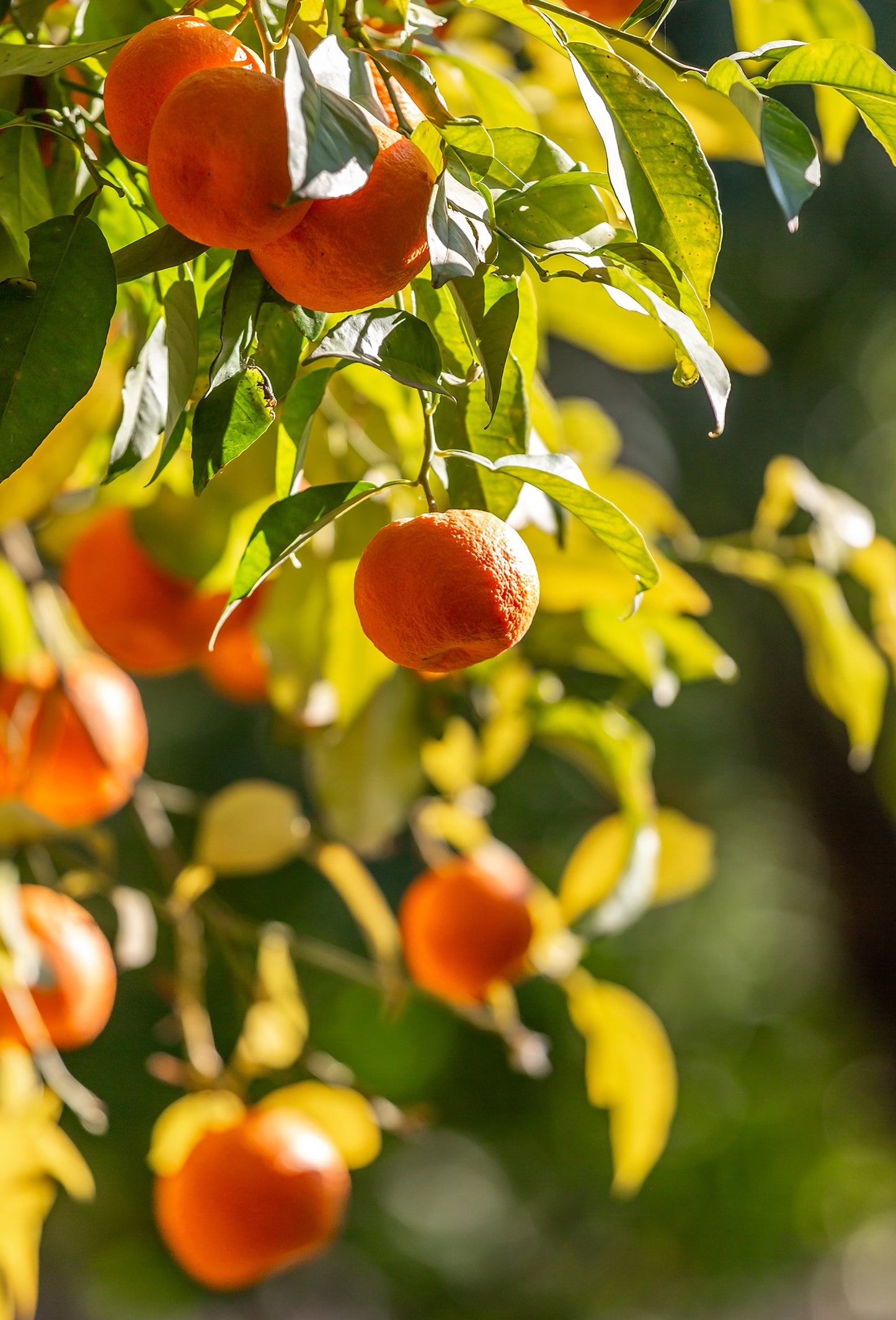
Petitgrain Bigarade is the extraction of the foliage from bitter orange trees (the fruit of which is used for classic Seville orange marmalade). Of all the petitgrain oils, this is probably the most widely used for fine fragrance.
This oil is extracted exclusively from the bitter orange tree making it the finest type, different from the lower quality so-called “Bigarade (Paraguay)” variants that flood the market. Petitgrain Paraguay is extracted from hybrid trees which cross the bitter orange with sweet (or other) varieties. Pure Petitgrain Bigarade is much more rare and considerably more beautiful.
Origin: Italy
Part: Foliage
Method: Steam distilled at source
- Country of Origin
- Italy
- IFRA 51
- 40% in finished product (Cat. 4)
- Odour Family
- Green
- Appearance
- Dark green liquid
- Longevity
- Lasts 4 hours on a smelling strip.
Petitgrain Bigarade Oil delivers a powerful burst of fresh, bitter-green citrus with distinctive floral neroli-like facets, followed by herbaceous, woody undertones that create a sophisticated, natural bridge between citrus and florals.
Essential bridge ingredient for cologne, fougère, and chypre structures; provides bitter-green lift and natural complexity.
Fraterworks® is strictly a reseller of this product and is neither an agent nor official distributor for Capua 1880, and is not affiliated with or endorsed by them.
General Information
General Information
Like most suppliers and makers of quality raw materials for fragrances, we do not filter many of our products. This ensures that no odiferous matter is lost prior to use but can result in the appearance of small particles or slight clouding.
All alcoholic fragrances should be macerated for up to a month and then chilled in a moderate freezer overnight before being filtered fine. This will remove all cloudiness or detritus and is the industry norm.
IFRA Standards
IFRA Standards
Permitted amounts in finished product:
IFRA 51: 40%
IFRA 49: 100%
These are derived from calculated concentrations which do not replace chromatographic quantification on individual lots. Disclaimer...
For Trade Use Only
For Trade Use Only
Our products are intended as building blocks in the perfume creation process; they are not to be applied to the skin undiluted.
These raw materials are for use by the perfumery trade only.
Usage in Perfumery
Petitgrain Bigarade Oil appears in 1% of the perfumes we have analysed, at a median of 1.1% of the concentrate.
- Odour
- Floral, green, orange, flower, citrus
- Family
- Green
- Substantivity
- 4 hours on a smelling strip
Free formulasPivet Pompeia (10%), Santa Maria Novella Caprifoglio (6.5%), Fougère Royale (6%), Terre d'Hermès (4%), Eau de Coty (4%), Patou Pour Homme (2.88%), Fougere Classique (2.5%), Après L'Ondée (2%), 1740 Marquis de Sade (2%), Aventus Vintage (1.5%), Cuir Cannage (1.2%), Helumt Lang Cologne (1%), Iris Gris (1%)
Creative Formulas212 Men (0.1–10%), 212 VIP Rosé, Aqva Pour Homme, At The Barber's, Au Coeur du Désert, Azaran, Black Opium Over Red, Black Opium, Black Saffron, Buongiorno, Cactus Garden, Carnal Flower, Cedro di Taormina, Chance EDP, Cipresso di Toscana, Code Parfum, Cologne Indélébile, Colonia Ebano, Colonia Pura, Colonia Sandalo, D. Homme Cologne, Daisy, Eau des Merveilles, Eau S. Parfum, Eidesis, Frenchy Lavande, Gardénia Antigua, Geranium Pour Monsieur, Grey Vetiver Parfum, Imitation Woman, Infusion d'Iris, Invictus Platinum, Isola Sol, K. Flower, L’Air du Désert Marocain Noir, L'air du Désert Marocain, L'Homme Ideal EDP, Lanv. for Men Vintage, Libre, Limette 37, Mandarine Basilic, Manhattan, Nectarine Blossom & Honey, Néroli Outrenoir, Noir Extreme Parfum, Noir Pour Femme, Ombre Noire, Oud Noir Intense, P. L'Homme, Pasión for Him, Platinum Égoïste, Poison EDT, Pure Oud, Renaissance, Sandalo, Scandal Parfum Cologne, Sole di Positano, Tubereuse 40, Virēre, Acqua di G. Profumo (< 0.1%), Aqva Pour Homme Marine, Bergamote 22, Crystal Saffron, Do Son EDP, Eau de Soleil Blanc 2025, Guidance, Matière Noire, MYSLF, Reflection Man, Royal Mayfair 2024, Safanad, Safari for Men, Symphonium
Also known by 65 other names
bigarade; bitter; citrus aurantium absolute morocco; citrus aurantium leaf absolute france; citrus aurantium leaf concrete; citrus aurantium leaf oil; citrus aurantium leaf oil (bigarade); citrus aurantium leaf oil morocco; citrus aurantium leaf oil paraguay; citrus reticulata blanco mandarin leaf oil; citrus reticulata blanco mandarin leaf oil terpeneless; citrus reticulata blanco var. mandarin leaf oil; citrus reticulata blanco var. mandarin leaf oil terpeneless; essential oil obtained from the leaves of the sour orange, citrus aurantium, rutaceae; mandarin; mandarin leaf oil; mandarin oil petitgrain natural; mandarin oil petitgrain terpeneless natural; oil mandarin petitgrain; oil mandarin petitgrain terpeneless (natural dimethyl anthranilate 98%); oil petitgrain S.A. cordillera extra FCC; oil petitgrain S.A. perfumery; orange leaf oil (citrus aurantium); petinerol; petinerol paraguay; petitgrain absolute maroc; petitgrain bigarade concrete; petitgrain bigarade ess nat 01; petitgrain bigarade oil bio; petitgrain bigarade oil egypt; petitgrain bigarade oil tunisia; petitgrain bigarade tunis EO; petitgrain ess BM 01 (Charabot); petitgrain ess BM 04 (Charabot); petitgrain ess TBM 06 (Charabot); petitgrain ess type; petitgrain ess. oil (for fragrance) (Robertet); petitgrain essential oil; petitgrain essential oil mandarin; petitgrain mandarin essential oil; petitgrain mandarin oil; petitgrain mandarin oil egypt; petitgrain mandarinier egypte EO; petitgrain mandarinier ess. oil (for fragrance) (Robertet); petitgrain oil; petitgrain oil (citrus aurantium); petitgrain oil bigarade; petitgrain oil mandarinier; petitgrain oil moroccan FCC; petitgrain oil morocco; petitgrain oil organic; petitgrain oil paraguay; petitgrain oil paraguay FCC; petitgrain oil paraguay, organic; petitgrain oil redisitlled FCC; petitgrain oil S.A.; petitgrain oil SA FCC; petitgrain oil terpeneless; petitgrain oil, bigarade; petitgrain oil, paraguay; petitgrain oil, S.A.; petitgrain organic oil morocco; petitgrain paraguay EO; petitgrain paraguay essential oil; petitgrain paraguay oil (citrus aurantium)
Statistics drawn from published GCMS analyses, commercial and demonstration formulas. References to third-party perfumes, brand names and trade marks are solely for identification and comparison. Formulas not made, supplied, licensed, authorised, sponsored or endorsed by the manufacturer or trade mark owner.
What Bitter orange leaf is made of
A Fraterworks analysis of the published chemical compositions of Citrus aurantium L, showing the median and observed range of each constituent across 49 studies.
Fraterworks Composition Combined from 49 published analyses — median and observed range
| Constituent | CAS | Median | Range |
|---|---|---|---|
| Linalool | 78-70-6 | 30.3% | 0.16–95.21% |
| Linalyl acetate | 115-95-7 | 16.46% | 0.18–92.05% |
| Limonene | 138-86-3 | 9.34% | 0.2–96.41% |
| Linalool oxides (cis/trans) (unknown isomers) | 2.65% | 0.2–5.1% | |
| alpha-Terpineol | 98-55-5 | 2.59% | 0–19.8% |
| Nerolidol (unknown isomer) | 7212-44-4 | 2.15% | 0.1–7.6% |
| Geraniol | 106-24-1 | 1.71% | 0.01–8.25% |
| beta-Ocimene | 13877-91-3 | 1.7% | 0.3–3.91% |
| Myrcene | 123-35-3 | 1.7% | 0.01–7.34% |
| beta-Pinene | 127-91-3 | 1.5% | 0.01–30% |
| beta-Ocimene (total isomers) | 3779-61-1 | 1.48% | 0.02–12.1% |
| Farnesol (unknown isomer) | 4602-84-0 | 1% | 0.01–8.7% |
| Geranyl acetate | 105-87-3 | 1% | 0.01–5.5% |
| beta-Bisabolene | 495-61-4 | 0.96% | 0.01–1.32% |
| Nerol | 106-25-2 | 0.77% | 0.01–2.86% |
| Farnesol (total isomers) | 3790-71-4 | 0.715% | 0.01–1.57% |
| Elemol | 639-99-6 | 0.7% | 0.7% |
| Phenylacetonitrile | 140-29-4 | 0.7% | 0.67–2.5% |
| Neryl acetate | 141-12-8 | 0.695% | 0.01–2.9% |
| Nerolidol (total isomers) | 40716-66-3 | 0.69% | 0.01–3.36% |
| 2-Phenylethanol | 60-12-8 | 0.64% | 0.01–4.5% |
| Citronellol | 106-22-9 | 0.55% | 0.01–4.08% |
| beta-Terpineol | 138-87-4 | 0.51% | 0.01–0.85% |
| meta-Cymene | 535-77-3 | 0.5% | 0.5% |
| Sabinene | 3387-41-5 | 0.5% | 0.02–9.53% |
| alpha-Pinene | 80-56-8 | 0.48% | 0.01–3% |
| beta-Caryophyllene | 87-44-5 | 0.45% | 0.01–2.78% |
| Meranzin | 23971-42-8 | 0.45% | 0.4–0.5% |
| Eugenol | 97-53-0 | 0.4% | 0.3–0.5% |
| Methyl heptenone (unknown structure) | 409-02-9 | 0.32% | 0.32% |
| Indole | 120-72-9 | 0.305% | 0.05–4.5% |
| (E)-2-Hexenal | 6728-26-3 | 0.3% | 0.3% |
| Aromadendrene | 72747-25-2 | 0.3% | 0.3% |
| Methyl anthranilate | 134-20-3 | 0.3% | 0.01–5.8% |
| Sesquiterpene hydrocarbons (unknown) | 0.29% | 0.29% | |
| Linalool oxide (6) (pyranoid) (total isomers) | 14009-71-3 | 0.285% | 0.02–0.77% |
| Terpinen-4-ol | 562-74-3 | 0.26% | 0.01–4% |
| beta-Phellandrene | 555-10-2 | 0.25% | 0.01–3.33% |
| beta-Copaene | 18252-44-3 | 0.23% | 0.23% |
| cis-alpha-Bisabolene | 29837-07-8 | 0.2% | 0.2% |
| Geranyl formate | 105-86-2 | 0.2% | 0.2% |
| Terpinolene | 586-62-9 | 0.2% | 0.01–0.9% |
| gamma-Terpinene | 99-85-4 | 0.18% | 0.01–15% |
| Ethyl acetate | 141-78-6 | 0.175% | 0.05–0.3% |
| Isocaryophyllene | 118-65-0 | 0.155% | 0.09–0.22% |
| Osthol | 484-12-8 | 0.15% | 0.1–0.2% |
| p-Menth-2-en-1-ol (total isomers) | 29803-81-4 | 0.15% | 0.02–0.28% |
| Benzyl alcohol | 100-51-6 | 0.15% | 0.15% |
| Carveol (total isomers) | 1197-07-5 | 0.135% | 0.01–0.98% |
| Linalool oxide (5) (furanoid) (total isomers) | 34995-77-2 | 0.13% | 0.01–12.53% |
| Decanal | 112-31-2 | 0.12% | 0.01–0.2% |
| Benzaldehyde | 100-52-7 | 0.115% | 0.01–0.22% |
| 2-Phenylethyl acetate | 103-45-7 | 0.105% | 0.03–0.18% |
| (2Z,6E)-Farnesal | 4380-32-9 | 0.1% | 0.1% |
| Acetaldehyde | 75-07-0 | 0.1% | 0.1% |
| alpha-Terpinene | 99-86-5 | 0.1% | 0.01–5.64% |
| alpha-Terpinyl acetate | 80-26-2 | 0.1% | 0.01–1.2% |
| cis-/trans-Anhydrolinalooloxides | 13679-86-2 | 0.1% | 0.1% |
| Cumin alcohol | 536-60-7 | 0.1% | 0.1% |
| Cyclofenchene | 488-97-1 | 0.1% | 0.1% |
| Ethanol | 64-17-5 | 0.1% | 0.1% |
| Germacrene D | 23986-74-5 | 0.1% | 0.04–0.2% |
| Methanol | 67-56-1 | 0.1% | 0.1% |
| Methyl N-methyl anthranilate | 85-91-6 | 0.1% | 0.05–3.18% |
| Toluene | 108-88-3 | 0.1% | 0.1% |
| para-Cymene | 99-87-6 | 0.095% | 0.01–5% |
| Bicyclogermacrene | 24703-35-3 | 0.09% | 0.01–0.17% |
| Limonene dioxide | 0.09% | 0.09% | |
| Octanal | 124-13-0 | 0.09% | 0.01–0.6% |
| Limonene oxide (unknown structure) | 4959-35-7 | 0.085% | 0.02–0.15% |
| 6-Methyl-5-hepten-2-one | 110-93-0 | 0.08% | 0.05–0.11% |
| beta-Farnesene (total isomers) | 18794-84-8 | 0.08% | 0.01–0.54% |
| Nootkatone | 4674-50-4 | 0.08% | 0.01–0.13% |
| Spathulenol | 6750-60-3 | 0.08% | 0.02–0.5% |
| alpha-Farnesene (total isomers) | 502-61-4 | 0.075% | 0.03–0.11% |
| Geranial | 141-27-5 | 0.07% | 0.01–1.5% |
| p-Mentha-1,4-dien-7-ol | 22539-72-6 | 0.07% | 0.07% |
| 1-Octanol | 111-87-5 | 0.065% | 0.01–0.34% |
| Decyl acetate | 112-17-4 | 0.065% | 0.03–0.1% |
| delta-3-Carene | 13466-78-9 | 0.065% | 0.01–1% |
| gamma-Elemene | 30824-67-0 | 0.065% | 0.01–0.12% |
| Bisabolene (unknown isomer) | 0.06% | 0.02–0.1% | |
| (E,Z)-Farnesyl acetate | 24163-98-2 | 0.06% | 0.03–0.09% |
| alpha-Humulene | 6753-98-6 | 0.06% | 0.01–1.35% |
| beta-Elemene | 515-13-9 | 0.055% | 0.01–1.63% |
| 1-Propanol | 71-23-8 | 0.05% | 0.05% |
| Acetone | 67-64-1 | 0.05% | 0.05% |
| alpha-Phellandrene | 99-83-2 | 0.05% | 0.01–1.9% |
| Carvotanacetone | 499-71-8 | 0.05% | 0.05% |
| cis-Jasmone | 488-10-8 | 0.05% | 0.03–0.15% |
| Citronellyl acetate | 150-84-5 | 0.05% | 0.01–0.4% |
| Geranylacetone | 3796-70-1 | 0.05% | 0.05% |
| Germacrene B | 15423-57-1 | 0.05% | 0.01–0.5% |
| (E)-2-Hexenol | 928-95-0 | 0.05% | 0.01–0.09% |
| Carvone | 99-49-0 | 0.045% | 0.01–0.14% |
| Caryophyllene oxide | 1139-30-6 | 0.045% | 0.04–0.3% |
| alpha,p-Dimethylstyrene | 1195-32-0 | 0.04% | 0.01–0.5% |
| Hexyl acetate | 142-92-7 | 0.04% | 0.03–0.05% |
| p-2,4(8)-Menthadiene | 586-63-0 | 0.04% | 0.04% |
| Octyl acetate | 112-14-1 | 0.035% | 0.01–0.1% |
Bitter orange leaf 1 (Petitgrain)B.M. Lawrence, Chemical Composition of Petitgrain Oil, Perf. Flav., Vol. 5, October/November 1980, no. 6, p. 28; Perf. Flav., Vol. 18, September/October 1993, no. 5, p. 46
- Linalyl acetate115-95-750.65%
- Linalool78-70-623.4%
- alpha-Terpineol98-55-56.1%
- Myrcene123-35-33.4%
- Geraniol106-24-12.75%
- Neryl acetate141-12-82.35%
- para-Cymene 99-87-61.85%
- (E)-beta-Ocimene 3779-61-11.7%
- Nerol106-25-21.25%
- beta-Pinene127-91-31.2%
- alpha-Terpinyl acetate80-26-21.2%
- Limonene138-86-30.9%
- gamma-Terpinene99-85-40.8%
- Terpinen-4-ol562-74-30.65%
- (Z)-beta-Ocimene 3338-55-40.6%
- Sabinene3387-41-50.2%
- alpha-Phellandrene 99-83-20.1%
- Citronellol106-22-90.1%
- Terpinolene586-62-90.05%
- alpha-Pinene80-56-80.01%
- alpha-Terpinene 99-86-50.01%
- Decanal112-31-20.01%
- Neral 106-26-30.01%
- Geranial 141-27-50.01%
- Thymol89-83-80.01%
- (Z)-3-Hexenol928-96-10.01%
Neroli bigarade (bitter orange flower) Spain 2Boelens, M.H. and Jimenez Sindreu, R., Essential Oils from Seville Bitter Orange (Citrus Aurantium L. ssp. amara) (bitter orange flower oil), B.M. Lawrence, B.D. Mookherjee and B.J. Willis (Eds.) Flavors and Fragrances: A World Perspective. Proc. 10th Int. Congress Ess. Oils, Fragr. and Flav., Washington, D.C. U.S.A. 1986, p. 551-565; Elsevier, Amsterdam (1988)
- Linalool78-70-637.5%
- Limonene138-86-316.6%
- beta-Pinene127-91-311.8%
- (E)-beta-Ocimene 3779-61-16%
- Geraniol106-24-14.25%
- Sabinene3387-41-52.8%
- Linalyl acetate115-95-72.8%
- Nerolidol (unknown isomer)7212-44-42.6%
- alpha-Terpineol98-55-52%
- Myrcene123-35-31.7%
- Geranyl acetate105-87-31.7%
- alpha-Pinene80-56-81.1%
- gamma-Terpinene99-85-41%
- Farnesol (unknown isomer)4602-84-01%
- Neryl acetate141-12-80.9%
- Terpinen-4-ol562-74-30.75%
- alpha-Terpinene 99-86-50.5%
- (Z)-beta-Ocimene 3338-55-40.5%
- Nerol106-25-20.5%
- beta-Caryophyllene87-44-50.5%
- Terpinolene586-62-90.4%
- 2-Phenylethanol60-12-80.2%
- alpha-Terpinyl acetate80-26-20.2%
- alpha-Thujene 3917-48-40.1%
- delta-3-Carene 13466-78-90.1%
- alpha-Humulene 6753-98-60.1%
- beta-Elemene 515-13-90.1%
- Germacrene D 23986-74-50.1%
- Bisabolene (unknown isomer) 0.1%
- Indole120-72-90.1%
- Methyl N-methyl anthranilate 85-91-60.1%
- Camphene 79-92-50.05%
- cis-Jasmone488-10-80.05%
- Geranylacetone3796-70-10.05%
- alpha-Phellandrene 99-83-20.05%
- Geranial 141-27-50.02%
- para-Cymene 99-87-60.01%
- Neral 106-26-30.01%
- delta-Cadinene 483-76-10.01%
- Valencene4630-07-30.01%
- Methyl cis-(Z)-jasmonate 1211-29-60.01%
Orange, bitter (Spain) 1Boelens, Mans H. and Jimenez Sindreu, Rafael, Essential Oils from Seville Bitter Orange (Citrus aurantium L., ssp.amara), Flavors and Fragrances, A World Perspective, Proceedings of the International Congress of Essential Oils, Elsevier, Amsterdam 1988, 551-565 (Eds. B.M. Lawrence, B.D. Mookherjee and B.J. Willis), Elsevier, Amsterdam, 1988
- Limonene138-86-392.5%
- Myrcene123-35-31.7%
- Linalyl acetate115-95-70.86%
- Meranzin 23971-42-80.5%
- alpha-Pinene80-56-80.4%
- beta-Pinene127-91-30.35%
- alpha-Terpineol98-55-50.26%
- Nerolidol (unknown isomer)7212-44-40.23%
- (E)-beta-Ocimene 3779-61-10.2%
- Linalool78-70-60.2%
- Osthol 484-12-80.2%
- Geranyl acetate105-87-30.17%
- Sabinene3387-41-50.15%
- Decanal112-31-20.14%
- Nootkatone4674-50-40.13%
- Germacrene D 23986-74-50.12%
- beta-Caryophyllene87-44-50.1%
- Octanal124-13-00.06%
- alpha-Phellandrene 99-83-20.05%
- Terpinolene586-62-90.05%
- Neryl acetate141-12-80.05%
- delta-Elemene 20307-84-00.05%
- alpha-Humulene 6753-98-60.04%
- Carvone 99-49-00.03%
- Dodecanal112-54-90.03%
- Nonanal124-19-60.02%
- alpha-7-epi-Selinenone-2 0.02%
- Valencene4630-07-30.02%
- Bisabolene (unknown isomer) 0.02%
- Farnesol (unknown isomer)4602-84-00.02%
- alpha-Terpinyl acetate80-26-20.02%
- Geranial 141-27-50.02%
- Geraniol106-24-10.02%
- Selinenenes 0.01%
- beta-Elemene 515-13-90.01%
- delta-Cadinene 483-76-10.01%
- Perilla aldehyde 2111-75-30.01%
- Neral 106-26-30.01%
- Citronellal106-23-00.01%
- Nerol106-25-20.01%
- Terpinen-4-ol562-74-30.01%
- Undecanal110-41-80.01%
- gamma-Terpinene99-85-40.01%
- (Z)-beta-Ocimene 3338-55-40.01%
- para-Cymene 99-87-60.01%
- alpha-Terpinene 99-86-50.01%
- delta-3-Carene 13466-78-90.01%
- Camphene 79-92-50.01%
- alpha-Thujene 3917-48-40.01%
Orange, bitter (Spain) 2Boelens, M.H., and Jimenez, R., The Chemical Composition of the Peel Oils from Unripe and Ripe Fruits of Bitter Orange, Citrus aurantium L. ssp. amara Engl., Flavour Fragr. J., Vol. 4, 139-142, (1989)
- Limonene138-86-392.2%
- Myrcene123-35-32%
- Linalyl acetate115-95-70.75%
- (E)-beta-Ocimene 3779-61-10.75%
- alpha-Pinene80-56-80.55%
- Meranzin 23971-42-80.4%
- Linalool78-70-60.34%
- alpha-Terpineol98-55-50.26%
- Nerolidol (unknown isomer)7212-44-40.23%
- beta-Pinene127-91-30.2%
- Sabinene3387-41-50.15%
- Geranyl acetate105-87-30.15%
- Decanal112-31-20.14%
- beta-Caryophyllene87-44-50.13%
- Nootkatone4674-50-40.13%
- Octanal124-13-00.12%
- Germacrene D 23986-74-50.1%
- Acetaldehyde 75-07-00.1%
- Ethanol 64-17-50.1%
- Osthol 484-12-80.1%
- Methanol 67-56-10.1%
- Terpinolene586-62-90.06%
- Acetone 67-64-10.05%
- 1-Propanol 71-23-80.05%
- Neryl acetate141-12-80.05%
- (Z)-beta-Ocimene 3338-55-40.05%
- Ethyl acetate141-78-60.05%
- alpha-Humulene 6753-98-60.04%
- Dodecanal112-54-90.03%
- Farnesol (unknown isomer)4602-84-00.02%
- (E)-2-Decenal3913-81-30.02%
- Limonene oxide (unknown structure) 4959-35-70.02%
- alpha-7-epi-Selinenone-2 0.02%
- Geranial 141-27-50.02%
- Citronellal106-23-00.02%
- Geraniol106-24-10.02%
- Nonanal124-19-60.02%
- Tridecanal 10486-19-80.01%
- Tetradecanal 124-25-40.01%
- (E,E)-2,4-Decadienal 25152-84-50.01%
- (E,Z)-2,4-Decadienal 25152-83-40.01%
- delta-Elemene 20307-84-00.01%
- Perilla aldehyde 2111-75-30.01%
- Neral 106-26-30.01%
- Nerol106-25-20.01%
- Undecanal110-41-80.01%
- gamma-Terpinene99-85-40.01%
- alpha-Terpinene 99-86-50.01%
- Camphene 79-92-50.01%
- alpha-Thujene 3917-48-40.01%
Bitter orange leaf (Petitgrain) (Spain) 1Boelens, M.H. and Jimenez Sindreu R., Essentials Oils from Seville Bitter Orange (Citrus aurantium L. ssp. Amara), B.M. Lawrence, B.D. Mookherjee and B.J. Willis (Eds), Flavors and Fragrances: A World Perspective. Proceedings of the 10th Int. Congress of Ess. Oils, Fragr. and Flavors, Washington DC, p. 551-565 (1986), Elsevier, Amsterdam (1988)
- Linalyl acetate115-95-745.5%
- Linalool78-70-624.1%
- alpha-Terpineol98-55-55.2%
- Geranyl acetate105-87-34.2%
- Limonene138-86-34%
- beta-Pinene127-91-32.5%
- Myrcene123-35-32.5%
- (E)-beta-Ocimene 3779-61-12.5%
- Neryl acetate141-12-82.2%
- Geraniol106-24-11.8%
- beta-Caryophyllene87-44-51.6%
- Nerol106-25-20.8%
- Sabinene3387-41-50.4%
- Terpinolene586-62-90.4%
- alpha-Terpinene 99-86-50.3%
- 2-Phenylethanol60-12-80.2%
- Linalool oxides (cis/trans) (unknown isomers)0.2%
- alpha-Pinene80-56-80.2%
- alpha-Humulene 6753-98-60.2%
- Nerolidol (unknown isomer)7212-44-40.15%
- Methyl N-methyl anthranilate 85-91-60.1%
- cis-/trans-Anhydrolinalooloxides 13679-86-20.1%
- Germacrene D 23986-74-50.1%
- Farnesol (unknown isomer)4602-84-00.1%
- alpha-Terpinyl acetate80-26-20.1%
- Terpinen-4-ol562-74-30.1%
- gamma-Terpinene99-85-40.1%
- (Z)-beta-Ocimene 3338-55-40.1%
- Indole120-72-90.05%
- Geranial 141-27-50.02%
- alpha-Thujene 3917-48-40.01%
- Camphene 79-92-50.01%
- para-Cymene 99-87-60.01%
- Neral 106-26-30.01%
- Perillene 539-52-60.01%
- 2-Methoxy-3-isobutylpyrazine 24683-00-90.01%
Orange, bitter (Cuba)Soulari, M., anf Fanghaenel, E., Analisis Parcial de Aceite Esencial de Naranja Agria (Citrus aurantium L.) Producido en Cuba, Rivista Cinic., Vol. 3 (1), 125-128 (1971)
- Limonene138-86-381.3%
- alpha-Terpinene 99-86-51.9%
- Myrcene123-35-31.7%
- para-Cymene 99-87-61.1%
- Terpinolene586-62-90.8%
- beta-Pinene127-91-30.6%
- gamma-Terpinene99-85-40.54%
- alpha-Pinene80-56-80.4%
Orange, bitter (Brazil)Koketsu, M., Maigaihaes, M.T., Wilberg, V.C., and Donaliso, M.G.R., Oleos Essenciais de Frutos Citricos Cultivados no Brazil (0.01% = trace), Bol. Pesqui EMBRAPA Cent. Technol. Agric. Aliment. (7), 21, (1983)
- Limonene138-86-392.29%
- Myrcene123-35-33.1%
- beta-Pinene127-91-31.17%
- alpha-Pinene80-56-80.89%
- Linalyl acetate115-95-70.37%
- Valencene4630-07-30.29%
- Sabinene3387-41-50.23%
- Linalool78-70-60.21%
- Decanal112-31-20.12%
- beta-Caryophyllene87-44-50.1%
- gamma-Terpinene99-85-40.07%
- alpha-Terpineol98-55-50.07%
- Geranial 141-27-50.06%
- Neral 106-26-30.05%
- Neryl acetate141-12-80.05%
- Octanal124-13-00.04%
- Terpinolene586-62-90.03%
- Dodecanal112-54-90.03%
- Terpinen-4-ol562-74-30.03%
- Citronellal106-23-00.03%
- 1-Nonanol143-08-80.03%
- Octyl acetate 112-14-10.03%
- Nonanal124-19-60.02%
- Camphene 79-92-50.01%
- alpha-Phellandrene 99-83-20.01%
- para-Cymene 99-87-60.01%
- beta-Phellandrene 555-10-20.01%
- Citronellol106-22-90.01%
- Citronellyl acetate150-84-50.01%
- Geranyl acetate105-87-30.01%
Orange, bitter (China)Lin, Z.K., Hua, Y.F., and Gu, Y.H., The Chemical Constituents of the Essential Oil from the Flowers, Leaves and Peels of Citrus aurantium (0.01% = trace), Zhiwa Xuebao, Vol. 28, 635-640 (1986)
- Limonene138-86-396.41%
- Myrcene123-35-31.91%
- Linalyl acetate115-95-70.64%
- alpha-Pinene80-56-80.35%
- Linalool78-70-60.16%
- Geranyl acetate105-87-30.15%
- beta-Pinene127-91-30.09%
- gamma-Muurolene 30021-74-00.03%
- (E)-Nerolidol 40716-66-30.03%
- beta-Caryophyllene87-44-50.03%
- alpha-Terpineol98-55-50.03%
- Nonanal124-19-60.01%
- Nerol106-25-20.01%
- Geranial 141-27-50.01%
- Camphor76-22-20.01%
- Neryl acetate141-12-80.01%
- alpha-Humulene 6753-98-60.01%
- trans-Pinocarveol 547-61-50.01%
- cis-Linalool oxide (6) (pyranoid) 14009-71-30.01%
- trans-Linalool oxide (6) (pyranoid) 39028-58-50.01%
Orange, bitter 2Haubruge, E., et al., Etude de la Toxicite de cinq Huiles Essentielles Extraites de Citrus etc., Med. Fac. Landbouww. Rijksuniv. Gent, Vol. 54 (3b), 1083-1093 (1989)
- Limonene138-86-390.7%
- Myrcene123-35-31.92%
- beta-Phellandrene 555-10-21.5%
- Linalool78-70-60.9%
- Sabinene3387-41-50.6%
- gamma-Terpinene99-85-40.4%
- para-Cymene 99-87-60.2%
- Octanal124-13-00.2%
- Nonanal124-19-60.1%
- Geranyl acetate105-87-30.1%
- Neral 106-26-30.1%
- alpha-Terpineol98-55-50.1%
- alpha-Pinene80-56-80.09%
- beta-Pinene127-91-30.03%
- Terpinolene586-62-90.01%
- beta-Caryophyllene87-44-50.01%
- trans-Linalool oxide (5) (furanoid) 34995-77-20.01%
Orange, bitter 1Inoma, S., Miyagi, Y., and Akieda, T., Characterization of Citrus Oil (Mainly Orange Oil, Mandarin Oil and Tangerine Oil) (0.01% = trace), Kanzei Chuo Bunsekishoho, Vol. 29, 87-97 (1989)
- Limonene138-86-393.5%
- Myrcene123-35-32.44%
- alpha-Pinene80-56-80.71%
- beta-Pinene127-91-30.46%
- Sabinene3387-41-50.25%
- Linalool78-70-60.23%
- Perilla aldehyde 2111-75-30.21%
- Decanal112-31-20.17%
- alpha-Terpineol98-55-50.17%
- Limonene oxide (unknown structure) 4959-35-70.15%
- Geranyl acetate105-87-30.11%
- trans-Carveol 1197-07-50.11%
- 1-Octanol111-87-50.1%
- (E)-beta-Ocimene 3779-61-10.09%
- Limonene dioxide 0.09%
- Neryl acetate141-12-80.09%
- Geranial 141-27-50.06%
- Carvone 99-49-00.06%
- beta-Caryophyllene87-44-50.06%
- delta-3-Carene 13466-78-90.01%
- gamma-Terpinene99-85-40.01%
- Nonanal124-19-60.01%
- Undecanal110-41-80.01%
- Dodecanal112-54-90.01%
- Geraniol106-24-10.01%
- Neral 106-26-30.01%
- Valencene4630-07-30.01%
Bitter orange leaf 3 (Petitgrain)Haubrage,E., Lognay,G., Marlier,M., Danhier,P. Gilson,J.C. & Gaspar,Ch., Etude de la toxicite de cinq huiles essentielles extraites de Citrus sp., Med. Fac. Landbouww. Rijksuniv. Gent, Vol. 54, 1083-1093 (1989)
- Linalyl acetate115-95-756.8%
- Linalool78-70-617%
- Limonene138-86-34.4%
- alpha-Terpineol98-55-53.7%
- Geranyl acetate105-87-33.2%
- beta-Pinene127-91-32.4%
- Geraniol106-24-12.3%
- beta-Ocimene13877-91-31.6%
- Myrcene123-35-31.5%
- Nerol106-25-20.8%
- meta-Cymene 535-77-30.5%
- Sabinene3387-41-50.4%
- alpha-Pinene80-56-80.2%
- Terpinolene586-62-90.2%
- Citronellyl acetate150-84-50.1%
- alpha-Humulene 6753-98-60.1%
- Nerolidol (unknown isomer)7212-44-40.1%
- Cyclofenchene 488-97-10.1%
- para-Cymene 99-87-60.05%
- (E)-beta-Farnesene 18794-84-80.05%
- Germacrene B 15423-57-10.05%
- trans-Linalool oxide (5) (furanoid) 34995-77-20.05%
- cis-Linalool oxide (5) (furanoid) 5989-33-30.05%
- Carvotanacetone 499-71-80.05%
Bitter orange leaf 2 (Petitgrain)Formacek, K., and Kubeczka, K.H., Essential Oils Analysis by Capillary Crhomatography and Carbon-13 NMR Spectroscopy, pp. 213, 214, book: see Title, John Wiley & Sons, New York (1982)
- Linalyl acetate115-95-750.81%
- Linalool78-70-626.62%
- alpha-Terpineol98-55-55.1%
- Geranyl acetate105-87-32.89%
- Geraniol106-24-12.24%
- Myrcene123-35-31.96%
- Neryl acetate141-12-81.69%
- beta-Pinene127-91-31.57%
- (E)-beta-Ocimene 3779-61-11.29%
- Limonene138-86-31.05%
- Nerol106-25-20.95%
- beta-Caryophyllene87-44-50.67%
- (Z)-beta-Ocimene 3338-55-40.52%
- delta-3-Carene 13466-78-90.39%
- Sabinene3387-41-50.3%
- alpha-Pinene80-56-80.22%
- Terpinolene586-62-90.19%
- Camphene 79-92-50.11%
- beta-Phellandrene 555-10-20.1%
- para-Cymene 99-87-60.07%
Orange, bitter (Italy)G. Dugo, A. Verzera, I.S. d'Alcontres, A. Crotoneo & R. Ficarra, On the genuineness of Citrus essential oils. Part LXI. Italian bitter orange essential oil: Composition and detection of contamination etc., Flavour Fragr. J., Vol. 8, 25-33 (1993)
- Limonene138-86-393.25%
- Myrcene123-35-31.77%
- beta-Pinene127-91-30.95%
- Linalyl acetate115-95-70.9%
- alpha-Pinene80-56-80.55%
- Sabinene3387-41-50.35%
- (E)-beta-Ocimene 3779-61-10.28%
- Linalool78-70-60.26%
- para-Cymene 99-87-60.2%
- Octanal124-13-00.15%
- Decanal112-31-20.15%
- Germacrene D 23986-74-50.11%
- Geranyl acetate105-87-30.09%
- gamma-Terpinene99-85-40.07%
- Geranial 141-27-50.07%
- alpha-Phellandrene 99-83-20.06%
- (E)-Nerolidol 40716-66-30.06%
- beta-Caryophyllene87-44-50.05%
- alpha-Terpineol98-55-50.04%
- Neral 106-26-30.04%
- Octyl acetate 112-14-10.04%
- Decyl acetate112-17-40.03%
- Neryl acetate141-12-80.02%
- Nonanal124-19-60.02%
- beta-Bisabolene 495-61-40.01%
- trans-Sabinene hydrate 17699-16-00.01%
- cis-Sabinene hydrate 15537-55-00.01%
- (Z,E)-Farnesol 3790-71-40.01%
- trans-beta-Bergamotene 15438-94-50.01%
- Nootkatone4674-50-40.01%
- 1-Hexanol111-27-30.01%
- Germacrene B 15423-57-10.01%
- beta-Sesquiphellandrene 20307-83-90.01%
- Nonyl acetate143-13-50.01%
- cis-Limonene-1,2-epoxide 4680-24-40.01%
- trans-Limonene-1,2-epoxide 6909-30-40.01%
- 1-Octanol111-87-50.01%
- 1-Nonanol143-08-80.01%
- Tetradecanal 124-25-40.01%
- alpha-Sinensal 17909-77-20.01%
- beta-Santalene 511-59-10.01%
- Isopulegol 7786-67-60.01%
- Borneol 507-70-00.01%
- alpha-Thujene 3917-48-40.01%
- Camphene 79-92-50.01%
- delta-3-Carene 13466-78-90.01%
- alpha-Terpinene 99-86-50.01%
- (Z)-beta-Ocimene 3338-55-40.01%
- Terpinolene586-62-90.01%
- Undecanal110-41-80.01%
- Dodecanal112-54-90.01%
- Piperitone89-81-60.01%
- Terpinen-4-ol562-74-30.01%
- Citronellol106-22-90.01%
- Nerol106-25-20.01%
- Citronellal106-23-00.01%
- Perilla aldehyde 2111-75-30.01%
- alpha-Terpinyl acetate80-26-20.01%
- Citronellyl acetate150-84-50.01%
- alpha-Humulene 6753-98-60.01%
Neroli bigarade (bitter orange flower) China 3Liangfeng Zhu, Li Yonghua, Li Baoling, Lu Biyao & Xia Nianhe, Aromatic Plants and Essential Constituents, p. 64 (bitter orange flower oil), South China Institute of Botany, Chinese Academy of Sciences, Hai Feng Publishing Co., Chinese National Node for APINMAP, distributed by Peace Book Co. Ltd., Hong Kong (1993)
- Linalool78-70-644.29%
- Linalyl acetate115-95-716.38%
- Limonene138-86-39.34%
- alpha-Terpineol98-55-56.5%
- Geranyl acetate105-87-33.8%
- beta-Pinene127-91-33.1%
- Neryl acetate141-12-82.73%
- cis-Linalool oxide (5) (furanoid) 5989-33-31.47%
- trans-Linalool oxide (5) (furanoid) 34995-77-21.27%
- Nerol106-25-20.95%
- Nerolidol (unknown isomer)7212-44-40.6%
- Geranial 141-27-50.48%
- (Z,E)-Farnesol 3790-71-40.36%
- Myrcene123-35-30.34%
- Sabinene3387-41-50.33%
- alpha-Pinene80-56-80.24%
- Neral 106-26-30.23%
- Terpinen-4-ol562-74-30.22%
- trans-Linalool oxide (6) (pyranoid) 39028-58-50.21%
- cis-Linalool oxide (6) (pyranoid) 14009-71-30.2%
- trans-Carveol 1197-07-50.16%
- para-Cymene 99-87-60.14%
- Carvone 99-49-00.14%
- (2Z,6E)-Farnesal 4380-32-90.1%
- Cumin alcohol 536-60-70.1%
Bitter orange leaf (Petitgrain) (Japan)Kamiyama, S., & M. Amaha, Studies on leaf oils of Citrus species. VI. Composition of leaf oils from ten Citrus Taxa and some intrageneric hybrids (0.01% = trace), Bull. Brew. Sci., Vol. 18, 17-27 (1972)
- Linalyl acetate115-95-749.8%
- Linalool78-70-638.4%
- beta-Pinene127-91-33%
- (E)-beta-Ocimene 3779-61-11.5%
- Myrcene123-35-31%
- gamma-Terpinene99-85-41%
- alpha-Terpineol98-55-51%
- beta-Caryophyllene87-44-50.6%
- alpha-Pinene80-56-80.5%
- Sabinene3387-41-50.5%
- Geranyl acetate105-87-30.5%
- Limonene138-86-30.4%
- Neryl acetate141-12-80.3%
- (E)-2-Hexenal 6728-26-30.3%
- para-Cymene 99-87-60.2%
- Geraniol106-24-10.2%
- Geranial 141-27-50.2%
- Nerol106-25-20.1%
- alpha-Thujene 3917-48-40.1%
- alpha-Humulene 6753-98-60.01%
- Isopulegol 7786-67-60.01%
- (Z)-2-Pentenol 1576-95-00.01%
- alpha,p-Dimethylstyrene 1195-32-00.01%
- (E)-2-Hexenol928-95-00.01%
- (Z)-3-Hexenol928-96-10.01%
- beta-Farnesene 77129-48-70.01%
- beta-Elemene 515-13-90.01%
- beta-Selinene 17066-67-00.01%
- Citronellal106-23-00.01%
- Terpinen-4-ol562-74-30.01%
- Nonanal124-19-60.01%
- Terpinolene586-62-90.01%
- beta-Phellandrene 555-10-20.01%
- alpha-Terpinene 99-86-50.01%
- delta-3-Carene 13466-78-90.01%
- Camphene 79-92-50.01%
Bitter orange leaf (Petitgrain) (USA) 1Ortiz, J.M., J. Kumamoto & R.W. Scora, Possible relationships among sour oranges by analysis of their essentials (average percentage in oils of a series of varieties), Int. Flav. Food Addit., 224-226 (1978)
- Linalool78-70-660%
- Linalyl acetate115-95-718.3%
- alpha-Terpineol98-55-54.45%
- Nerol106-25-22.73%
- alpha-Phellandrene 99-83-21.9%
- beta-Ocimene13877-91-31.8%
- (Z)-3-Hexenol928-96-11.75%
- Geraniol106-24-11.6%
- beta-Pinene127-91-31.5%
- Geranial 141-27-51.5%
- Neral 106-26-31.11%
- Myrcene123-35-30.9%
- Terpinen-4-ol562-74-30.4%
- Sabinene3387-41-50.35%
- Limonene138-86-30.35%
- para-Cymene 99-87-60.28%
- Terpinolene586-62-90.24%
- Citronellol106-22-90.2%
- alpha-Terpinene 99-86-50.01%
- gamma-Terpinene99-85-40.01%
- Decanal112-31-20.01%
- Thymol89-83-80.01%
Bitter orange leaf (Petitgrain) (China) 1Lin, Z.-K., Y.-F. Hua & Y.-H. Gu, The chemical constituents of the essential oil from the flowers, leaves and peels of Citrus aurantium, Ziwu Xuebao (Acta Botanica Sinica, Vol. 28, 635-640 (1986)
- Linalyl acetate115-95-744.08%
- Linalool78-70-611.72%
- trans-Linalool oxide (5) (furanoid) 34995-77-27.13%
- cis-Linalool oxide (5) (furanoid) 5989-33-35.4%
- Methyl anthranilate134-20-33.49%
- Geranyl acetate105-87-31.73%
- alpha-Humulene 6753-98-61.35%
- alpha-Terpineol98-55-51.26%
- alpha-Terpinyl acetate80-26-21.11%
- Myrcene123-35-31.02%
- Geraniol106-24-10.98%
- Neryl acetate141-12-80.83%
- Limonene138-86-30.78%
- trans-Linalool oxide (6) (pyranoid) 39028-58-50.6%
- Nonanal124-19-60.45%
- gamma-Muurolene 30021-74-00.45%
- beta-Ocimene13877-91-30.3%
- alpha-Pinene80-56-80.25%
- Farnesol (unknown isomer)4602-84-00.23%
- cis-Linalool oxide (6) (pyranoid) 14009-71-30.17%
- beta-Caryophyllene87-44-50.11%
- p-Mentha-1,4-dien-7-ol 22539-72-60.07%
- alpha-Thujene 3917-48-40.01%
- Camphene 79-92-50.01%
- beta-Pinene127-91-30.01%
- Terpinen-4-ol562-74-30.01%
- Nerol106-25-20.01%
- Neral 106-26-30.01%
- Geranial 141-27-50.01%
- Camphor76-22-20.01%
- trans-Pinocarveol 547-61-50.01%
- (Z)-Nerolidol 3790-78-10.01%
Bitter orange leaf (Petitgrain) (Spain) 2Boelens, M.H. and Oporto, A., Natural Isolates from Seville Bitter Orange Tree, Perf. Flav., Vol. 16, November/December 1991, 1-7
- Linalyl acetate115-95-745.85%
- Linalool78-70-620.2%
- Limonene138-86-35.43%
- alpha-Terpineol98-55-54%
- Geranyl acetate105-87-33.92%
- Geraniol106-24-13%
- Myrcene123-35-32.6%
- beta-Pinene127-91-32.53%
- (E)-beta-Ocimene 3779-61-12.44%
- Neryl acetate141-12-82.15%
- beta-Caryophyllene87-44-51.77%
- Nerol106-25-21%
- (Z)-beta-Ocimene 3338-55-40.84%
- (E)-beta-Farnesene 18794-84-80.46%
- Sabinene3387-41-50.4%
- Terpinolene586-62-90.29%
- 2-Phenylethanol60-12-80.2%
- alpha-Pinene80-56-80.19%
- alpha-Humulene 6753-98-60.18%
- Terpinen-4-ol562-74-30.15%
- Nerolidol (unknown isomer)7212-44-40.12%
- alpha-Terpinyl acetate80-26-20.1%
- Methyl anthranilate134-20-30.1%
- (Z)-beta-Farnesene 28973-97-90.08%
- delta-Cadinene 483-76-10.07%
- Citronellyl acetate150-84-50.07%
- Geranial 141-27-50.07%
- alpha-Terpinene 99-86-50.06%
- gamma-Terpinene99-85-40.06%
- trans-Linalool oxide (5) (furanoid) 34995-77-20.06%
- cis-Linalool oxide (5) (furanoid) 5989-33-30.06%
- para-Cymene 99-87-60.05%
- Citronellal106-23-00.05%
- Methyl N-methyl anthranilate 85-91-60.05%
- Caryophyllene oxide1139-30-60.04%
- Germacrene D 23986-74-50.04%
- Nootkatone4674-50-40.03%
- Valencene4630-07-30.03%
- Neral 106-26-30.03%
- delta-3-Carene 13466-78-90.03%
- alpha-Thujene 3917-48-40.02%
- Decanal112-31-20.02%
- Camphene 79-92-50.01%
- alpha-Phellandrene 99-83-20.01%
- Octanal124-13-00.01%
- Perilla aldehyde 2111-75-30.01%
- beta-Elemene 515-13-90.01%
- delta-Cadinol 0.01%
- Perillene 539-52-60.01%
- p-1,8-Menthadienyl-4 acetate 81893-41-60.01%
- 2,2,6-Trimethyl-6-vinyltetrahydropyran 7392-19-00.01%
Bitter orange leaf (Petitgrain) (Mauritius)Gurib-Fakim, A., and Demarne, F., Aromatic Plants of Mauritius: Volatile Constituents of the Leaf Oils of Citrus aurantium L., Citrus paradisi Macfad and C. sinensis (L.) Osbekc, J. Essent. Oil Res., Vol. 7, 105-109 (Jan/Feb 1995)
- Linalool78-70-666.1%
- Linalyl acetate115-95-720.86%
- Geraniol106-24-16.6%
- Citronellol106-22-92.33%
- Geranyl acetate105-87-30.99%
- cis-Carveol 1197-06-40.98%
- Neryl acetate141-12-80.53%
- 1-Octanol111-87-50.34%
- alpha-Terpineol98-55-50.3%
- beta-Copaene 18252-44-30.23%
- Geranyl formate105-86-20.2%
- Terpinolene586-62-90.18%
- alpha-Phellandrene 99-83-20.12%
- Myrcene123-35-30.01%
- (Z)-beta-Ocimene 3338-55-40.01%
- (E)-beta-Ocimene 3779-61-10.01%
- (Z)-3-Hexenol928-96-10.01%
Bitter orange leaf (Petitgrain) (Italy) 1Dugo, G., et al., Characterization of Italian Citrus Petitgrain Oils (average analysis of 5 industrial oil samples), Perf. Flav., Vol. 21, 17-28 (May/June 1996)
- Linalyl acetate115-95-755.5%
- Linalool78-70-626.5%
- alpha-Terpineol98-55-54.36%
- Geranyl acetate105-87-32.53%
- Neryl acetate141-12-81.38%
- Limonene138-86-31.3%
- (E)-beta-Ocimene 3779-61-11.16%
- beta-Pinene127-91-30.9%
- Myrcene123-35-30.9%
- Nerol106-25-20.87%
- Geraniol106-24-10.83%
- beta-Caryophyllene87-44-50.55%
- Geranial 141-27-50.51%
- delta-3-Carene 13466-78-90.33%
- (Z)-beta-Ocimene 3338-55-40.32%
- Neral 106-26-30.32%
- Sabinene3387-41-50.18%
- Bicyclogermacrene 24703-35-30.17%
- alpha-Pinene80-56-80.16%
- Terpinolene586-62-90.15%
- alpha-Terpinyl acetate80-26-20.12%
- Spathulenol 6750-60-30.08%
- Terpinen-4-ol562-74-30.07%
- Methyl N-methyl anthranilate 85-91-60.07%
- (E)-Nerolidol 40716-66-30.06%
- cis-Linalool oxide (5) (furanoid) 5989-33-30.06%
- 6-Methyl-5-hepten-2-one 110-93-00.05%
- (Z)-beta-Farnesene 28973-97-90.05%
- Caryophyllene oxide1139-30-60.05%
- gamma-Terpinene99-85-40.05%
- para-Cymene 99-87-60.05%
- alpha-Humulene 6753-98-60.05%
- alpha,p-Dimethylstyrene 1195-32-00.04%
- p-2,4(8)-Menthadiene 586-63-00.04%
- beta-Phellandrene 555-10-20.03%
- Nonanal124-19-60.03%
- 1,8-Cineole470-82-60.03%
- Linalyl propionate144-39-80.03%
- (E,E)-alpha-Farnesene502-61-40.03%
- Citronellal106-23-00.02%
- trans-Linalool oxide (5) (furanoid) 34995-77-20.02%
- Methyl geranate 2349-14-60.02%
- delta-Cadinene 483-76-10.02%
- alpha-Phellandrene 99-83-20.02%
- trans-p-Menth-2-en-1-ol 29803-81-40.01%
- cis-p-Menth-2-en-1-ol 29803-82-50.01%
- alpha-Fenchene 471-84-10.01%
- trans-beta-Bergamotene 15438-94-50.01%
- delta-Elemene 20307-84-00.01%
- beta-Elemene 515-13-90.01%
- alpha-Cubebene 17699-14-80.01%
- cis-Sabinene hydrate 15537-55-00.01%
- ortho-Cymene 527-84-40.01%
- alpha-Copaene 3856-25-50.01%
- beta-Bisabolene 495-61-40.01%
- Citronellyl acetate150-84-50.01%
- alpha-Terpinene 99-86-50.01%
- Camphene 79-92-50.01%
- alpha-Thujene 3917-48-40.01%
- Tricyclene 508-32-70.01%
Neroli bigarade (bitter orange flower) Italy 3Mondello, L., Dugo, G., Dugo, P., and Bartle, K.D., On-Line HPLC-HRGC in the Analytical Chemistry of Citrus Essential Oils, Perf. Flav., Vol. 21, July/August 1996, 25-49
- Limonene138-86-324.57%
- beta-Pinene127-91-318.22%
- Linalool78-70-615.59%
- Linalyl acetate115-95-79.76%
- gamma-Terpinene99-85-43.71%
- (E)-beta-Ocimene 3779-61-13.6%
- Methyl N-methyl anthranilate 85-91-63.18%
- Myrcene123-35-32.33%
- Sabinene3387-41-52%
- alpha-Terpineol98-55-51.79%
- (E)-Nerolidol 40716-66-31.76%
- beta-Elemene 515-13-91.63%
- alpha-Pinene80-56-81.31%
- Terpinen-4-ol562-74-31.2%
- para-Cymene 99-87-61.04%
- (Z,E)-Farnesol 3790-71-40.98%
- Neryl acetate141-12-80.92%
- beta-Caryophyllene87-44-50.72%
- Nerol106-25-20.69%
- Geranial 141-27-50.65%
- Terpinolene586-62-90.53%
- delta-3-Carene 13466-78-90.52%
- alpha-Terpinene 99-86-50.51%
- Neral 106-26-30.41%
- (Z)-beta-Ocimene 3338-55-40.34%
- Sesquiterpene hydrocarbons (unknown) 0.29%
- trans-p-Menth-2-en-1-ol 29803-81-40.19%
- (Z)-beta-Farnesene 28973-97-90.14%
- 6-Methyl-5-hepten-2-one 110-93-00.11%
- Methyl anthranilate134-20-30.11%
- alpha-Humulene 6753-98-60.1%
- alpha-Phellandrene 99-83-20.09%
- trans-Sabinene hydrate 17699-16-00.09%
- cis-p-Menth-2-en-1-ol 29803-82-50.09%
- alpha-Farnesene0.07%
- Citronellal106-23-00.06%
- Indole120-72-90.06%
- alpha-Thujene 3917-48-40.05%
- alpha-Terpinyl acetate80-26-20.05%
- Germacrene D 23986-74-50.05%
- Camphene 79-92-50.04%
- Caryophyllene oxide1139-30-60.04%
- Citronellyl acetate150-84-50.03%
- cis-Sabinene hydrate 15537-55-00.03%
- trans-Piperitol 16721-39-40.03%
- delta-Cadinene 483-76-10.03%
- Spathulenol 6750-60-30.02%
- alpha-Cadinol 481-34-50.02%
- trans-alpha-Bergamotene 13474-59-40.02%
- cis-Linalool oxide (unknown isomer) 0.02%
- Tricyclene 508-32-70.01%
- Benzaldehyde 100-52-70.01%
- 2-Phenylethanol60-12-80.01%
- Globulol 0.01%
- (E,E)-Farnesol 106-28-50.01%
- (Z)-Nerolidol 3790-78-10.01%
Neroli bigarade (bitter orange flower) Spain 3Boelens, M.H., and Boelens, H.H., Differences in Chemical and Sensory Properties of Orange Flower and Rose Oils obtained from Hydrodistillation and from Supercritical CO2 Extraction, Perf. Flav., Vol. 22, May/June 1997, 31-35
- Linalool78-70-639.2%
- Limonene138-86-315.4%
- beta-Pinene127-91-311.75%
- (E)-beta-Ocimene 3779-61-16.3%
- Linalyl acetate115-95-75.3%
- (E)-Nerolidol 40716-66-32.75%
- alpha-Terpineol98-55-52.26%
- Myrcene123-35-32.25%
- Sabinene3387-41-52.1%
- Geranyl acetate105-87-31.8%
- Geraniol106-24-11.55%
- (E,Z)-Farnesol 3879-60-51.15%
- alpha-Pinene80-56-80.95%
- Neryl acetate141-12-80.92%
- beta-Caryophyllene87-44-50.62%
- Nerol106-25-20.57%
- Terpinolene586-62-90.5%
- alpha-Terpinene 99-86-50.33%
- Terpinen-4-ol562-74-30.31%
- gamma-Terpinene99-85-40.26%
- (Z)-beta-Ocimene 3338-55-40.26%
- Methyl anthranilate134-20-30.16%
- 2-Phenylethanol60-12-80.16%
- alpha-Terpinyl acetate80-26-20.15%
- trans-Linalool oxide (5) (furanoid) 34995-77-20.15%
- Indole120-72-90.13%
- alpha-Humulene 6753-98-60.1%
- Geranial 141-27-50.08%
- (E)-beta-Farnesene 18794-84-80.08%
- (E,E)-alpha-Farnesene502-61-40.08%
- Camphene 79-92-50.07%
- cis-Linalool oxide (5) (furanoid) 5989-33-30.04%
- alpha-Thujene 3917-48-40.03%
- para-Cymene 99-87-60.03%
- Hexyl acetate142-92-70.03%
- cis-Jasmone488-10-80.03%
- (E,Z)-Farnesyl acetate 24163-98-20.03%
- Neral 106-26-30.02%
- delta-Cadinene 483-76-10.02%
- gamma-Elemene 30824-67-00.01%
- (Z)-Methyl jasmonate 42536-97-00.01%
Neroli bigarade (bitter orange flower) Tunisia 2Boelens, M.H., and Boelens, H.H., Differences in Chemical and Sensory Properties of Orange Flower and Rose Oils Obtained from Hydrodistillation and from Supercirtical CO2 Extraction, Perf. Flav. Vol. 22, May/June 1997, 31-35
- Linalool78-70-634.6%
- beta-Pinene127-91-314.56%
- Limonene138-86-312.2%
- (E)-beta-Ocimene 3779-61-16.24%
- alpha-Terpineol98-55-54.11%
- (E)-Nerolidol 40716-66-33.36%
- Linalyl acetate115-95-73.3%
- Geranyl acetate105-87-32.94%
- Myrcene123-35-32.08%
- Geraniol106-24-12%
- (E,Z)-Farnesol 3879-60-51.57%
- Neryl acetate141-12-81.53%
- Sabinene3387-41-51.17%
- alpha-Pinene80-56-80.99%
- Nerol106-25-20.88%
- (Z)-beta-Ocimene 3338-55-40.73%
- beta-Caryophyllene87-44-50.73%
- Terpinolene586-62-90.42%
- Terpinen-4-ol562-74-30.39%
- gamma-Terpinene99-85-40.18%
- (E)-beta-Farnesene 18794-84-80.17%
- Indole120-72-90.16%
- cis-Linalool oxide (5) (furanoid) 5989-33-30.16%
- alpha-Terpinyl acetate80-26-20.14%
- para-Cymene 99-87-60.12%
- gamma-Elemene 30824-67-00.12%
- (E,E)-alpha-Farnesene502-61-40.11%
- alpha-Terpinene 99-86-50.1%
- alpha-Humulene 6753-98-60.1%
- Methyl anthranilate134-20-30.09%
- (E,Z)-Farnesyl acetate 24163-98-20.09%
- Camphene 79-92-50.07%
- Geranial 141-27-50.06%
- trans-Linalool oxide (5) (furanoid) 34995-77-20.06%
- Hexyl acetate142-92-70.05%
- Neral 106-26-30.03%
- delta-Cadinene 483-76-10.03%
- 2-Phenylethyl acetate103-45-70.03%
- Jasmone 68043-00-50.02%
- alpha-Thujene 3917-48-40.01%
- (Z)-Methyl jasmonate 42536-97-00.01%
Neroli bigarade (bitter orange flower) MoroccoBoelens, M.H., and Boelens, H.H., Differences in Chemical and Sensory Properties of Orange Flower and Rose Oil Obtained from Hydrodistillation and from Supercritical CO2 Extraction, Perf. Flav., Vol. 22, May/June 1997, 31-35
- Linalool78-70-634.6%
- Linalyl acetate115-95-723.6%
- Limonene138-86-311.5%
- beta-Pinene127-91-38.79%
- (E)-beta-Ocimene 3779-61-14.54%
- (E)-Nerolidol 40716-66-31.21%
- Geranyl acetate105-87-31.17%
- alpha-Terpineol98-55-51.13%
- Myrcene123-35-31.11%
- Sabinene3387-41-51.1%
- Methyl anthranilate134-20-30.98%
- Neryl acetate141-12-80.79%
- Phenylacetonitrile 140-29-40.67%
- 2-Phenylethanol60-12-80.64%
- alpha-Pinene80-56-80.46%
- Indole120-72-90.45%
- (E,Z)-Farnesol 3879-60-50.44%
- Geraniol106-24-10.4%
- (Z)-beta-Ocimene 3338-55-40.4%
- Nerol106-25-20.23%
- cis-Linalool oxide (5) (furanoid) 5989-33-30.22%
- 2-Phenylethyl acetate103-45-70.18%
- Terpinolene586-62-90.16%
- trans-Linalool oxide (5) (furanoid) 34995-77-20.16%
- cis-Jasmone488-10-80.15%
- Terpinen-4-ol562-74-30.14%
- alpha-Terpinyl acetate80-26-20.14%
- beta-Caryophyllene87-44-50.07%
- gamma-Terpinene99-85-40.06%
- (E,Z)-Farnesyl acetate 24163-98-20.06%
- Camphene 79-92-50.04%
- alpha-Terpinene 99-86-50.04%
- para-Cymene 99-87-60.04%
- Hexyl acetate142-92-70.04%
- (Z)-Methyl jasmonate 42536-97-00.03%
- alpha-Thujene 3917-48-40.01%
Neroli bigarade (bitter orange flower) 1Buccellato, F., Orange blossom, Perf. Flavor., Vol. 6 (3), 31-34 (1981)
- Linalool78-70-630.6%
- beta-Pinene127-91-315%
- Limonene138-86-310%
- Linalyl acetate115-95-79.1%
- (Z)-beta-Ocimene 3338-55-46.1%
- (E)-beta-Ocimene 3779-61-16%
- Farnesol (unknown isomer)4602-84-04%
- Nerolidol (unknown isomer)7212-44-44%
- alpha-Terpineol98-55-53%
- Geranyl acetate105-87-32.9%
- Geraniol106-24-12%
- Neryl acetate141-12-81.7%
- Myrcene123-35-31.6%
- alpha-Pinene80-56-80.8%
- Nerol106-25-20.5%
- Methyl anthranilate134-20-30.3%
- Citronellol106-22-90.2%
- Indole120-72-90.1%
Bitter orange flower absolute 1Buccellato, F., Orange blossom, Perfum. Flavor., Vol. 6(3), 31-34 (1981)
- Linalool78-70-632%
- Linalyl acetate115-95-716.8%
- Farnesol (unknown isomer)4602-84-07.7%
- Nerolidol (unknown isomer)7212-44-47.6%
- Limonene138-86-34.5%
- 2-Phenylethanol60-12-84.5%
- Methyl anthranilate134-20-33%
- alpha-Terpineol98-55-52.4%
- Geraniol106-24-11.5%
- Indole120-72-91%
- Nerol106-25-20.9%
- Neryl acetate141-12-80.8%
- (Z)-beta-Ocimene 3338-55-40.6%
- (E)-beta-Ocimene 3779-61-10.6%
- Geranyl acetate105-87-30.6%
- Citronellol106-22-90.5%
- beta-Pinene127-91-30.4%
- Eugenol97-53-00.3%
- Myrcene123-35-30.1%
- Citronellyl acetate150-84-50.1%
- alpha-Pinene80-56-80.05%
Bitter orange flower water absolute 1Buccellato, F., Orange blossom, Perfum. Flavor., Vol. 6 (3), 31-34 (1981)
- Linalool78-70-644.2%
- alpha-Terpineol98-55-518.5%
- Geraniol106-24-16.4%
- Methyl anthranilate134-20-34.1%
- Nerol106-25-22.8%
- 2-Phenylethanol60-12-81.9%
- Nerolidol (unknown isomer)7212-44-41.7%
- beta-Pinene127-91-31.1%
- Neryl acetate141-12-80.5%
- Farnesol (unknown isomer)4602-84-00.5%
- Eugenol97-53-00.5%
- Geranyl acetate105-87-30.5%
- Limonene138-86-30.4%
- (E)-beta-Ocimene 3779-61-10.2%
- Citronellol106-22-90.2%
- (Z)-beta-Ocimene 3338-55-40.1%
- Indole120-72-90.1%
Neroli bigarade (bitter orange flower) Spain 1Srinivas, S.R., Atlas of essential oils, see Title: published by author, Bronx, NY (1986)
- Linalool78-70-638.81%
- Limonene138-86-315.6%
- beta-Pinene127-91-39.97%
- Sabinene3387-41-57.93%
- Nerolidol (unknown isomer)7212-44-44.61%
- Citronellol106-22-93.59%
- alpha-Terpineol98-55-53.09%
- gamma-Terpinene99-85-42.75%
- Linalyl acetate115-95-72.48%
- Myrcene123-35-31.87%
- Geraniol106-24-11.5%
- alpha-Pinene80-56-81.18%
- Farnesol (unknown isomer)4602-84-01.01%
- beta-Terpineol 138-87-40.85%
- para-Cymene 99-87-60.56%
- Nerol106-25-20.48%
- Terpinen-4-ol562-74-30.43%
- (Z)-beta-Ocimene 3338-55-40.36%
- beta-Phellandrene 555-10-20.3%
- trans-Linalool oxide (5) (furanoid) 34995-77-20.24%
- Terpinolene586-62-90.17%
- Methyl anthranilate134-20-30.13%
- cis-Linalool oxide (5) (furanoid) 5989-33-30.08%
- Farnesyl acetate (unknown isomer) 0.03%
Neroli bigarade (bitter orange flower) AlgeriaSrinivas, S.R., Atlas of essential oils, see Title: published by author, Bronx, NY (1986)
- Linalool78-70-625.48%
- Limonene138-86-315.35%
- beta-Pinene127-91-39.31%
- gamma-Terpinene99-85-47.92%
- Sabinene3387-41-57.24%
- Nerolidol (unknown isomer)7212-44-46.88%
- Linalyl acetate115-95-75.29%
- Citronellol106-22-94.08%
- alpha-Terpineol98-55-52.26%
- Myrcene123-35-32.07%
- Geraniol106-24-11.99%
- alpha-Pinene80-56-80.95%
- Nerol106-25-20.79%
- beta-Terpineol 138-87-40.6%
- (Z)-beta-Ocimene 3338-55-40.52%
- alpha-Phellandrene 99-83-20.5%
- Terpinolene586-62-90.45%
- Methyl anthranilate134-20-30.31%
- Terpinen-4-ol562-74-30.17%
- trans-Linalool oxide (5) (furanoid) 34995-77-20.05%
- cis-Linalool oxide (5) (furanoid) 5989-33-30.05%
Neroli bigarade (bitter orange flower) Italy 1Srinivas, S.R., Atlas of essential oils, see Title: published by author, Bronx, NY (1986)
- Linalool78-70-631.23%
- Limonene138-86-315.05%
- beta-Pinene127-91-38.22%
- Myrcene123-35-37.34%
- gamma-Terpinene99-85-47.34%
- Sabinene3387-41-57.12%
- Linalyl acetate115-95-74.9%
- Nerolidol (unknown isomer)7212-44-43.03%
- alpha-Terpineol98-55-52.96%
- Citronellol106-22-92.81%
- Terpinen-4-ol562-74-31.9%
- Geraniol106-24-11.71%
- alpha-Pinene80-56-81.24%
- Nerol106-25-20.81%
- alpha-Terpinene 99-86-50.74%
- Terpinolene586-62-90.66%
- beta-Phellandrene 555-10-20.5%
- beta-Terpineol 138-87-40.5%
- (Z)-beta-Ocimene 3338-55-40.36%
- Methyl anthranilate134-20-30.36%
- para-Cymene 99-87-60.17%
- cis-Linalool oxide (5) (furanoid) 5989-33-30.08%
- trans-Linalool oxide (5) (furanoid) 34995-77-20.05%
Neroli bigarade (bitter orange flower) Tunesia 1Srinivas, S.R., Atlas of essential oils, see Title: published by author, Bronx, NY (1986)
- Linalool78-70-629%
- beta-Pinene127-91-314.08%
- Limonene138-86-312.58%
- Sabinene3387-41-59.53%
- gamma-Terpinene99-85-46.98%
- Nerolidol (unknown isomer)7212-44-44.33%
- Geraniol106-24-14.09%
- Linalyl acetate115-95-73.84%
- alpha-Terpineol98-55-53.35%
- Citronellol106-22-93.08%
- Farnesol (unknown isomer)4602-84-02.17%
- Myrcene123-35-31.97%
- alpha-Pinene80-56-81.35%
- Nerol106-25-20.77%
- Terpinen-4-ol562-74-30.53%
- beta-Terpineol 138-87-40.52%
- (Z)-beta-Ocimene 3338-55-40.48%
- Terpinolene586-62-90.43%
- beta-Phellandrene 555-10-20.3%
- Methyl anthranilate134-20-30.26%
- cis-Linalool oxide (5) (furanoid) 5989-33-30.11%
- para-Cymene 99-87-60.05%
- trans-Linalool oxide (5) (furanoid) 34995-77-20.02%
Neroli bigarade (bitter orange flower) EgyptSrinivas, S.R., Atlas of essential oils, see Title: published by author, Bronx, NY (1986)
- Linalool78-70-629.99%
- Limonene138-86-318.12%
- Linalyl acetate115-95-79.45%
- gamma-Terpinene99-85-48.34%
- beta-Pinene127-91-37.42%
- Sabinene3387-41-55.27%
- Myrcene123-35-33.76%
- Nerolidol (unknown isomer)7212-44-42.76%
- alpha-Terpineol98-55-52.59%
- Citronellol106-22-92.21%
- Geraniol106-24-12%
- Terpinen-4-ol562-74-31.59%
- alpha-Pinene80-56-80.86%
- Methyl anthranilate134-20-30.85%
- Farnesol (unknown isomer)4602-84-00.72%
- (Z)-beta-Ocimene 3338-55-40.68%
- Nerol106-25-20.64%
- alpha-Terpinene 99-86-50.59%
- Terpinolene586-62-90.36%
- beta-Terpineol 138-87-40.32%
- beta-Phellandrene 555-10-20.3%
- para-Cymene 99-87-60.15%
- cis-Linalool oxide (5) (furanoid) 5989-33-30.05%
- trans-Linalool oxide (5) (furanoid) 34995-77-20.02%
Neroli bigarade (bitter orange flower) 2Prager, M.J., and Miskiewicz, M.A., Gas chromatographic/mass spectrometric analysis identification and detection of adulteration of perfumery products from bitter orange trees, J. Assoc. Offic.. Anal. Chem., Vol. 64, 131-138 (1981)
- Linalool78-70-635%
- beta-Pinene127-91-315%
- Limonene138-86-312%
- (E)-beta-Ocimene 3779-61-15.6%
- Linalyl acetate115-95-75%
- Terpinen-4-ol562-74-34%
- alpha-Terpineol98-55-54%
- Nerolidol (unknown isomer)7212-44-43.6%
- Geranyl acetate105-87-32.9%
- Geraniol106-24-12.2%
- Farnesol (unknown isomer)4602-84-01.8%
- Sabinene3387-41-51.7%
- Myrcene123-35-31.7%
- Neryl acetate141-12-81.5%
- Indole120-72-91.3%
- alpha-Pinene80-56-81.1%
- Nerol106-25-20.9%
- (Z)-beta-Ocimene 3338-55-40.7%
- beta-Caryophyllene87-44-50.4%
- Methyl anthranilate134-20-30.2%
Bitter orange flower water absolute 2Prager, M.J., and Miskiewicz, M.A., Gas chromatographic/mass spectrometric analysis identification and detection of adulteration of perfumery products from bitter orange trees, J. Assoc. Offic. Anal. Chem., Vol. 64, 131-136 (1981)
- Linalool78-70-648%
- alpha-Terpineol98-55-516%
- Geraniol106-24-16.1%
- Methyl anthranilate134-20-35.8%
- trans-Linalool oxide (5) (furanoid) 34995-77-22.5%
- Phenylacetonitrile 140-29-42.5%
- Nerol106-25-22.4%
- 2-Phenylethanol60-12-82.1%
- cis-Linalool oxide (5) (furanoid) 5989-33-31.6%
- Terpinen-4-ol562-74-31.5%
- Indole120-72-91.3%
- Linalyl acetate115-95-71%
- Farnesol (unknown isomer)4602-84-00.9%
- Nerolidol (unknown isomer)7212-44-40.8%
- Limonene138-86-30.7%
- Geranyl acetate105-87-30.7%
- beta-Pinene127-91-30.5%
- beta-Caryophyllene87-44-50.5%
- Neryl acetate141-12-80.4%
Bitter orange flower absolute 2Prager, M.J., and Miskiewicz, M.A., Gas chromatographic/mass spectrometric analysis identification and detection of adulteration of perfumery products from bitter orange trees, J. Assoc. Offic. Anal. Chem., Vol. 64, 131-138 (1981)
- Linalool78-70-642%
- Linalyl acetate115-95-718%
- Farnesol (unknown isomer)4602-84-08.7%
- Nerolidol (unknown isomer)7212-44-46.8%
- Indole120-72-94.5%
- Methyl anthranilate134-20-32.8%
- alpha-Terpineol98-55-52.1%
- Limonene138-86-32%
- Geraniol106-24-11.1%
- (E)-beta-Ocimene 3779-61-11%
- Geranyl acetate105-87-31%
- beta-Pinene127-91-30.9%
- 2-Phenylethanol60-12-80.9%
- Phenylacetonitrile 140-29-40.7%
- Nerol106-25-20.6%
- Neryl acetate141-12-80.5%
- Terpinen-4-ol562-74-30.3%
- Myrcene123-35-30.2%
- beta-Caryophyllene87-44-50.1%
Neroli bigarade (bitter orange flower) China 1Lin, Z.-K., Hua, Y.-F., and Gu, Y.-H., The chemical constituents of the essential oil from the flowers, leaves and peels of Citrus aurantium, Zhiwu Xuebao, Vol. 28, 635-640 (1986)
- Linalool78-70-650.46%
- Linalyl acetate115-95-718.39%
- Limonene138-86-39.13%
- Myrcene123-35-36.26%
- alpha-Terpineol98-55-54.75%
- beta-Ocimene13877-91-33.91%
- Geranyl acetate105-87-32.15%
- Neryl acetate141-12-81.09%
- (E)-Nerolidol 40716-66-31.09%
- (Z)-Nerolidol 3790-78-10.64%
- beta-Pinene127-91-30.53%
- Neral 106-26-30.5%
- alpha-Pinene80-56-80.28%
- trans-Linalool oxide (5) (furanoid) 34995-77-20.15%
- beta-Caryophyllene87-44-50.13%
- Terpinen-4-ol562-74-30.11%
- trans-Linalool oxide (6) (pyranoid) 39028-58-50.09%
- cis-Linalool oxide (6) (pyranoid) 14009-71-30.07%
- Geranial 141-27-50.04%
- Camphene 79-92-50.02%
- alpha-Thujene 3917-48-40.01%
- Nonanal124-19-60.01%
- Nerol106-25-20.01%
- Geraniol106-24-10.01%
- alpha-Terpinyl acetate80-26-20.01%
- alpha-Humulene 6753-98-60.01%
- trans-Pinocarveol 547-61-50.01%
- Farnesol (unknown isomer)4602-84-00.01%
- gamma-Muurolene 30021-74-00.01%
- Methyl anthranilate134-20-30.01%
Neroli bigarade (bitter orange flower) China 2Ma, L., et al., Aroma volatile constituents of Citrus aurantium var. amara Engl., Beijing Daxue Zuebao Ziran Kexueban (Acta Sci. Natural Univ. Pekinesis) Vol. 24, 687-694 (1988)
- Linalool78-70-673.72%
- Linalyl acetate115-95-716.53%
- Farnesol (unknown isomer)4602-84-02.46%
- (Z)-Nerolidol 3790-78-11.18%
- Limonene138-86-31.06%
- Indole120-72-90.83%
- Neryl acetate141-12-80.45%
- (E)-beta-Ocimene 3779-61-10.4%
- Aromadendrene 72747-25-20.3%
- Methyl anthranilate134-20-30.25%
- Geranyl acetate105-87-30.21%
- Nerol106-25-20.19%
- Benzyl alcohol100-51-60.15%
- beta-Pinene127-91-30.13%
- Isocaryophyllene 118-65-00.09%
- (E)-2-Hexenol928-95-00.09%
- Myrcene123-35-30.07%
- alpha-Humulene 6753-98-60.06%
Bitter orange flower headspace (China)Ma, L., et al., Aroma volatile constituents of Citrus aurantium var. amara Engl., Beijing Daxue Zuebao Ziran Kexueban (Acta Sci. Natural Univ. Pekinesis) Vol. 24, 687-694 (1988)
- Limonene138-86-345.9%
- beta-Pinene127-91-320.95%
- Linalyl acetate115-95-716.69%
- Linalool78-70-66.87%
- beta-Phellandrene 555-10-23.33%
- (E)-beta-Ocimene 3779-61-12.02%
- alpha-Thujene 3917-48-41.59%
- Myrcene123-35-30.96%
- Isocaryophyllene 118-65-00.22%
- alpha-Humulene 6753-98-60.11%
- Toluene108-88-30.1%
- Camphene 79-92-50.08%
- trans-Linalool oxide (5) (furanoid) 34995-77-20.04%
- cis-Linalool oxide (5) (furanoid) 5989-33-30.04%
Neroli bigarade (bitter orange flower) Italy 2aGermana, M.A., et al., Essential oils of the flowers, leaves and buds of five species of Citrus (analysis of real flower oils), Essenze Deriv. Agrum., Vol. 60, 297-312 (1990)
- Linalool78-70-653.19%
- alpha-Terpineol98-55-59.76%
- Farnesol (unknown isomer)4602-84-07.55%
- Limonene138-86-37.15%
- alpha-Terpinene 99-86-55.64%
- beta-Pinene127-91-34.85%
- Neral 106-26-33.7%
- Myrcene123-35-31.34%
- beta-Caryophyllene87-44-51.23%
- Geranyl acetate105-87-31.08%
- Geranial 141-27-51.05%
- Nerol106-25-20.98%
- Sabinene3387-41-50.66%
- Neryl acetate141-12-80.48%
- Geraniol106-24-10.45%
- alpha-Pinene80-56-80.25%
Neroli bigarade (bitter orange flower) Italy 2bGermana, M.A., et al., Essential oils of the flowers, leaves and buds of five species of Citrus (analysis of oil from flowerbuds), Essenze Deriv. Agrum., Vol. 60, 297-312 (1990)
- Linalool78-70-695.21%
- Geranial 141-27-50.99%
- Neral 106-26-30.93%
- Geranyl acetate105-87-30.65%
- Limonene138-86-30.49%
- Neryl acetate141-12-80.46%
- Geraniol106-24-10.31%
- Benzaldehyde 100-52-70.22%
- Farnesol (unknown isomer)4602-84-00.22%
- beta-Caryophyllene87-44-50.11%
- beta-Pinene127-91-30.1%
- Nerol106-25-20.1%
- Methyl anthranilate134-20-30.08%
- alpha-Terpineol98-55-50.04%
- Sabinene3387-41-50.02%
- Myrcene123-35-30.01%
Bitter orange leaf (Petitgrain) (USA) 2Lota, M-L-. et al.,, Chemical variability of peel and leaf essential oils of sour orange (0.01% = trace), Flav. Fragr. J., 2001, Vol. 16, 89-96
- Linalool78-70-633.2%
- Linalyl acetate115-95-722.5%
- alpha-Terpineol98-55-511.8%
- Geraniol106-24-16.7%
- Geranyl acetate105-87-35.5%
- beta-Pinene127-91-34.2%
- (E)-beta-Ocimene 3779-61-13.2%
- Neryl acetate141-12-82.9%
- Myrcene123-35-32.8%
- Nerol106-25-22.3%
- (Z)-beta-Ocimene 3338-55-41.1%
- Limonene138-86-30.7%
- Terpinolene586-62-90.6%
- Sabinene3387-41-50.5%
- alpha-Pinene80-56-80.3%
- Terpinen-4-ol562-74-30.2%
- beta-Caryophyllene87-44-50.2%
- cis-alpha-Bisabolene 29837-07-80.2%
- beta-Phellandrene 555-10-20.1%
- gamma-Terpinene99-85-40.1%
- alpha-Terpinyl acetate80-26-20.1%
- (E)-Nerolidol 40716-66-30.1%
- Camphene 79-92-50.01%
- alpha-Terpinene 99-86-50.01%
- 1,8-Cineole470-82-60.01%
- cis-Linalool oxide (5) (furanoid) 5989-33-30.01%
Bitter orange leaf (Petitgrain) (Spain) 3Lota, M-L., et al.,, Chemical variability of peel and leaf essential oils of sour orange (0.01% = trace), Flav. Fragr. J., 2001, Vol. 16, 89-96
- Linalool78-70-632.7%
- Linalyl acetate115-95-724.4%
- alpha-Terpineol98-55-510.2%
- beta-Pinene127-91-35.9%
- Geraniol106-24-15.8%
- Geranyl acetate105-87-35%
- (E)-beta-Ocimene 3779-61-13.4%
- Myrcene123-35-32.7%
- Neryl acetate141-12-82.6%
- Nerol106-25-22%
- (Z)-beta-Ocimene 3338-55-41.1%
- Limonene138-86-30.8%
- Sabinene3387-41-50.7%
- Terpinolene586-62-90.6%
- alpha-Pinene80-56-80.4%
- Terpinen-4-ol562-74-30.2%
- cis-alpha-Bisabolene 29837-07-80.2%
- alpha-Terpinene 99-86-50.1%
- beta-Phellandrene 555-10-20.1%
- gamma-Terpinene99-85-40.1%
- cis-Linalool oxide (5) (furanoid) 5989-33-30.1%
- alpha-Thujene 3917-48-40.01%
- Camphene 79-92-50.01%
- 1,8-Cineole470-82-60.01%
- alpha-Humulene 6753-98-60.01%
- (E)-Nerolidol 40716-66-30.01%
Bitter orange leaf (Petitgrain) (Italy) 2aAdami, M., et al.,, Estrazione di petitgrain con CO2 supercirtical (analysis of steamdistilled oil), Essenz. Deriv. Agrum., Vol. 73, 193-200 (2000)
- Linalyl acetate115-95-740.28%
- Linalool78-70-637.38%
- alpha-Terpineol98-55-56.34%
- Geranyl acetate105-87-33.77%
- beta-Caryophyllene87-44-52.18%
- Neryl acetate141-12-81.87%
- Limonene138-86-31.55%
- alpha-Pinene80-56-81.21%
- beta-Bisabolene 495-61-40.96%
- alpha-Thujene 3917-48-40.73%
- Myrcene123-35-30.59%
- beta-Pinene127-91-30.34%
- Terpinolene586-62-90.34%
Bitter orange leaf (Petitgrain) (Italy) 2bAdami, M., et al.,, Estrazione di petitgrain con CO2 supercritical (analysis of SFE extract), Essenz. Deriv. Agrum., Vol. 70, 193-200 (2000)
- Linalyl acetate115-95-792.05%
- beta-Caryophyllene87-44-52.78%
- beta-Bisabolene 495-61-41.32%
- Linalool78-70-61.24%
- alpha-Pinene80-56-80.4%
- Limonene138-86-30.2%
- Geranyl acetate105-87-30.14%
- beta-Pinene127-91-30.08%
- Neryl acetate141-12-80.06%
- alpha-Thujene 3917-48-40.05%
- Myrcene123-35-30.02%
- Terpinolene586-62-90.01%
- alpha-Terpineol98-55-50.01%
Bitter orange leaf (Petitgrain) (Italy) 2cAdami, M., et al.,, Estrazione di petitgrain con CO2 supercritical (analysis of ether extract), Essenz. Deriv. Agrum., Vol. 70, 193-200 (2000)
- Linalyl acetate115-95-787.87%
- Linalool78-70-64.04%
- beta-Caryophyllene87-44-52.17%
- beta-Bisabolene 495-61-41.25%
- alpha-Pinene80-56-81.13%
- Limonene138-86-30.32%
- alpha-Thujene 3917-48-40.12%
- beta-Pinene127-91-30.05%
- Neryl acetate141-12-80.02%
- Myrcene123-35-30.01%
- Terpinolene586-62-90.01%
- alpha-Terpineol98-55-50.01%
- Geranyl acetate105-87-30.01%
Bitter orange flower water absolute 3Remy, M., Bayle, J.-C., Derbesy, M., and Uzio, R., The Tunisian orange flower water absolute LMR, Rivista Ital. EPPOS, (Numero speciale), 593-602 (1993)
- Linalool78-70-647.8%
- alpha-Terpineol98-55-519.8%
- Geraniol106-24-18.25%
- Linalool oxides (cis/trans) (unknown isomers)5.1%
- Methyl anthranilate134-20-32.97%
- Nerol106-25-22.86%
- 2-Phenylethanol60-12-82.54%
- Indole120-72-91.5%
- Farnesol (unknown isomer)4602-84-01%
- Geranyl acetate105-87-30.7%
- Nerolidol (unknown isomer)7212-44-40.7%
- Neryl acetate141-12-80.33%
- Methyl heptenone (unknown structure)409-02-90.32%
- Linalyl acetate115-95-70.18%
Daidai (Japan)Song, H.S., Sawamura, M., Ito, T., Ido, A., and Ukeda, H.,, Quantitative determination and characteristic flavour of daidai (Citrus aurantium L. var. cyathifera Y. Tanaka) peel oil (0.01% = trace), Flavour Fragr. J., 2000, Vol. 15, 323-328
- Limonene138-86-392.5%
- Myrcene123-35-32.2%
- Linalyl acetate115-95-71.4%
- alpha-Pinene80-56-80.6%
- Octanal124-13-00.6%
- beta-Pinene127-91-30.4%
- (E)-beta-Ocimene 3779-61-10.3%
- Ethyl acetate141-78-60.3%
- Sabinene3387-41-50.2%
- Decanal112-31-20.2%
- Linalool78-70-60.2%
- Geranyl acetate105-87-30.2%
- Decyl acetate112-17-40.1%
- Germacrene D 23986-74-50.1%
- Nerolidol (unknown isomer)7212-44-40.1%
- beta-Elemene 515-13-90.1%
- Perilla aldehyde 2111-75-30.1%
- alpha-Terpinyl acetate80-26-20.1%
- Geranial 141-27-50.1%
- Citronellal106-23-00.1%
- Cedrol77-53-20.01%
- trans-Carveol 1197-07-50.01%
- (E)-beta-Farnesene 18794-84-80.01%
- alpha-Bisabolol515-69-50.01%
- Bicyclogermacrene 24703-35-30.01%
- Nonyl acetate143-13-50.01%
- cis-Limonene-1,2-epoxide 4680-24-40.01%
- trans-Limonene-1,2-epoxide 6909-30-40.01%
- beta-Elemol 32142-08-80.01%
- Isomenthol 490-99-30.01%
- beta-Terpineol 138-87-40.01%
- Geranyl propionate105-90-80.01%
- Thujyl alcohol 21653-20-30.01%
- Tridecanal 10486-19-80.01%
- Octyl acetate 112-14-10.01%
- (E)-2-Decenal3913-81-30.01%
- Dodecyl acetate 112-66-30.01%
- Perillyl acetate 15111-96-30.01%
- Thymol89-83-80.01%
- alpha-Humulene 6753-98-60.01%
- beta-Caryophyllene87-44-50.01%
- Neryl acetate141-12-80.01%
- Carvone 99-49-00.01%
- Camphor76-22-20.01%
- Neral 106-26-30.01%
- Geraniol106-24-10.01%
- Undecanal110-41-80.01%
- Nonanal124-19-60.01%
- Terpinolene586-62-90.01%
- (Z)-beta-Ocimene 3338-55-40.01%
- para-Cymene 99-87-60.01%
- Camphene 79-92-50.01%
Orange, bitter 3Lota, M-L., et al.,, Chemical variabitlity of peel and leaf essential oils of sour orange (0.01% = trace), Flavour Fragr. J. 2001, Vol. 16, 89-96
- Limonene138-86-392.7%
- Myrcene123-35-31.6%
- Linalyl acetate115-95-71.5%
- beta-Pinene127-91-31.1%
- alpha-Terpineol98-55-50.4%
- alpha-Pinene80-56-80.3%
- Geranyl acetate105-87-30.3%
- Germacrene D 23986-74-50.2%
- trans-beta-Bergamotene 15438-94-50.2%
- (E)-Nerolidol 40716-66-30.2%
- Linalool78-70-60.2%
- (E)-beta-Ocimene 3779-61-10.2%
- beta-Phellandrene 555-10-20.2%
- Sabinene3387-41-50.2%
- Decanal112-31-20.1%
- Octyl acetate 112-14-10.1%
- alpha-Phellandrene 99-83-20.01%
- para-Cymene 99-87-60.01%
- gamma-Terpinene99-85-40.01%
- Terpinolene586-62-90.01%
- Octanal124-13-00.01%
- Nonanal124-19-60.01%
- Nerol106-25-20.01%
- Geraniol106-24-10.01%
- Neral 106-26-30.01%
- alpha-Humulene 6753-98-60.01%
Bitter orange leaf (Petitgrain) (China) 2Huang, Y-Z., Pu, Z-L., and Chen, Q-Y.,, The chemical composition of the leaf essential oils from 100 Citrus species, cultivars, hybrids and varieties of Chinese origin (3 cultivars), Perfum. Flav., Vol. 25 (1), 53-66 (2000)
- beta-Pinene127-91-330%
- gamma-Terpinene99-85-415%
- Linalool78-70-610%
- (E)-beta-Ocimene 3779-61-16%
- Sabinene3387-41-55%
- para-Cymene 99-87-65%
- Limonene138-86-34%
- alpha-Pinene80-56-83%
- Citronellal106-23-02%
- Thymol89-83-82%
- Geranial 141-27-51.5%
- (E)-Nerolidol 40716-66-31.5%
- Myrcene123-35-31%
- beta-Caryophyllene87-44-51%
- Geranyl acetate105-87-31%
- Neral 106-26-31%
- delta-3-Carene 13466-78-91%
- alpha-Thujene 3917-48-41%
- Terpinolene586-62-90.9%
- Elemol639-99-60.7%
- Citronellol106-22-90.6%
- Neryl acetate141-12-80.6%
- alpha,p-Dimethylstyrene 1195-32-00.5%
- Germacrene B 15423-57-10.5%
- Spathulenol 6750-60-30.5%
- beta-Phellandrene 555-10-20.5%
- 1,8-Cineole470-82-60.5%
- Citronellyl acetate150-84-50.4%
- alpha-Terpinene 99-86-50.3%
- Terpinen-4-ol562-74-30.3%
- Geraniol106-24-10.3%
- alpha-Humulene 6753-98-60.3%
- Caryophyllene oxide1139-30-60.3%
- (Z)-beta-Farnesene 28973-97-90.3%
- (Z)-beta-Ocimene 3338-55-40.2%
- Nerol106-25-20.2%
- beta-Elemene 515-13-90.2%
- Camphene 79-92-50.15%
- delta-Cadinene 483-76-10.14%
- alpha-Terpinyl acetate80-26-20.1%
- Isopulegol 7786-67-60.1%
- alpha-Phellandrene 99-83-20.05%
- Undecanal110-41-80.03%
- cis-Linalool oxide (unknown isomer) 0.03%
- 1-Octanol111-87-50.03%
- Nonanal124-19-60.02%
- Decanal112-31-20.02%
- cis-Sabinene hydrate 15537-55-00.02%
- alpha-Terpineol98-55-50%
Sources: Published studies indexed by Essential Oil University (EOUdb). Constituent harmonisation and calculations by Fraterworks.
Design Your Next Fragrance In 3 Simple Steps
Choose Your Ingredients
Select the weight and concentration that fit your needs.
Same Day Fulfilment
We pack and ship your order safely, worldwide.
Create & Formulate
Use your materials to craft unique fragrances.
Highest quality materials, for those who formulate without compromise.
Perfumery is an art shaped by curiosity, knowledge, and the pursuit of the exceptional.
We source not only the DNA of fragrance composition but also the rare, the distinctive, and the nearly unobtainable. With a deep understanding of the craft and a history rooted in expertise and fragrance making, we provide more than just ingredients, we offer inspiration, guidance, and access to a world of scent that few ever experience.
We Source, You Create.
The foundation of every great fragrance starts here.
We Select The Finest Materials
We source every ingredient from trusted producers and ensure unmatched quality.
We Ensure Effortless Blending
Our materials integrate smoothly into any formulation, from classics to modern creations.
We Enhance Depth And Performance
Each ingredient delivers rich olfactory nuances, longevity, and structural balance.

We Guarantee Transparency
We trace every material to its source and maintain full consistency in every batch.
We Supply Experts And Artisans
Professional perfumers and niche brands trust us for precision, reliability, and artistry.
We Meet All Industry Standards
Our materials comply with IFRA and EU 1223/2009 regulations for safety and quality.
Fraterworks — The Superior Choice
Fraterworks® offers a carefully curated assortment of finest citrus oils — oils used by the master perfumers of today and yesteryear. We select only the best because only the best will do.
From Capua 1880™ — the citrus oil supplier of choice to Creed, Guerlain, Dior, Clive Christian and other discerning fragrance houses — to IFF LMR with its incredible attention to detail in all its natural extracts.


Demonstration Formulas
Explore real-world examples showcasing the versatility and applications of our premium products. See the complete index.
Fougère Royale — Original Fougère
Eau de Coty — A Classic Cologne
Terre d'Hermès — Woody Masculine
Fougere Classique — A Masculine Fragrance
1740 Marquis de Sade — An Oriental Fragrance
Aventus Vintage — Fruity Chypre
Iris Gris — Floral Woody Fragrance
Iris Gris — IFRA Compliant Edition
* Disclaimer
General Disclaimer
(a) Vegan labelling: Where the word “vegan” is used in relation to our products, that indicates that we have not added any animal products to products marked vegan. We do not verify whether any third-party supplier has used animal additives prior to supplying a product to us. We provide products marked vegan “as is” and make no representation as to the accuracy, completeness, or reliability of that claim.
(b) Natural labelling: Where the word “natural” is used in relation to our products, that indicates that we have not added any synthetic additives to products marked natural. We do not verify whether any third-party supplier has used synthetic additives prior to supplying a product to us. We provide products marked natural “as is” and make no representation as to the accuracy, completeness, or reliability of that claim.
(c) Documentation: We provide the information contained in each document you obtain from us (including but not limited to SDS, IFRA certificate, COA, TDS, EU Allergens, and any other regulatory document) “as is” and make no representation as to its accuracy, completeness, or reliability. We provide no warranties or guarantees in relation to a document you obtain from us. You purchase and use a document or documents at your own risk. Any implied conditions or warranties are excluded and, to the extent that they cannot be excluded, any liability we have to you or any other person or entity in respect of a document you obtain from us is limited to NZD0.01 (one cent). You indemnify us against any loss we suffer or incur as a direct or indirect result of your use of a document you obtain from us.
(d) Demonstration formulas: Demonstration formulas are provided as a guide only. We provide no warranties or guarantees in relation to the formula. You access and use the formula at your own risk. These are independent Fraterworks reconstructions based on our own GCMS and olfactory analysis. They are not the manufacturers' original formulas and have not been supplied, authorised, licensed, sponsored or endorsed by the manufacturers. Brand and perfume names are used solely to identify the subject of the analysis and comparison. Any implied conditions or warranties are excluded and, to the extent that they cannot be excluded, any liability we have to you or any other person or entity in respect of the formula is limited to NZD0.01 (one cent). You indemnify us against any loss we suffer or incur as a direct or indirect result of your use of a formula.
Note: Wherever you are a professional perfumer or a hobbyist, we have what you need — from essential oils and absolutes, to bases, perfume chemicals (synthetics), bottles and more. We also offer compounding (contract blend), fragrance formulation, and an artisan lab visit for a guided smelling experience. Please note that we are not selling perfumes and that our materials are for use for perfume creation. We ship all around the world and have customer service that is second to none. We also stock educational kits and sample kits.
-
Regulations
DisclaimerAll of our products are compliant with EU 1223/2009 and the NZCPGS. None of our bases contain prohibited materials and regulatory compliance is possible depending on usage.
-
IFRA Conformity
All of our bases can be used in products requiring conformity with the latest IFRA standards. Fraterworks is an official member of IFRA and the FFAANZ.
-
Nitro Musks
Some of our products may contain small amounts of EU and IFRA compliant musk ketone. We never use musk xylene, musk ambrette or any other prohibited materials.
 Petitgrain Bigarade Oil